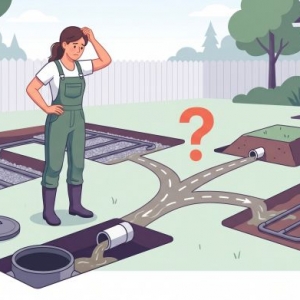
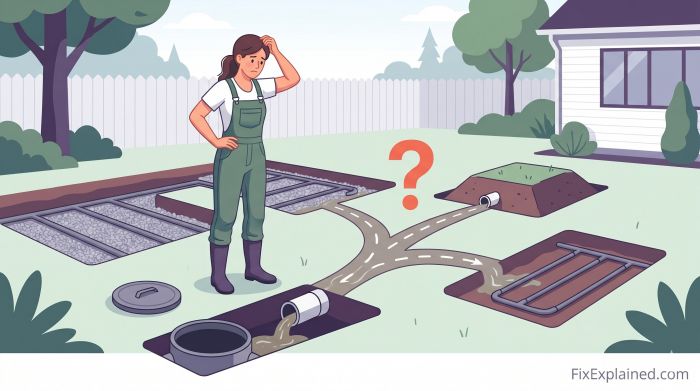
We get asked this out in the field all the time, usually when a homeowner has slow drains, soggy soil, or a septic smell that seems to come and go with weather and water use. The short answer is no, not all septic tanks have a traditional leach field, but every septic system still needs some method to treat and disperse liquid effluent after the tank separates solids from water. The septic tank is only the first stage. It is a watertight container that handles solid waste separation, scum retention, and anaerobic digestion. It does not finish the wastewater treatment cycle on its own.
In a standard gravity system, the tank sends clarified liquid effluent out through the outlet tee, into a distribution box or header line, and then into lateral lines buried in drain rock. From there, the soil absorption interface takes over. That is the leach field’s job. It lets wastewater move slowly through unsaturated soil where biomat, soil permeability, oxygen exposure, and groundwater filtering all work together to reduce pathogens and contaminants. Without that soil treatment zone, the tank becomes only a holding and separation vessel, not a complete treatment system.
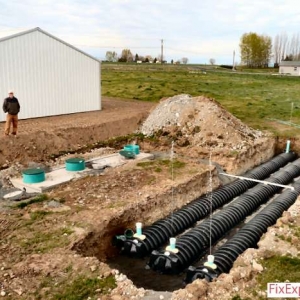
What confuses many homeowners is that newer and alternative systems may use mound systems, drip dispersal, aerobic treatment, sand filters, or pump-assisted distribution instead of a classic trench-style drain field. Those systems still need a final disposal or absorption area, but it may not look like the old-school leach field people picture. So when we answer this question properly, we do not stop at the tank. We follow the effluent path from the inlet tee to the outlet tee, through the baffles, past the distribution box, and out into whatever treatment area the site and soil will allow.
| Symptom | Likely Culprit | Quick Test | DIY Fixable? |
|---|---|---|---|
| Yard wet over septic area | Saturated ground, biomat failure, overloaded lateral trench | Check for persistent soft soil 6–18 inches deep after 48 dry hours | No |
| Slow drains after laundry days | Hydraulic overload, outlet restriction, distribution box imbalance | Reduce water use for 24 hours and compare fixture drainage speed | Sometimes |
| Odor near tank or field | Effluent surfacing, broken inspection port cap, leaking riser, failing field | Walk system edge at dawn or evening when odor is strongest | Sometimes |
| Backups in lowest drain | Full tank, clogged outlet tee, blocked effluent filter, field rejection | Open access lid safely and check liquid level relative to outlet pipe | No |
| Only one side of field stays wet | Distribution box out of level or one lateral line blocked | Inspect distribution box flow pattern during active water use | Sometimes |
| System fine in dry season, fails after rain | High groundwater, poor soil percolation, trench saturation threshold reached | Compare system performance before and after rainfall above 1 inch | No |
What a Septic Tank Does, and Why the Tank Alone Is Not the Whole System
A septic tank is a settling and separation vessel, not a complete wastewater treatment plant. In most homes we inspect, tank size runs from about 750 to 1,500 gallons, though larger homes can go beyond that. Wastewater enters through the inlet tee, slows down inside the tank, and separates into three layers. Heavy solids settle into the sludge layer, fats and floatables rise into the scum layer, and the middle liquid zone becomes the clarified effluent that moves onward. Baffles or sanitary tees keep the floating and settled waste from washing straight out.
That separation is mechanical first, then biological. Inside the tank, anaerobic digestion begins breaking down part of the organic solids. That helps reduce sludge volume, but it does not sterilize the wastewater and it does not remove dissolved nutrients the way soil treatment does. We still have suspended solids, dissolved organic matter, bacteria, nitrogen compounds, and water that needs controlled dispersal. If the outlet tee is missing, broken, or submerged in excessive solids because pump-outs were neglected, that waste exits the tank too early and the next component gets punished.
The septic tank also has hydraulic limits. A two-compartment tank handles surge loads better than a single-compartment tank because the first chamber traps more solids before the second chamber sends effluent out. But even a well-designed two-compartment tank cannot replace the drain field. If a house sends 300 to 450 gallons per day into a system, the tank merely buffers and separates that flow. The actual long-term treatment depends on the downstream soil absorption area, pressure dispersal bed, or engineered alternative. In gravity systems, that usually means a leach field. In aerobic or mound systems, the final treatment area changes shape, but not purpose.
How the inlet tee, outlet tee, and baffles protect the rest of the system
The inlet tee calms incoming wastewater so it does not blast straight across the tank and disturb the sludge layer. The outlet tee draws from the clearer middle liquid zone and keeps scum from escaping. Baffles guide this flow path and hold the treatment stages in order. When these pieces are intact, the tank sends relatively consistent liquid effluent downstream, which protects the distribution box, lateral lines, and soil absorption interface from premature solids loading.
When one of these components fails, we see a very predictable field problem. A missing outlet tee lets grease, paper, and suspended solids enter the septic drain field. Those solids collect in the distribution box, settle in lateral lines, and thicken the biomat at the trench bottom far faster than the soil can handle. Stage 1 is solids escape. Stage 2 is uneven flow and trench clogging. Stage 3 is full leach field failure, surfacing effluent, and sometimes replacement instead of simple repair.
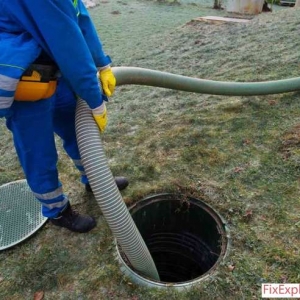
The best prevention is simple but specific: inspect the inlet tee, outlet tee, and baffle condition during every pump-out, which for many households means every 3 to 5 years, though high occupancy or garbage disposal use can shorten that interval. In pump-assisted systems, tee damage becomes even more serious because higher discharge rates can carry solids farther into the field than gravity alone would. That changes a cheap internal tank fix into a much more expensive soil and lateral repair.
Why anaerobic digestion helps but does not replace soil treatment
Anaerobic digestion inside the tank reduces part of the organic load by allowing bacteria to work in low-oxygen conditions. That is helpful because it lowers some solids volume and begins decomposition before the effluent reaches the drain field. But it is incomplete treatment. The liquid still contains dissolved pollutants, pathogens, and nutrients that must be filtered, adsorbed, and biologically processed in the soil.
We see trouble when homeowners think additives or bacteria boosters can make the tank do the field’s work. A tank full of active bacteria still cannot create the oxygen-rich unsaturated soil conditions needed around the biomat and trench sidewalls. If the field is saturated or the soil percolation rate is too slow, the wastewater has nowhere to finish treatment. That is why a tank can be recently pumped and still back up a week later. The tank volume was restored, but the downstream hydraulic bottleneck stayed in place.
Preventing that misunderstanding starts with knowing what each component is supposed to do. The tank separates and partially digests. The distribution box apportions flow. The lateral trench disperses. The soil finishes the treatment. In aerobic treatment units, the biological stage changes because air is added, but even then the final discharge still depends on a properly designed dispersal zone or approved discharge method. The rule changes in equipment, not in treatment logic.
What a Leach Field Actually Does in the Wastewater Treatment Cycle
The leach field, also called a drain field or septic drain field, is the part many people never see until it fails. In a standard system, liquid effluent leaves the tank, flows through a distribution box, and enters a series of perforated lateral lines laid in gravel or drain rock. The effluent then seeps out into the trench bottom and sidewalls. Typical trenches may be 18 to 36 inches wide, with perforated pipe commonly 4 inches in diameter, and trench spacing often around 6 to 10 feet depending on design and soil conditions.
Mechanically, the leach field spreads water across a wider area so the soil is not overloaded in one spot. Hydraulically, it slows the discharge so the surrounding unsaturated soil can accept the daily flow. Biologically, a biomat forms where the effluent meets the soil absorption interface. Homeowners hear that word and think it always means failure, but a thin biomat is normal. It helps trap fine particles and promotes treatment. The problem starts when biomat becomes too thick because excessive solids, grease, or overload smother the trench bottom faster than the soil can recover.
Chemically and physically, the soil acts like a treatment medium. Clay particles, organic matter, air pockets, and mineral surfaces all influence how contaminants are reduced. Soil permeability matters. So does percolation rate, usually measured in minutes per inch during site testing. If the soil is too tight, the effluent ponds. If it is too coarse and groundwater is too close, wastewater may move too fast with inadequate treatment. That is why a leach field is not just a place to dump water. It is a carefully sized absorption and treatment zone built around hydraulic loading limits, trench geometry, and soil science.
How lateral lines, drain rock, and trench sidewalls share the treatment load
The perforated lateral lines do not treat wastewater by themselves. They distribute it. The drain rock below and around the pipe creates void space so the effluent can spread rather than jet into one point. From there, the trench bottom and sidewalls become the active soil contact surfaces. In healthy conditions, these surfaces accept wastewater gradually, letting oxygen and microbial action support treatment at the biomat and surrounding soil pores.
When a field begins failing, the first sign may not be a total backup. We often see one trench staying wetter than the others because the distribution box is tilted or one line is partially blocked. Stage 1 is uneven distribution. Stage 2 is overload on one lateral trench while others stay underused. Stage 3 is premature trench sealing, saturated ground, and effluent surfacing over the overloaded section. Homeowners then assume the whole field is bad when the real starting point was poor distribution.
Preventing that means inspecting the distribution box, checking trench loading patterns, and confirming the pipe network is not carrying solids from a failed outlet tee or neglected effluent filter. In pressure systems, the same principle applies, but flow pulses are stronger and more controlled, so timing, pump performance, and orifice condition become part of the inspection too. The load still ends up on soil surfaces, but the path there is different.
Why biomat is normal at first and destructive when it gets too thick
Biomat is a biologically active layer that develops where septic effluent meets the native soil. A modest biomat slows flow and improves treatment by filtering suspended matter and supporting microbial activity. In a balanced system, it forms gradually and stays thin enough for wastewater to pass through. That balance depends on solids being held back in the tank, the soil staying unsaturated enough for oxygen exchange, and daily flow staying within the design load.
When too many suspended solids leave the tank, or when water use spikes beyond the design flow, the biomat thickens and becomes a hydraulic barrier. We see this after years of skipped pump-outs, leaking toilets that add hundreds of gallons per day, or heavy laundry days that flood the field with surfactant-rich water. Stage 1 is accelerated biomat growth. Stage 2 is reduced infiltration and trench ponding. Stage 3 is field rejection, sewage odor, and eventual need for leach field rejuvenation or replacement depending on how far the damage went.
The prevention is not magic additives. It is solids control, water management, and keeping oxygen exchange possible in the soil zone. In sandy soils, the system may tolerate overload differently than in silty clay, because permeability and capillary behavior change how quickly the trench saturates. The same advice does not apply evenly everywhere. What saves a gravity trench in sandy loam may not save a shallow field sitting over tight clay or seasonal groundwater.
If Not a Leach Field, Then What? Systems That Use Other Final Treatment Methods
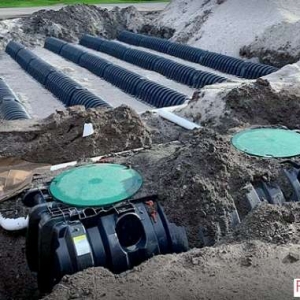
Not every septic tank discharges into a classic leach field with gravel trenches. We also work on mound systems, chamber systems, drip dispersal systems, sand filters, aerobic treatment units, and pump-assisted pressure distribution setups. In all of those, the tank still performs primary separation, but the final treatment and dispersal method changes to match site limits such as shallow bedrock, high groundwater, poor soil permeability, limited lot size, or setback restrictions.
An aerobic treatment unit, for example, adds oxygen so bacteria can digest waste more aggressively than a standard anaerobic tank. That can improve effluent quality before it reaches the dispersal area. But it still does not mean the system can skip a safe discharge method. The treated effluent may go to a smaller dispersal field, a spray field where allowed, or another engineered polishing step. Mound systems lift the soil absorption area above poor native soil using engineered sand fill. Drip systems meter small doses through tubing over a broad area. The equipment changes. The need for controlled dispersal does not.
This is where homeowners get tripped up by the wording. They ask whether all septic systems have a leach field, and the honest answer is no if by “leach field” they mean the old trench-and-stone layout only. But yes in the broader sense that every onsite wastewater system needs some downstream treatment or dispersal zone unless it is a sealed holding tank subject to pump-out, which is a different category and often heavily regulated. The tank by itself is almost never the whole answer for a normal residence.
How aerobic treatment changes the biology but not the need for dispersal
Aerobic treatment introduces air into the wastewater, which shifts bacterial activity from primarily anaerobic digestion toward oxygen-dependent breakdown. That typically produces cleaner effluent with lower suspended solids and lower organic strength before discharge. Mechanically, the unit may include aeration chambers, clarifiers, and pumps. Biologically, it supports a different microbial population than a conventional septic tank.
But when these units fail, the same misunderstanding appears. Homeowners assume cleaner effluent means no drain field concerns. Then a blower fails, solids carry over, and the final dispersal area begins clogging. Stage 1 is treatment drop inside the unit. Stage 2 is poor-quality effluent reaching the disposal zone. Stage 3 is clogging, surfacing, odor complaints, and a much costlier repair because both the treatment device and field may need work.
Preventative care means servicing blowers, alarms, filters, pumps, and discharge components on schedule, not just pumping the trash tank. In gravity trench systems, the main weak points are solids and water loading. In aerobic systems, mechanical failures add another layer. The field may be smaller because the effluent is better, but that also means neglect can overwhelm it fast when treatment quality suddenly drops.
When mound, drip, and pressure systems replace traditional trench fields
Mound, drip, and pressure-dosed systems are usually chosen because the native site cannot safely handle a gravity trench field. Maybe the seasonal water table is too high, maybe bedrock is too shallow, or maybe the percolation rate falls outside acceptable limits. Pressure distribution doses the field in measured bursts so the soil gets time to rest between applications. Drip systems spread effluent across a wide area in small, controlled amounts. Mounds create an artificial treatment zone above grade using engineered media.
We often see problems when owners treat these alternative systems like plain old septic tanks. A pump alarm gets ignored, filters go uncleaned, or one repair contractor bypasses a control issue just to get flow moving again. Stage 1 is uneven or uncontrolled dosing. Stage 2 is wet spots, zone overload, or line fouling. Stage 3 is media saturation, surfacing effluent, and expensive reconstruction because these systems depend on balance and timing much more than a simple gravity trench does.
Prevention means respecting the design. Check pump cycles, flush laterals where applicable, maintain filters, and keep records of dosing settings. A standard trench field may limp along under abuse for years before obvious failure. Alternative systems often tell on themselves sooner, but homeowners have to listen to alarms and changes in yard condition before the damage compounds.
How Soil Decides Whether a Septic System Lives or Dies
If we had to name the real boss of every septic system, it would be the soil. Soil permeability, percolation rate, structure, depth to limiting layers, and groundwater position decide whether a leach field can accept and treat effluent safely. A percolation test may show the soil absorbs water at, say, 5 minutes per inch, 20 minutes per inch, or 60 minutes per inch. Those numbers matter because they help size the absorption area. A field designed for one rate will fail if the actual soil behaves much slower once real wastewater and biomat enter the picture.
Effluent does not just disappear underground. It moves through pore spaces, clings to soil particles, slows at fine-textured zones, and rises sideways and upward through capillary movement when the soil nears saturation. The biomat adds another resistance layer. In a healthy field, the wastewater dose enters unsaturated soil where oxygen can still move. That is critical. Once the soil stays fully saturated, treatment efficiency drops, odors rise, and wastewater can move improperly toward the surface or groundwater instead of being cleaned gradually.
Groundwater interaction is where bad designs become dangerous. If the vertical separation between trench bottom and seasonal high groundwater is too small, the effluent can reach saturated zones before adequate treatment happens. That creates contamination risk for wells, streams, and nearby low ground. Setbacks vary by jurisdiction, but common design rules include specific minimum distances from wells, buildings, and property lines, plus trench sizing based on daily gallons per day. The leach field is not sized by guesswork if it is done right. It is tied directly to soil behavior and hydraulic loading thresholds.
Why saturated ground stops treatment even when the pipes are technically open
A homeowner may assume that if the lateral lines are not crushed, the field should still work. But open pipe is only part of the story. The effluent leaves the perforations and enters the soil. If that soil is already saturated from rainfall, high groundwater, or biomat sealing, there is no air-filled pore space left to accept the flow. The pipe can be open and the system can still fail because the treatment zone has lost its ability to absorb and process wastewater.
We see this after storms or during seasonal wet periods. The tank level rises, drains slow, and the lawn above the septic drain field turns spongy. Stage 1 is soil saturation. Stage 2 is trench ponding and hydraulic backup into the tank. Stage 3 is indoor backup, surface breakout, and contamination risk. That is why pumping the tank may buy a little time but does not solve the core issue. The blocked component is the soil absorption interface, not tank volume alone.
Preventing this means directing roof runoff away, fixing footing drains that discharge too close, avoiding soil compaction from vehicles, and understanding seasonal groundwater behavior before expanding water use. In a mound or raised system, the same physics apply, but the design creates artificial unsaturated media above the natural limiting layer. That changes the location of treatment, not the requirement for oxygen and unsaturated flow.
How percolation rate, capillary movement, and biomat interact underground
Percolation rate tells us how quickly water moves through soil under test conditions, but real septic performance depends on more than that. Once effluent hits the trench bottom, biomat forms and changes the effective infiltration rate. At the same time, capillary movement can pull moisture upward and sideways into adjacent soil. In fine-textured soils, this means the saturated zone around a trench can spread wider than many homeowners expect, reducing the usable treatment area even when the ground surface looks dry.
When the balance goes bad, the field starts acting smaller than it was built. Maybe the original design counted on 450 gallons per day, but frequent long showers, extra occupants, and leaking fixtures now push 600 gallons per day. Stage 1 is chronic overload beyond soil recovery time. Stage 2 is expanding saturation around trenches and reduced oxygen exchange. Stage 3 is effluent surfacing, foul odor at the inspection port, and eventual trench abandonment or field expansion if space allows.
Preventative work means respecting gallons-per-day reality, not just relying on the old design paperwork. Water softener discharge, spa tubs, and repeated laundry loads can all change the hydraulic picture. In coarse sandy soil, effluent may move downward quickly but still need enough unsaturated depth for treatment. In silty or clay-rich soil, the issue may be slow infiltration and perched water near trench bottoms. Different soil, different failure pattern.
Why a Drain Field Starts Failing, and How That Failure Cascades Through the Whole System
Drain field failure almost never begins with a dramatic event out of nowhere. It usually builds one layer at a time. We see solids bypass from a damaged outlet tee, sludge accumulation from missed pump-outs, excess water from running toilets, sodium-heavy discharge that affects soil structure, root intrusion in lines, compacted soil over trenches, or a distribution box that has drifted out of level. The field then starts receiving either too much water, too many solids, or both.
Once the field is overloaded, wastewater no longer infiltrates at the original rate. Effluent ponds in the trench. Oxygen exchange drops. The biomat thickens. Soil permeability effectively decreases, even if the native soil was acceptable at installation. Then the tank liquid level rises because the outlet side is now hydraulically restricted. This is why homeowners often report the system acting fine for years and then suddenly failing during normal use. The real damage may have been developing quietly for a long time.
This is where we separate temporary distress from structural failure. A field stressed by one holiday weekend of extra guests may recover if water use drops. A field that has been fed solids for five years through a missing outlet baffle usually does not. That is why inspection must follow the whole path: sludge layer, scum layer, outlet tee, effluent filter, distribution box, lateral lines, trench moisture, and surrounding soil condition. If you skip the sequence, you guess wrong and waste money.
The classic failure chain: clogged outlet tee to full field collapse
A clogged or broken outlet tee is one of the most damaging small failures in a septic system. Its job is to pull from the clearer liquid zone and keep scum from leaving the tank. Once it clogs, tank level rises. Once it breaks or goes missing, solids and grease escape downstream. That changes the quality of everything entering the distribution box and lateral trench network.
The failure cascade is brutal and common. Stage 1 immediate effect: suspended solids and floating waste pass into the outlet line. Stage 2 system-level impact: the distribution box receives sludge-like effluent, lateral lines accumulate deposits, and the biomat thickens far faster than normal. Stage 3 long-term infrastructure consequence: trench bottoms seal, effluent surfaces, the septic drain field loses usable life, and repair costs jump from a tee replacement to possible full field rehabilitation or replacement.
The preventative move is direct inspection during pump-out, not guessing from indoor symptoms alone. We want eyes on the outlet tee, effluent filter if present, and liquid level relative to the outlet invert. In pressure systems, this same failure can spread damage farther because pumped bursts can drive solids deeper into the disposal network. The starting failure is tiny. The downstream repair bill is not.
Why heavy laundry days and hidden leaks quietly overload the soil
Hydraulic overload does not always come from a family using outrageous amounts of water. A single leaking toilet can waste dozens to hundreds of gallons per day. Back-to-back laundry cycles can dump large surge loads in a few hours. High-efficiency systems help, but repeated concentrated dosing can still exceed trench recovery time. The soil needs rest between loading events so water can move out and oxygen can return.
When that rest never comes, the field stays damp, then saturated, then stressed into failure. Stage 1 is chronic overloading of the trench bottom. Stage 2 is expansion of the saturated zone and restricted infiltration through biomat. Stage 3 is sewage odor outside, slow house drains, and field life shortened years ahead of schedule. We often find that the homeowner focused on the tank while the real trigger was a flapper valve or a pattern of ten laundry loads every weekend.
Prevention means spreading water use, fixing leaks immediately, and tracking actual occupancy changes. In gravity systems, surge loading tends to hit the nearest trench hard if the distribution box is already uneven. In pressure-dosed systems, controls can help meter flows better, but only if they are working and not overridden. Different distribution method, same hydraulic truth.
How We Inspect the Components When a Homeowner Asks, “Do I Even Have a Leach Field?”
When somebody is not sure whether their septic tank has a leach field, we do not answer from the kitchen table. We inspect component by component. First we identify the tank lid, risers, inlet side, and outlet side. Then we confirm whether the tank sends effluent into a distribution box, pump chamber, treatment unit, or direct line toward a disposal area. We look for inspection ports, vented cleanouts, field markers, pump controls, and any as-built drawings if they exist.
This inspection has to be done carefully. Septic tanks can contain methane and hydrogen sulfide. Tank lids can be unstable. Soil over old concrete lids can hide collapse risk. Digging without utility locating can create underground utility strike danger. So we never lean over an open tank unnecessarily, never enter one, and never recommend blind probing with steel bars across an unknown utility corridor. Calm inspection is safe inspection.
Component-level inspection tells us much more than guessing from symptoms. A tank with healthy separation but no visible distribution box may feed a pump chamber or aerobic unit. A tank with a single outlet line heading to a shallow gravel area may indeed feed a conventional drain field. A sealed holding tank, by contrast, usually has no disposal field and requires scheduled pump-outs because it stores wastewater instead of dispersing it. The difference matters because the repair path, permit requirements, and cost exposure are completely different.
Component inspection walkthrough from tank to soil absorption area
The Action: Open and inspect the access risers, identify the inlet tee and outlet tee, measure the sludge and scum layers, and confirm the outlet path. Then locate the distribution box, pump chamber, or treatment unit downstream. Finally inspect the suspected leach field area for inspection ports, wetness, odor, and vegetation differences.
The Why: This sequence shows whether the problem starts in the tank, the conveyance line, the distribution component, or the soil absorption zone. It keeps us from blaming the field for a blocked effluent filter or blaming the tank for a saturated trench network.
The Execution: We check whether liquid level inside the tank sits at the normal outlet elevation or is backed above it. We examine the outlet tee and baffles. We inspect the distribution box for level flow. We trace lateral direction where possible. We compare trench area moisture, grass color, and soil firmness. We note odors strongest at lids, boxes, or field edge. We may also use camera inspection or dye testing where appropriate.
The Expected Result: We identify whether the home has a conventional drain field, an alternative dispersal method, or a holding arrangement. We also identify which component is failing first, which matters more than the homeowner’s original label for the system.
The Pivot: If the tank is normal but no field can be found, we pivot to looking for a pump tank, aerobic unit, sand filter, mound, or holding tank documentation. If the field is present but unevenly loaded, we pivot toward the distribution box and downstream laterals instead of assuming total field collapse.
What failure looks like, smells like, and sounds like at each component
A failing outlet tee often shows a high liquid level in the tank and heavy solids near the outlet compartment. A failing distribution box may show one outlet flowing strongly while others are dry. A saturated lateral trench may show dark green grass, soft ground, or blackened anaerobic soil near the trench line. An overloaded pump chamber may cycle too frequently or trigger alarms. These are not vague signs. They point to specific components and specific hydraulic behavior.
The smell matters too. Strong septic odor near the tank riser can mean lid leakage, filter issues, or turbulence at the access point. Odor out in the yard often points more toward effluent surfacing or field saturation. Sometimes homeowners report a stronger smell at night. Cooler, still evening air can trap odor lower to the ground, making a weak surface seepage issue much more noticeable. That does not create the problem, but it changes when people detect it.
Sound can help in pump systems. A short-cycling pump, a humming motor that does not move water, or alarm activation after heavy use points us away from a simple gravity trench issue. In a standard gravity system, silence is normal. In an aerobic or pump-assisted system, equipment noise becomes part of the diagnosis. The scenario changes with system type, which is exactly why “do all septic tanks have a leach field” is not a yes-or-no question unless we know what sits downstream.
What Helps, What Does Not, and When Repair Changes to Replacement
Homeowners usually want to know whether a struggling field can be saved. Sometimes yes. Sometimes no. The answer depends on whether the problem is hydraulic, mechanical, biological, or structural. A clogged effluent filter, a tilted distribution box, or a short-term overload issue can often be corrected without rebuilding the field. But if the soil absorption interface is sealed over large areas, trenches are collapsed, or the site has chronic groundwater interference, the repair conversation changes fast.
Leach field rejuvenation sometimes helps when the field still has structural integrity and the main issue is partial clogging or distribution imbalance. That might involve cleaning lines, correcting the distribution box, reducing water loading, and restoring upstream solids control. But rejuvenation is not a miracle cure for fields that have been fed raw solids for years. Once trench bottoms are heavily sealed and soil structure is compromised, the cost of chasing temporary relief often approaches the cost of doing the replacement correctly.
The tank matters here too. If the tank is undersized, missing baffles, or carrying chronic sludge overload, any field repair is on borrowed time until the upstream issues are fixed. We always explain repairs as a chain. If you correct only one weak link and leave the next one feeding failure into it, the system will circle right back to the same complaint.
When leach field rejuvenation can work, and why it sometimes cannot
The Action: Restore upstream solids control, reduce hydraulic loading, inspect the distribution box, and evaluate whether lateral lines and trench zones are only partially restricted rather than destroyed. Where appropriate, clean accessible lines and rebalance distribution.
The Why: Rejuvenation works only when the field still has viable soil permeability left and the failure driver can be stopped. Mechanically, you need flow balance. Biologically, you need biomat stress to stop worsening. Hydraulically, you need the soil to recover between doses. Chemically, you need to avoid inputs that worsen sealing or soil dispersion problems.
The Execution: We verify the outlet tee, effluent filter, sludge depth, and water use patterns first. Then we inspect the distribution box and laterals. We reduce surge loads, fix leaks, and correct any obvious misdistribution. In some cases, resting the field or alternating zones can help. In others, there is not enough functional soil left to recover.
The Expected Result: If the field is only partially stressed, drainage improves, yard wetness decreases, and tank levels return closer to normal operating elevation. Odors often lessen because effluent is no longer surfacing.
The Pivot: If effluent still ponds, trenches remain saturated, or solids damage is extensive, the repair pivots from rejuvenation to partial replacement, new field installation, or alternative system conversion. In pressure or mound systems, repair options differ because media, pumps, and controls can be as important as soil itself.
How ignoring early symptoms turns a manageable repair into a major replacement
The biggest cost jump in septic work happens when homeowners wait too long after the early warnings. A wet patch after heavy laundry, a filter that needs constant rinsing, or a slight odor at the field edge may sound minor. But those are often the stage-one signals that the system is losing hydraulic balance. The cheapest time to act is before solids escape, before trench biomat thickens dramatically, and before groundwater contamination becomes a concern.
The failure cascade is straightforward. Stage 1 immediate effect: a small issue such as a leaking toilet, clogged filter, or uneven distribution box begins stressing one part of the system. Stage 2 system-level impact: tank levels rise, lateral trenches stay wet, oxygen exchange falls, and biomat thickens. Stage 3 long-term infrastructure consequence: the soil absorption area loses capacity, surface breakout begins, regulatory involvement may follow, and repair costs jump from a service call to excavation, design, and replacement work.
The preventative insight is simple but specific: do not treat recurring slow drains, field odor, or wet ground as isolated symptoms. Tie them back to the tank, outlet tee, distribution box, lateral lines, and soil condition together. In a standard gravity system, that may save the field. In an aerobic or pump-dosed system, it may also save expensive controls and treatment hardware from secondary damage.
FAQs
Do all septic tanks have a leach field?
No, not all septic tanks have a traditional leach field. A conventional septic tank often discharges to a leach field, but some systems discharge to a mound, drip field, sand filter, aerobic treatment dispersal area, or other approved final treatment method. The mechanism is what matters: the tank separates solids and sends liquid effluent onward, and that effluent still needs safe treatment or dispersal somewhere.
A common homeowner mistake is assuming the concrete tank itself “is the septic system.” It is not. The tank handles solid waste separation, sludge retention, scum containment, and partial anaerobic digestion. The downstream soil or engineered unit handles the next stage. The answer changes in the case of a holding tank, which may have no field at all because it stores waste for regular pump-out, but that is a different type of system with different operating expectations.
What is a leach field for a septic tank?
A leach field is the soil-based treatment and dispersal area that receives liquid effluent after it leaves the septic tank. It spreads wastewater through lateral lines and drain rock so the soil absorption interface can filter, slow, and biologically treat the effluent. Without it, a standard gravity septic tank cannot complete the wastewater treatment cycle.
Homeowners often think the field just “gets rid of water,” but that is too shallow. The field depends on soil permeability, biomat behavior, oxygen movement, and hydraulic loading limits. A mistake we see often is parking over trenches or flooding them with roof runoff, which compacts or saturates the soil and reduces treatment. The answer changes when an alternative system replaces the traditional trench field, but some final dispersal method is still required.
Do all septic systems have a leach field?
No, not all septic systems have a classic leach field, but all functioning onsite systems need some final treatment or disposal method unless they are sealed holding tanks. That method may be a conventional drain field, pressure bed, mound, drip dispersal zone, or another engineered solution designed for the site.
The mechanism stays the same even when the hardware changes. Effluent leaving the tank must either be treated in soil or managed in another approved final stage. A common mistake is buying a house with an aerobic unit and assuming maintenance is optional because it is “more advanced.” In reality, alternative systems often require more attention. The answer changes most in highly regulated or site-limited properties where engineered systems replace standard trenches.
Can a septic tank work without a leach field?
Not as a normal standalone residential treatment system, no. A septic tank can hold and separate wastewater, but it cannot complete treatment and legal disposal by itself in ordinary residential use. It needs a downstream field, treatment unit, or storage plan.
We have seen homeowners pump a failing system and assume the tank can carry the home for a while without fixing the field. That only buys time because the tank is not designed to be a long-term storage-only vessel under normal household flow. The answer changes if the property uses a permitted holding tank that is pumped regularly, but that is not the same as a standard septic tank with failed downstream components.
How do I know if my home has a leach field or another type of septic dispersal area?
You confirm it by tracing the outlet path from the tank to the next component, not by guessing from the yard. Look for a distribution box, pump chamber, aerobic unit, inspection ports, field lines, alarms, and any available as-built documents. That tells you whether you have a standard leach field, pressure system, mound, drip setup, or holding arrangement.
The mistake we see is homeowners identifying one concrete lid and assuming they found the whole system. We inspect the inlet tee, outlet tee, tank liquid level, downstream piping, and field indicators together. The answer changes on older properties where records are poor and parts may be buried deeper or modified over time. In those cases, camera work, probing, and professional locating become more important.
Does pumping the tank fix a bad leach field?
No, pumping the tank does not fix a bad leach field. It removes sludge and scum from the tank, which is necessary maintenance, but it does not restore clogged soil, collapsed lateral lines, or saturated trench bottoms. It addresses storage and solids control, not field permeability.
The mechanism is straightforward. Pumping lowers the liquid level and removes accumulated solids, but if the outlet side still cannot discharge into the soil, the tank will refill and symptoms will return. A common homeowner mistake is pumping multiple times instead of checking the outlet tee, distribution box, and field condition. The answer changes only when the symptoms were caused mainly by excessive sludge or a blocked internal component rather than actual field failure.
Conclusion
So, do all septic tanks have a leach field? No, not every septic tank connects to a traditional trench-style leach field. But every real septic setup still needs a way to finish the wastewater treatment cycle after the tank separates solids from liquid. In most conventional homes that means a drain field. In tougher sites it may mean a mound, drip dispersal area, aerobic treatment discharge zone, or another engineered alternative.
The important part is not the label. It is the sequence. Wastewater enters through the inlet tee, separates inside the tank, leaves through the outlet tee, passes through the distribution component, and reaches a final treatment zone where soil or engineered media does the real finishing work. When that path is understood clearly, diagnosis gets sharper, repairs get smarter, and homeowners stop spending money on the wrong part of the system.