We’ve stood over more open septic tanks than most folks ever will—watching layers separate, smelling when things go wrong, and tracing failures all the way out to the far end of a saturated drain field. One question keeps coming up from homeowners dealing with slow drains, odors, or soggy yards:
Is bleach bad for septic tanks?
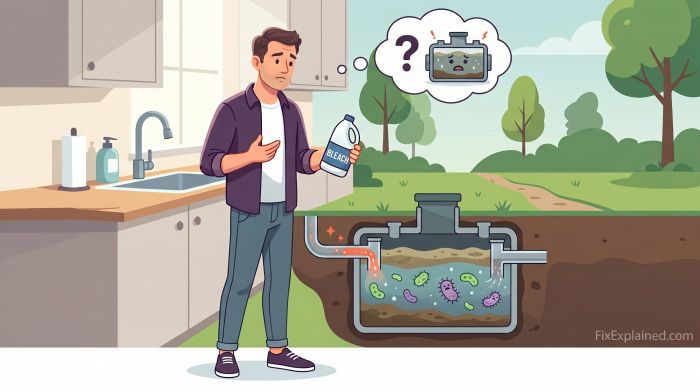
Short answer—yes, but not in the way most people think. It’s not just about killing bacteria. It’s about how chlorine interferes with the entire wastewater treatment cycle, from the inlet tee to the soil absorption interface, and how that disruption moves through the system over time.
Quick Diagnostic Guide: Is Bleach Bad for Septic Tanks?
| Symptom | Likely Culprit | Quick Test | DIY Fixable? |
|---|---|---|---|
| Strong chemical smell at tank opening | Excess chlorine killing anaerobic bacteria | Open inspection port and smell for bleach odor | Yes (reduce usage immediately) |
| Slow drains after heavy cleaning | Disrupted digestion causing sludge buildup | Check if issue follows laundry/bleach use | Partially |
| Wet spots over drain field | Untreated effluent clogging soil | Look for pooling after high water use | No |
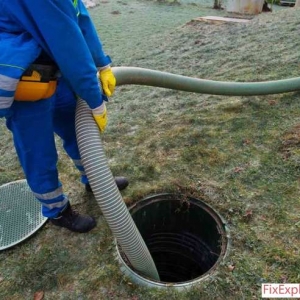
| Frequent pump-outs needed | Accelerated sludge accumulation | Compare pump interval vs normal (3–5 years) | No |
What Bleach Actually Does Inside a Septic Tank
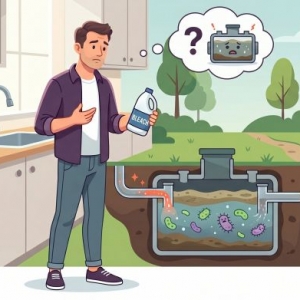
Inside a typical 1000–1500 gallon septic tank, the system relies on anaerobic digestion to break down organic waste. Wastewater enters through the inlet tee, heavy solids drop to form the sludge layer, lighter materials rise into the scum layer, and partially treated liquid effluent flows out through the outlet tee toward the distribution box.
Bleach introduces chlorine, a strong oxidizing chemical, into this balanced biological environment. Instead of supporting organic breakdown, it attacks microbial cells responsible for decomposition. This disrupts sludge digestion, increases suspended solids, and changes the chemical structure of the effluent.
The immediate effect is not always visible. The tank still fills and drains. But internally, digestion slows down, sludge thickens faster, and more untreated material starts moving toward the outlet tee and effluent filter.
Chlorine vs Anaerobic Bacteria
Chlorine molecules penetrate bacterial cell walls and disrupt enzyme activity. In a septic system, this reduces the population of anaerobic bacteria responsible for breaking down organic waste into simpler compounds.
We often see this after repeated heavy bleach use—tanks that should have a soft, layered sludge instead show dense, compacted waste with poor separation between sludge and effluent.
Reducing bleach allows bacterial populations to recover naturally, but recovery can take weeks depending on tank volume and daily hydraulic loading.
Effect on Sludge, Scum, and Effluent
When digestion slows, solids remain intact longer. This causes sludge to build faster and scum to become thicker and more stable. At the same time, effluent leaving the outlet tee carries more suspended particles.
In the field, this shows up as cloudy effluent at inspection ports or clogged effluent filters requiring frequent cleaning.
Switching to septic-safe cleaners reduces this load and allows proper separation to resume.
Impact on Tank Components
Excess bleach affects more than biology. It changes the chemical composition of wastewater, which can affect inlet tees, outlet tees, and effluent filters.
We’ve opened tanks where outlet filters are prematurely clogged with fine particles that should have been digested, not carried forward.
Maintaining chemical balance protects both biological and mechanical components of the system.
How Bleach Damage Spreads to the Drain Field
The septic tank is only the first stage. What leaves the tank as effluent determines how long your drain field survives. When bleach disrupts digestion, the effluent becomes overloaded with suspended solids.
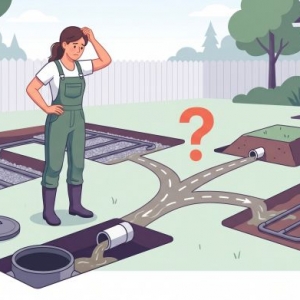
This effluent flows into the distribution box, which splits flow into lateral trenches. Each trench relies on even distribution and clean liquid to infiltrate soil properly.
When solids reach the soil absorption interface, they contribute to premature biomat formation—a dense biological layer that reduces soil permeability.
Biomat Formation and Soil Clogging
The biomat is a natural layer that forms at the trench bottom. It regulates flow, but when overloaded with solids, it thickens too quickly.
We see this when trenches become saturated even under normal water usage. The soil cannot absorb effluent at its designed percolation rate.
Reducing solids entering the field is the only way to slow biomat growth.
Hydraulic Overload Conditions
When soil permeability drops, the system reaches its hydraulic loading limit faster. Even normal household flow can exceed what the soil can absorb.
This leads to surface pooling, odors, and in severe cases, wastewater backing up toward the tank.
In pressure distribution systems, the effect can be more uniform but still results in widespread trench failure.
Groundwater Contamination Risk
Untreated effluent passing through a compromised drain field can reach groundwater before proper filtration occurs.
This is especially risky in sandy soils with high permeability or areas with shallow water tables.
Maintaining proper treatment inside the tank is critical to protecting groundwater quality.
The Failure Cascade From Bleach Misuse
Septic failures rarely happen instantly. They follow a chain reaction that starts inside the tank and ends in the soil.
Bleach is often the trigger that disrupts the first stage of treatment, setting off a cascade that affects every downstream component.
Understanding this sequence helps explain why small habits can lead to major repairs.
Stage 1: Biological Disruption
Bleach reduces anaerobic bacteria populations, slowing organic breakdown.
We observe thicker sludge layers and less clear separation inside the tank.
Limiting harsh chemicals restores microbial balance over time.
Stage 2: Solid Carryover
Undigested solids move past the outlet tee and into the distribution system.
This leads to clogged effluent filters and uneven flow in the distribution box.
Regular inspection can catch this before it spreads.
Stage 3: Drain Field Failure
Solids reach the trenches, accelerating biomat formation and reducing soil absorption capacity.
The result is standing water, odors, and eventual system failure requiring repair or replacement.
Ignoring early signs increases repair costs significantly.
When Bleach Use Becomes a Real Problem
Not all bleach use causes failure. The problem comes from frequency, concentration, and system size.
A single diluted use in a 1500-gallon tank may have minimal impact, while repeated heavy use in a 750-gallon tank can disrupt the system quickly.
Hydraulic loading also matters—high water usage spreads chemicals throughout the tank faster.
Small Systems vs Large Systems
Smaller tanks have less buffering capacity, meaning chemicals reach higher concentrations.
We often see faster failure in small residential systems compared to larger installations.
Adjusting usage based on tank size is critical.
Laundry Day Overload
Multiple loads of bleach-containing laundry in one day introduce a concentrated chemical spike.
This overwhelms bacterial populations and increases suspended solids.
Spacing out loads reduces impact significantly.
Interaction With Other Chemicals
Bleach combined with antibacterial soaps or surfactants creates a compounded effect on microbial life.
This can lead to near-total disruption of digestion processes.
Using septic-safe products helps maintain balance.
Safer Alternatives and System Protection
Maintaining a septic system is about preserving biological balance while controlling waste input.
There are practical alternatives to bleach that achieve cleaning without damaging the system.
These options support both tank function and drain field longevity.
Septic-Safe Cleaners
These cleaners are formulated to break down without harming bacteria.
We see better sludge digestion and clearer effluent when these are used consistently.
They are especially important in smaller systems.
Controlled Bleach Use
If bleach must be used, dilution and spacing are key.
Using small amounts and avoiding concentrated discharge protects bacterial populations.
This approach works differently in pump systems where distribution timing varies.
Biological Additives
Live enzymes and bacterial additives can help restore balance after disruption.
However, they are not a fix for ongoing chemical misuse.
Proper usage habits are still the primary defense.
FAQs
Can you use bleach with a septic system?
Yes, in small diluted amounts. Large or frequent use disrupts bacterial digestion and leads to system imbalance.
Is bleach safe for septic systems long term?
No, repeated exposure reduces microbial activity, increases sludge, and shortens drain field lifespan.
What happens if too much bleach enters the tank?
It kills bacteria, slows digestion, increases solids carryover, and can eventually damage the drain field.
Does bleach affect the drain field directly?
Indirectly. It affects effluent quality, which determines how the soil and biomat behave.
Conclusion
Bleach is not just a cleaner when it enters a septic system—it becomes a disruptor of a delicate biological and mechanical process. The damage starts inside the tank, moves through the outlet, and ends in the soil where repairs are most expensive.
We always tell homeowners the same thing: your septic system is only as healthy as what you send into it. Protect the bacteria, control the chemicals, and the system will do its job for decades.