
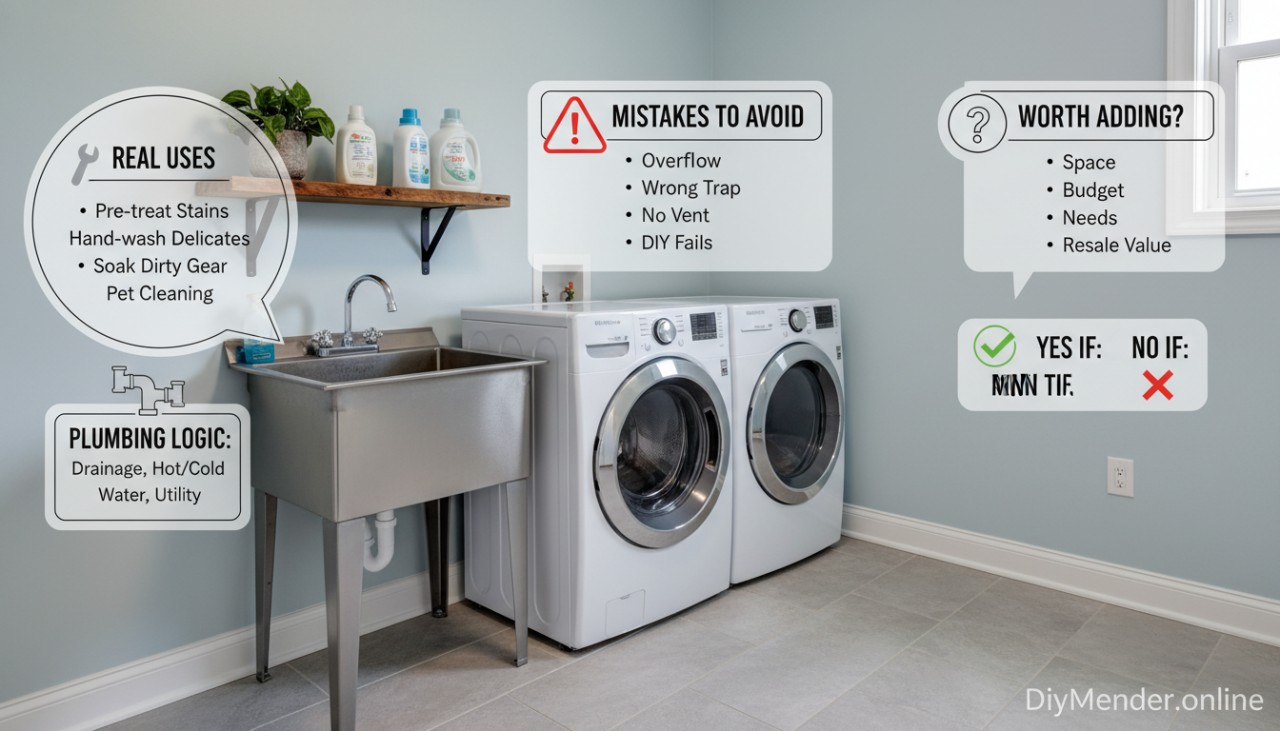
If you're asking why are there sinks in laundry rooms, it's because a utility sink solves messy jobs your washer and normal bathroom/kitchen fixtures can't handle—and it doubles as a safety and service point for the whole laundry zone. I’ve installed and removed plenty; here’s when they shine, when they don’t, and how they fail.
What a laundry sink does that your washer can’t
- Pre-treat and contain mess: Muddy boots, paint rollers, pet accidents, mop buckets—stuff you don’t want in a kitchen sink or bathtub.
- Emergency dump zone: If a washer hose leaks or a dehumidifier bucket needs emptying, the sink is a fast, contained drain.
- Hand-wash and soak: Delicates, stained items, and long soaks that you can’t spare your washer drum for.
- Rinse station: Garden tools, cooler drains, aquarium changes—anything gritty that would scratch tubs or plug shower drains.
- Service access: A nearby drain and water taps make it easy to test or flush lines, mix cleaning solutions, or connect a small pump.
Why it works: the plumbing logic
A laundry sink is a controlled interface to your drainage system. The sink’s basket strainer and P-trap catch debris and block sewer gases. The faucet gives you on-demand hot/cold water with a safe air gap above the rim. Compared to dumping into a floor drain, the sink keeps lint, grit, and paint solids out of your branch line and gives you a place to mount strainers, lint traps, or even an under-sink bucket filter if you’re washing really dirty items.
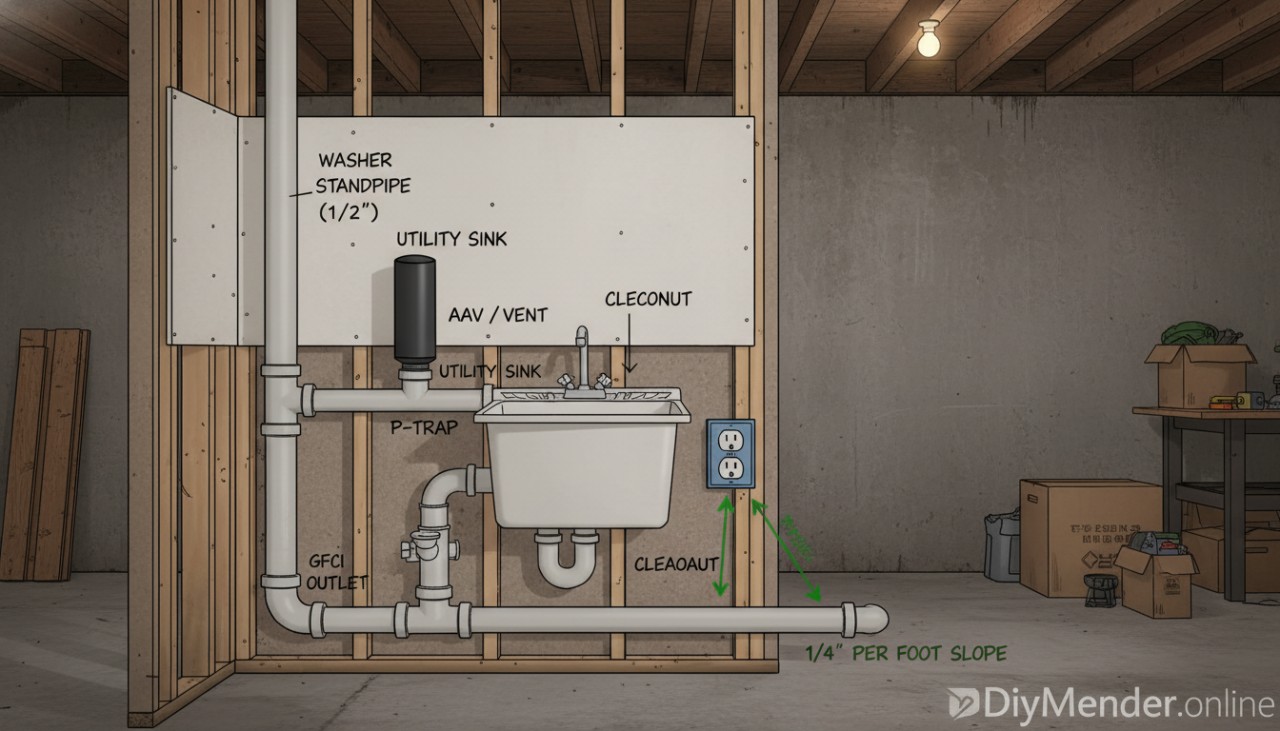
Venting matters: a properly vented trap (via the home’s vent stack or an allowed AAV) keeps the trap from siphoning dry and stops gurgling or odors. Drain sizing matters too: in most places, 1-1/2 inch is minimum for a utility sink, and 2 inch is ideal if it also shares with a washer standpipe. Slope the drain at 1/4 inch per foot toward the main line.
Common mistakes I see (and why they fail)
- Undersized or unvented drain: A 1-1/4 inch trap or an S-trap will clog, gurgle, or pull the trap dry—hello sewer smell.
- Sharing a tiny branch with the washer: Modern washers discharge fast. If the sink and washer tie into a small, flat-slope line, expect backups into the sink.
- No lint protection: Washing shop rags or fleece without a strainer sends lint to the trap arm where it mats and clogs. Use a mesh basket or attach a lint sock to the washer discharge if it empties into the sink.
- Rubber supply hoses: They burst. Use braided stainless lines and full-port shutoff valves you can reach quickly.
- Dumping paint/compound: Latex “seems” safe, but it skins and narrows the trap. Let it cure and trash it, or rinse in a bucket and filter solids first.
- Wrong faucet: Non-spray faucets make pre-treating harder. A pull-down sprayer or a hose-thread spout is more useful and wastes less water.
- No splash/back panel: Water rots drywall. Use tile, FRP panel, or a washable backsplash behind the sink.
When a sink doesn’t help (limits and trade-offs)
- Tight closets: If you’ve got a stackable in a 30-inch closet, a sink will crush your clearance and airflow. Prioritize a proper drain pan and leak sensors.
- No gravity drain: Basement below sewer? You’ll need a sink pump or utility pump into an ejector. Adds cost and maintenance; if you rarely need a sink, skip it.
- Water-hammer homes: Old pipes plus quick-closing washer valves can bang; adding a sink alone won’t fix it. Install hammer arrestors at the valves.
- Hard-water scaling: Aerators and sprayers clog. Plan to descale or add a whole-home softener if buildup is chronic.
- Household habits: If you never pre-treat, never soak, and use a separate mudroom, the floor space might be better as a folding counter or cabinet.
Edge cases I design around
- Washer draining into the sink: Allowed in many places and gives a visual overflow indicator. But the sink must handle the discharge rate, have a clear strainer, and a properly sized trap and branch. If it burps or overflows, switch to a dedicated standpipe.
- Garage installs: Insulate and heat-trace lines if freezing is possible. Use a frost-proof hose bibb-style faucet or isolate with shutoffs and drain-down for winter.
- All-in-one plastic tubs: Cheap and effective, but flimsy legs rock on uneven floors. Shim and anchor to the wall; upgrade to a deeper, thicker tub if you’re cleaning heavy tools.
- Counter-integrated sinks: Great for folding space. Ensure the cabinet interior has a tray or pan and that the trap is accessible via a large door.
How I decide if it’s worth adding
I ask: What messy tasks do you avoid today? Do you pre-treat often? Do you need a safe place to dump buckets? If you say yes to two of those, the sink pays for itself in convenience and fewer clogs elsewhere. If space is tight and your messes are rare, install a wide pull-out faucet at a bathroom/kitchen instead and add a washer drain pan with an alarm.
Quick DIY path (without breaking code)
- Pick the right basin: 20–24 inch wide, 12–14 inch deep utility tub or a 22–25 inch stainless laundry sink. Deeper helps contain splashes.
- Faucet with sprayer: Choose 4-inch centerset or single-hole with deck plate; add a vacuum breaker if you’ll connect hoses.
- Supply lines: 1/2 inch shutoffs to braided hoses. Add hammer arrestors if you get banging.
- Trap and drain: 1-1/2 inch P-trap, short trap arm to a vented branch. If no vent nearby, ask your inspector if an AAV is allowed; install it above the trap weir height.
- Slope and cleanout: Maintain 1/4 inch per foot fall and include a cleanout you can reach.
- Protection: Tile/FRP backsplash, GFCI receptacle within reach for tools, and a rubber floor mat for drips.
Pro tip: If you’re sharing with a washer standpipe, keep the tie-in after the trap for each fixture and avoid long horizontal runs without venting. If the sink burps when the washer drains, your venting or pipe size is wrong.
Care and longevity
- Use a mesh strainer every time; empty it in the trash.
- Monthly: Fill the sink, pull the plug, and watch the drain. Slow swirl means buildup—flush with hot water and a plastic drain brush (skip harsh chemicals).
- Seasonally: Check supply hoses and valves for weeps; exercise shutoffs.
- Annually: Inspect caulk at backsplash and anchor points for looseness.
Bottom line: Laundry-room sinks aren’t just “old house” relics. They protect your main plumbing, contain mess, and give you a safe, versatile work zone. Add one if you routinely handle dirty jobs or want an insurance valve for spills. Skip or modify the plan if space, drainage, or climate constraints make it impractical—just don’t ignore venting, drain size, and splash protection if you do install one.