
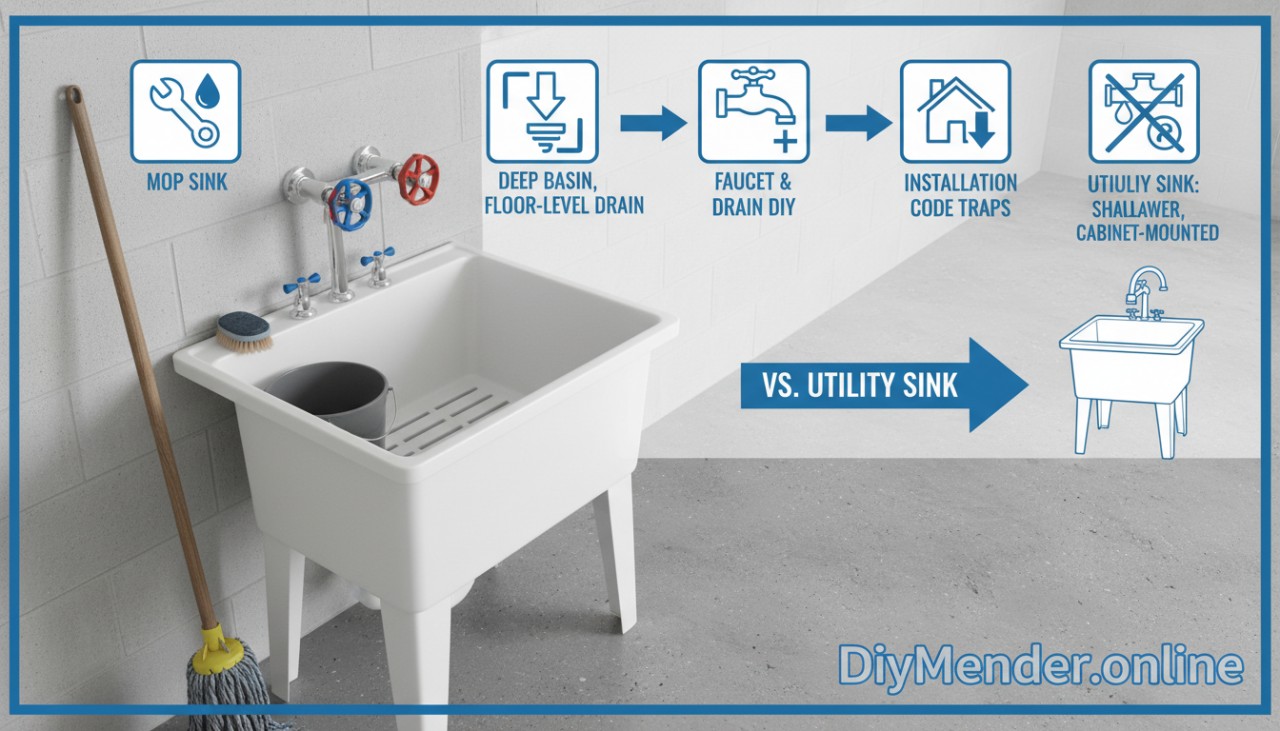
A mop sink—also called a “service sink” in plumbing codes—is a floor-level basin designed for filling mop buckets and dumping dirty water without lifting. If you’re wondering what is a mop sink in a home vs. a shop, it’s the low, step-in basin you see in janitor closets with a wall-mounted faucet above. Unlike a laundry or utility sink, a mop sink lives at floor height, handles slop, grit, and chemicals, and protects the rest of your plumbing from contamination via proper backflow prevention.
Why it works: the low height means you roll or carry a bucket in, dump at knee level, and rinse without straining your back. The basin is deeper and tougher than a typical sink, so gravel, sand, and stringy mop debris don’t immediately chip it or clog the drain. The faucet usually has a vacuum breaker to keep dirty water from siphoning back into your clean water lines.
How a Mop Sink Differs From a Utility Sink
Utility or laundry sinks are waist-height tubs (great for hand-washing, paint trays, or pet baths). A mop sink is floor-mounted and optimized for janitorial tasks. In codes (IPC/UPC), “service sink” is the category that includes mop sinks, and many commercial spaces are required to have one. At home, it’s optional but handy in garages, mudrooms, and basements.
Key differences: a larger, more abuse-resistant basin; floor-level access; and fixtures designed to prevent cross-contamination. Many mop sinks also accept chemical dispensers and hose attachments, which is why backflow protection is critical.
Materials, Sizes, and Faucet Choices
Common basin materials include terrazzo/molded stone (durable, heavy), polypropylene or fiberglass (light, chemical resistant), and stainless steel (sanitary, pricier). Typical inside dimensions are around 24×24 inches with 10–12 inches of depth, but compact units exist. Choose raised edges or splash guards if you’ll be hosing down muddy gear.
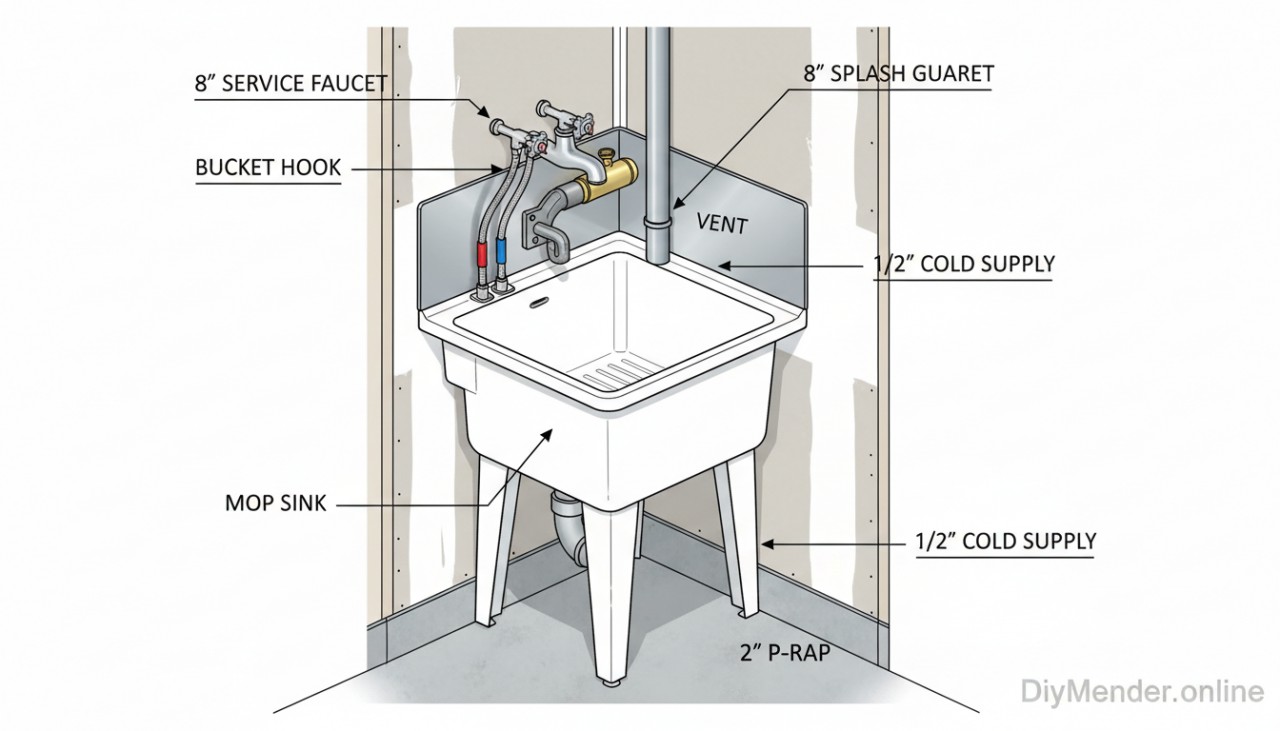
For faucets, a wall-mounted service sink faucet with an atmospheric vacuum breaker (AVB) or integral backflow preventer is standard. Many have a bucket hook and a garden-hose thread spout. If you’ll mix hot and cold, consider a thermostatic mixing valve so you don’t blast 140°F water (scald risk, and some plastics warp).
Where a Mop Sink Makes Sense
I install them where mess happens: garages (car detailing, muddy tools), mudrooms (sports gear, boots), basements (paint and drywall cleanup), or a dedicated utility closet. If mobility or lifting is a concern, a floor-level service sink beats hefting heavy buckets into a deep tub. In small homes, a deep utility sink might be more versatile—but for heavy slop, the mop sink wins.
Installation Basics and Why They Matter
Drain size and trap: a 2-inch P-trap and drain are typical. Bigger drains tolerate mop strings, sand, and lint better. The trap must be vented per code to keep it from siphoning dry—when traps dry, sewer gas enters the room. If your sink is rarely used, add a trap primer or pour a tablespoon of mineral oil after use to slow evaporation.
Backflow protection: never feed a chemical dispenser or hose from an unprotected faucet. Use a faucet with an AVB or ASSE-rated vacuum breaker. This prevents dirty water from being sucked back into your household water during a pressure drop.
Structure and splash: mount the faucet into solid backing (plywood behind drywall) because folks lean buckets on it. Line the wall with FRP panels or tile to resist splash and disinfectants.
On-slab vs. basement: cutting a slab to run a 2-inch drain to an existing line takes planning. Keep 1/4 inch per foot slope, avoid flat runs, and add a cleanout. In a basement with exposed plumbing, tying into an existing 2- or 3-inch line is easier, but you still need a vent connection. When in doubt, get a plumber to confirm vent distances and tie-in points.
Common Mistakes I See (And Why They Bite You)
- Using a standard hose bibb without a vacuum breaker: risk of contaminating your potable water, especially with chemical dispensers.
- Undersized drain (1-1/2 inch): clogs faster with mop lint and grit.
- No vent or improper venting: gurgling, slow drainage, and sewer odors.
- Too shallow or tiny basin: constant splash-over and knee strain.
- Unprotected walls: disinfectants and hot water destroy drywall paper and paint; mold follows.
- Unheated garage install without freeze plan: traps freeze and crack. Use heat tape, indoor location, or winterize.
- Using it for food-related tasks in commercial settings: violates health codes; a service sink is not for food or utensil washing.
Limits and Edge Cases
If you barely mop or already have a deep laundry sink, a mop sink can be overkill. In tight spaces, a wall-mounted slop sink (raised but rugged) is a compromise. ADA in commercial settings may control height and reach ranges—floor sinks can be tricky for compliance. On slab-on-grade with radiant heat, cutting the floor may be a non-starter; consider a compact mop basin atop a low curb with a short ramp, or use a deep utility sink with a bucket shelf and proper backflow protection.
Infrequent use? Traps dry out. Either install a trap primer or set a reminder to run a quart of water monthly. If odors appear, check the trap seal depth and venting first—air admittance valves (AAVs) can help where allowed, but they don’t prime traps.
Costs and DIY Reality Check
Materials: $200–$900 for the basin, $120–$400 for a proper service faucet, $30–$150 for a mixing valve, plus wall protection. Pro labor ranges widely: $600–$2,500+ depending on slab cutting and vent routing. DIY is feasible if you’re comfortable with drain slope, venting, and secure faucet backing. I DIY most installs except when tying into tricky vents or cutting structural slabs—then I bring in a plumber and sometimes a concrete cutter.
Maintenance That Actually Works
Use a strainer to catch mop strings. Rinse after each use and give it a quick degreaser scrub weekly. Avoid harsh acids on terrazzo; use neutral cleaners. If mineral scale builds on the faucet, descale with diluted vinegar, keeping it off stone surfaces. Verify the vacuum breaker annually—if water dribbles from the breaker vents during backpressure, it may be doing its job, but constant leakage means service or replacement.
Bottom Line
If your cleanup tasks involve heavy slop, grit, or chemicals, a mop sink is the right tool. It’s a floor-mounted, tough basin with the right faucet safeguards to protect your water and your back. Installed with a properly sized, vented drain and real backflow protection, it’s a low-maintenance workhorse. Skimp on those details, and you invite clogs, odors, and contamination—the exact mess you were trying to avoid.