
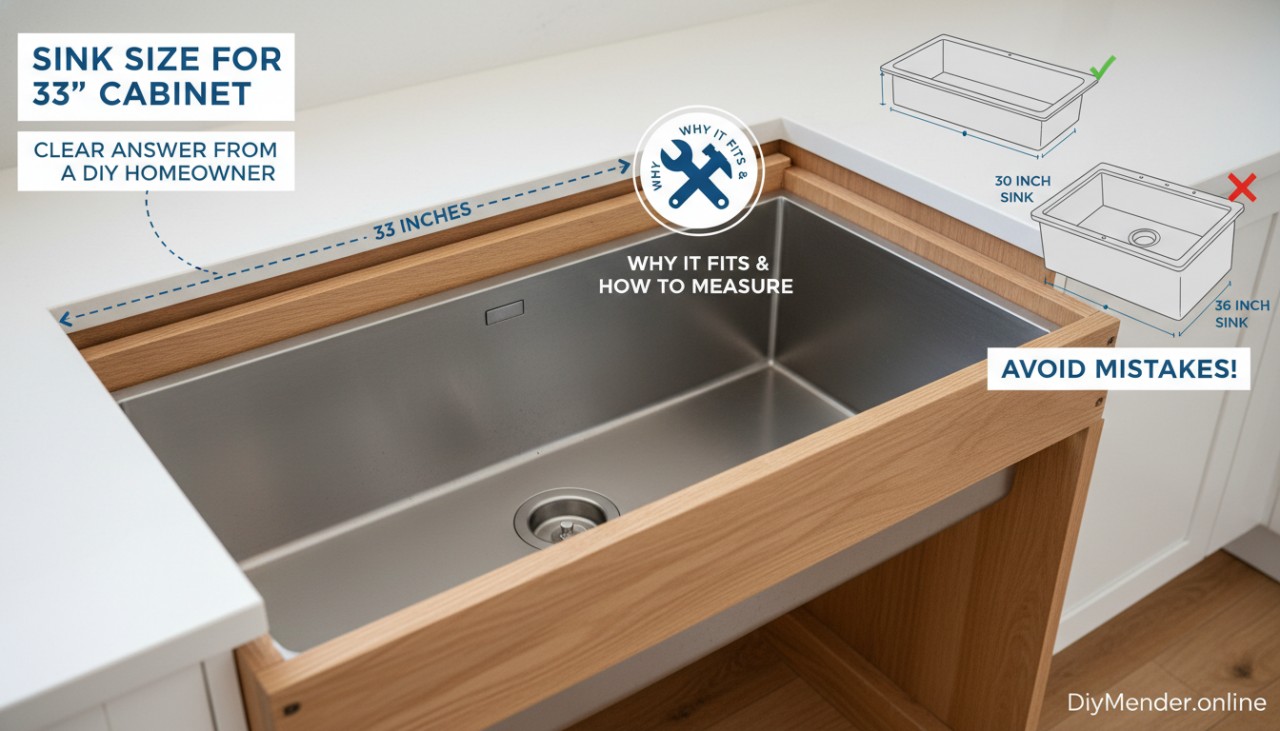
If you’re asking what size sink for 33 inch cabinet, here’s the straight answer: pick a sink whose spec sheet says “minimum cabinet size: 33 in.” In real terms, that usually means an overall sink width of 30–31 inches for undermount or drop-in, and 30 inches for most apron-front (farmhouse) models. Keep the front-to-back (depth) around 18–20 inches so you have room for the faucet and backsplash. That combo fits most 33-inch sink base cabinets without rail surgery or plumbing gymnastics.
Quick-fit recommendations by sink type
Undermount or Drop-in: 30–31 in overall width, 18–20 in front-to-back, 8–10 in bowl depth
Apron-front (Farmhouse): 30 in apron sink, plan on trimming the cabinet’s top rail per manufacturer
Double-bowl in 33-in cabinet: Go compact (e.g., 31 x 18) and expect tight disposal clearance
Workstation sinks: 30–31 in models are fine; verify ledge adds no hidden width beyond spec
Why these sizes actually fit (and when they don’t)
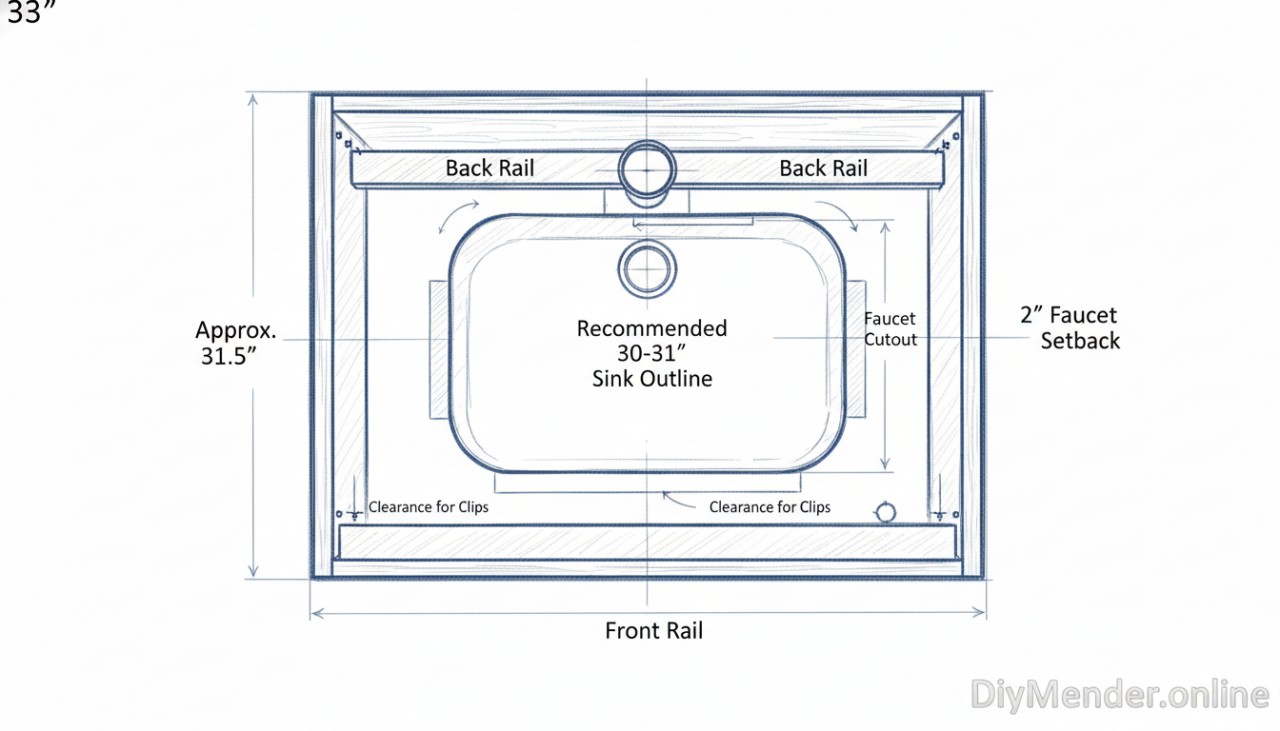
The limiting factor is the cabinet’s inside width at the top rails, not the 33-inch outside dimension. Most U.S. face-frame cabinets are 33 inches wide with 3/4-inch side panels; inside width lands near 31.5 inches. You also need clearance for clips, brackets, sink corners, and the countertop overhang. That’s why 30–31 inches overall width is the sweet spot for undermounts and drop-ins.
Front-to-back, a standard counter is 25 inches deep. You must leave enough stone or laminate behind the cutout for the faucet holes (usually at least 2 inches of solid material), plus a safe margin at the front before the cabinet’s front rail. Sinks around 18–20 inches front-to-back strike the balance: big basin, no conflict with faucet or backsplash.
Apron-front sinks sit forward and often require trimming the cabinet’s top rail. A 30-inch apron sink in a 33-inch base leaves you enough side meat and makes the carpentry manageable.
How to measure your cabinet in 3 minutes
Measure inside width at the top rails (just under the countertop). Write that number down.
Subtract 1 inch for comfortable side clearance and clip/hardware tolerance. That’s your maximum overall sink width.
Measure from the inside of the front rail to the inside of the back rail. Subtract 3–4 inches total to keep 2+ inches behind the cutout for faucet holes and a safety margin at the front. That’s your max sink front-to-back.
Open the doors and confirm the disposal and trap zone. A 10-inch-deep bowl plus a large disposal can crowd the P-trap or hit the back panel in a 33-inch base; 8–9 inches deep is often easier.
Common mistakes I see (and have made)
Buying a 32-inch sink because “the cabinet is 33.” That usually fails; the inside top rails don’t give you enough room for the outside lip or mounting clips.
Ignoring “minimum cabinet size” on the spec sheet. Manufacturers test this; follow it and you’ll avoid return-shipping a 60-lb box.
No plan for faucet clearance. If your backsplash is thick or you choose a faucet with a big handle sweep, you may need more than 2 inches behind the cutout. Dry-fit templates before cutting stone.
Going too deep on the bowl. A 10-inch bowl plus thick countertop and a tall disposal can drop the outlet too low to hit the wall drain without S-traps or pumps. Sometimes 8–9 inches deep is the smarter choice.
farmhouse sink without cabinet mods. Apron-fronts often require trimming the top rail, fitting side brackets, and shimming the base. Plan for carpentry, not just plumbing.
Edge cases and limits
Frameless (European) cabinets: You might squeeze a 31–31.5-inch sink because there’s no face frame reducing the opening. Measure; don’t assume.
Laminate counters: Drop-in makes sense to protect the particleboard core at the cutout. Keep the sink lighter and use butyl rope or high-quality sealant; undersized units are easier to clip.
Workstation ledges: The ledge is inside the bowl, but confirm the “overall” still lands under your max width and F/B numbers.
Double-bowl expectations: In a 33-inch cabinet, two bowls reduce each basin’s width and complicate disposal clearance. If you want a disposal and big pans, a single-bowl 30–31 inch often wins.
Rear-drain vs center-drain: Rear-drain gives better base-cabinet storage and can help with P-trap height in tight setups.
Simple sizing formula you can trust
Max overall sink width ≈ inside cabinet width at top rails − 1 inch. For many 33-inch bases, that yields 30–31 inches. Max front-to-back ≈ inside front-to-back distance − 3 to 4 inches (to keep at least 2 inches behind the cutout for faucet holes and a safety buffer at the front). If the numbers don’t land near 30–31 by 18–20 inches, re-check measurements or choose a smaller model.
Real-world picks I’ve used in 33-inch bases
Undermount single-bowl: 30 x 18 or 31 x 18 (8–9 in deep) — easy fit, great capacity, disposal-friendly.
Drop-in single-bowl: 31 x 19 overall with a modest rim — forgiving install in laminate or remodels.
Apron-front: 30-inch apron with a template-driven rail cut — clean look, no drama.
Bottom line: For a 33-inch cabinet, a sink labeled “minimum cabinet size 33 inches” and measuring roughly 30–31 inches wide by 18–20 inches front-to-back is the proven, low-risk choice. Measure your actual cabinet rails, keep faucet clearance in mind, and you’ll avoid 95% of fit issues.