
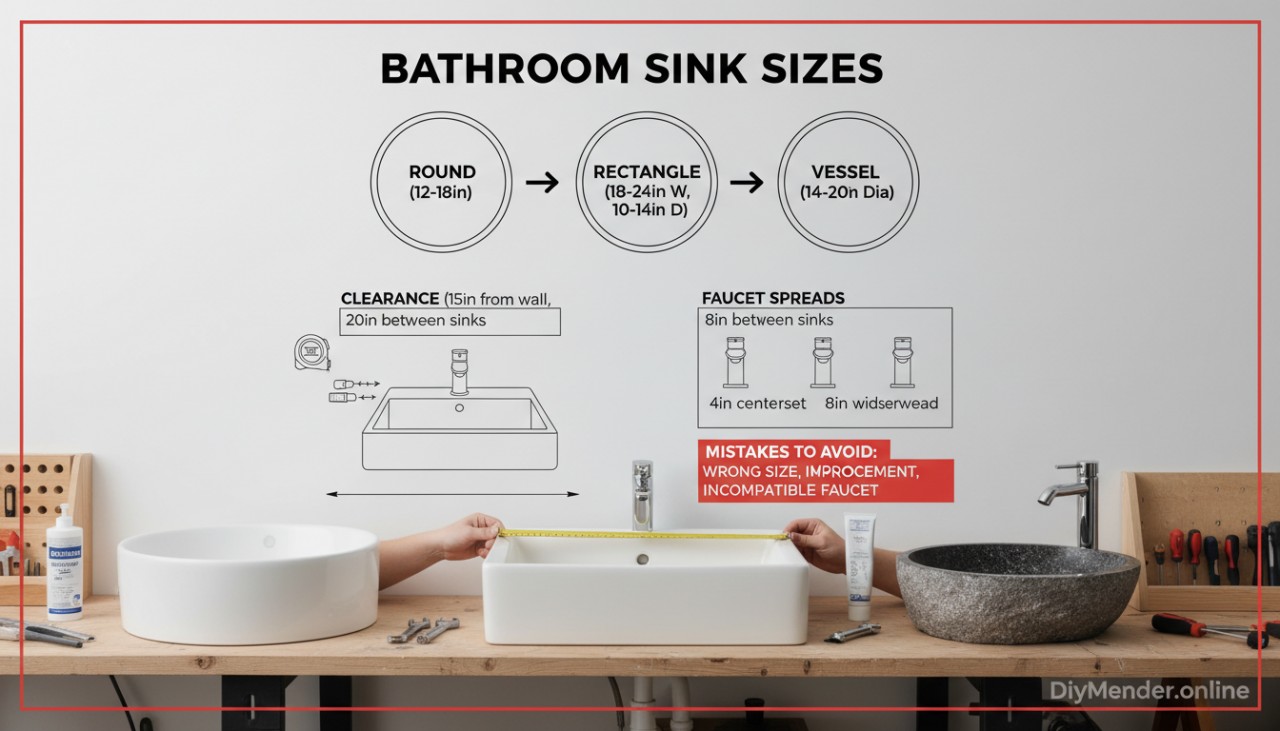
Short answer: most bathroom sinks are 16–20 inches across for round/oval bowls, and 18–24 inches wide by 16–20 inches front-to-back for rectangles. Typical usable bowl depth is 5–8 inches. Vanity tops that pair with them are usually 19–22 inches deep. That’s the quick hit to "how big is a bathroom sink"—but the right size depends on your vanity width, faucet spread, and the space in front of the sink.
Why these numbers work: a 16–20 inch round or 18×16 inch rectangle balances wash space with splash control and leaves enough counter around the rim for soap and a faucet without crowding your body. Go much shallower front-to-back and the faucet ends up too close to the edge (splash city); go much deeper and you lose floor clearance and bump the vanity in tight bathrooms.
Here’s how I size sinks on real jobs before buying anything: match the sink to the vanity and room clearances first, then choose shape and style. A sink isn’t just the outer dimension—you must check the inner bowl size, faucet hole spacing, and the trap path under the counter.
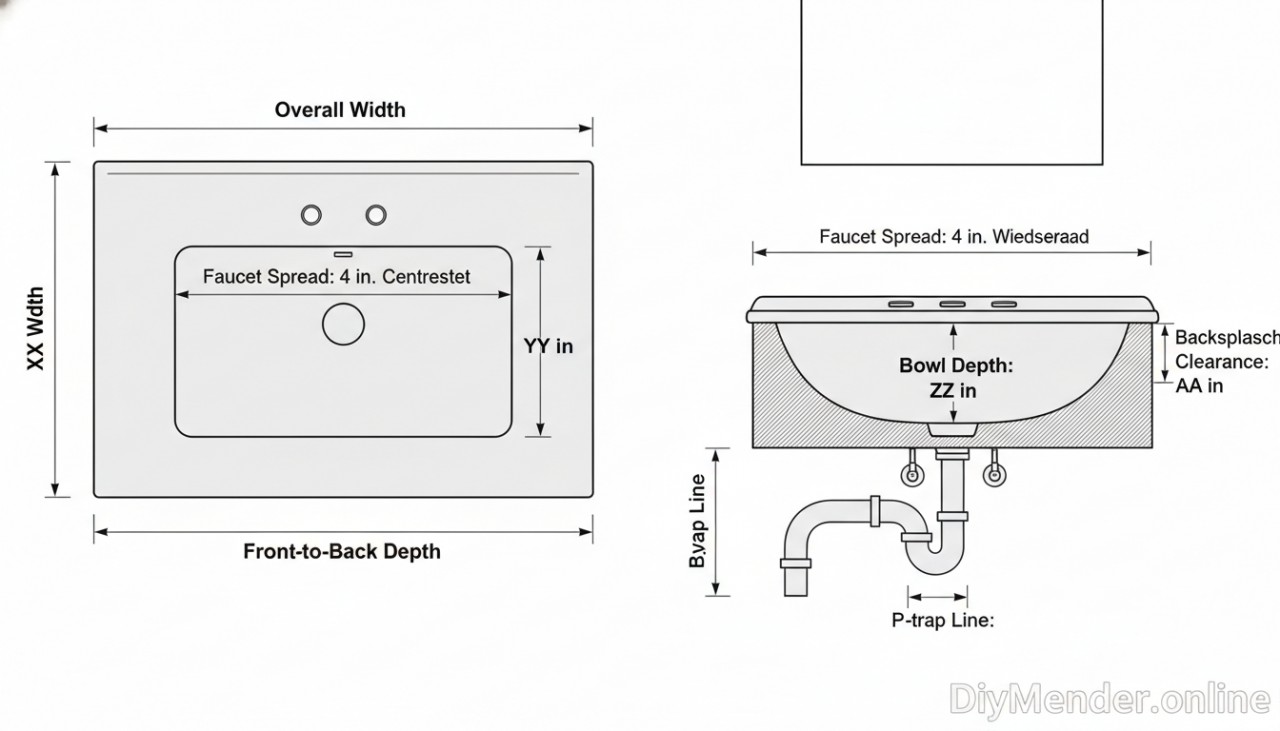
Common Sizes by Type (what actually fits)
Round/oval drop-in or undermount: 16–20 inch diameter. 18 inch is the sweet spot for most 24–36 inch vanities. Inner bowl usually ~14–16 inches.
Rectangular undermount: 18–24 inches wide by 14–20 inches front-to-back. The everyday classic is ~19×16 inches. That size centers well on a 24–36 inch vanity and keeps the faucet comfortably back from the front edge.
Vessel bowls: 14–18 inches diameter (round) or 16–20 inches wide (rectangle), with 4–6 inch bowl height. You’ll want a lower vanity (around 32 inches finished height) or a shorter faucet so the rim doesn’t end up chin-high.
Pedestal and wall-hung sinks: 18–24 inches wide by 15–20 inches deep. Pedestals often have shallower bowls (5–6 inches) to keep them visually light. These excel in small powder rooms where a vanity would feel bulky.
Console sinks: 24–36 inches wide, 18–22 inches deep. Airy look, more counter than a pedestal, but they demand space and sturdy wall blocking.
Faucet Spreads and Why They Matter
Centerset/4-inch spread: compact, great for sinks under 20 inches wide. Single-hole faucets also work well on small bowls and reduce splash by keeping the spout centered.
Widespread/8-inch spread: looks upscale but needs a wider deck or generous rim. If your sink is under ~19 inches wide, 8-inch spreads can push handles too close to the edge or into the backsplash.
Why sizing fails here: people buy a sink they love, then discover the faucet handles hit the backsplash or the spout doesn’t reach far enough. Aim for a spout reach landing 1.5–2 inches behind the drain center, typically a 4.5–6 inch reach for standard bowls.
Clearances You Can’t Ignore
Backsplash to faucet: leave 2–2.5 inches from the backsplash to the faucet centerline so handles can swing and you can clean behind.
Front clearance: standing room in front of the sink should be at least 21 inches (24 inches feels comfortable). In tiny powder rooms, I sometimes use a 15–16 inch deep sink to preserve walking space.
Side clearance: centerline of sink 15 inches minimum from a side wall (20 inches is nicer) so you don’t bang elbows.
Vanity and Countertop Pairing
24 inch vanity: sink around 16–18 inches (round) or ~17–19×14–16 inches (rectangular) keeps room for soap and faucet without crowding drawers.
30–36 inch vanity: 18–21×15–18 inch sinks are ideal; two sinks are possible at 60 inches (48 inches only works if both bowls are small and you accept tight spacing).
Countertop depth: 19–22 inches is normal. Match a sink with 16–18 inch front-to-back so the faucet lands comfortably and you keep a small rim in front.
Mounting Types and Hidden Gotchas
Undermount: clean look and better counter space. The cutout is typically 0.5–1 inch smaller than the sink lip shape. Watch cabinet rails and drawers; many bowls are deeper at the back and can collide with top drawers.
Drop-in (self-rimming): easiest DIY install; the rim adds ~0.5–1 inch all around. Good for laminate tops. The downside is a bit less counter space and a raised edge to clean.
Vessel: statement piece, but adds height. Use a shorter faucet or deck-mounted spout with proper reach. Check splash—flat-bottom vessels splash more unless paired with a gentle-flow faucet and aerator.
ADA and Family-Friendly Notes
ADA lavatories cap the rim at 34 inches high, with 27 inches high knee clearance for 8 inches depth minimum at the front and 19 inches deep knee space. Shallow bowls (5–6 inches) help preserve knee room under wall-hung sinks.
For kids, shallow bowls splash more. I prefer 5.5–6.5 inch bowl depth with an aerated faucet to keep water in the basin.
Edge Cases I’ve Run Into
Tiny powder rooms: a 10–12 inch deep corner sink or 14 inch deep wall-mount keeps the door swing clear. Expect trade-offs: smaller bowl, careful faucet selection, maybe a single-hole mixer.
Thick countertops: on 2 cm stone with a build-up or thick butcher block, check that the drain tailpiece and P-trap still align with your rough-in. A deep undermount plus thick top can drop the drain too low for existing plumbing.
Odd faucet geometry: waterfall spouts look great but splash in shallow or flat-bottom bowls. If you must, choose a deeper, sloped basin and keep the spout aerated or reduced-flow.
Common Mistakes and How to Avoid Them
- Buying by outer width only. Always check inner bowl size and spout reach so water doesn’t hit the back wall or your knuckles.
- Ignoring drawer interference. Print or trace the sink profile and hold it in the cabinet to verify the bowl clears top drawers and rails.
- Forgetting the backsplash gap. Handles that bump the wall are a return waiting to happen; leave 2–2.5 inches behind the faucet centerline.
- Mixing faucet spread with the wrong sink. A small sink with 8 inch widespread looks cramped and splashes more.
- No template test. I tape a cardboard outline on the counter and place the faucet to visualize reach and soap space.
Quick Picking Guide (what I actually buy)
Powder room, 24 inch vanity: 18×13–16 inch rectangle or 16–18 inch round, single-hole or 4 inch centerset.
Main bath, 30–36 inch vanity: 19×16 or 20×15 undermount, 4 inch or 8 inch spread based on backsplash clearance.
Double vanity, 60 inch: two sinks around 17–19×14–16 inches, spaced with at least 12 inches between inner edges.
If you keep those ranges and clearances in mind, you’ll answer "how big is a bathroom sink" the practical way: it’s as big as your room, vanity, faucet reach, and plumbing clearances allow—while still keeping the water in the bowl and your elbows free.