
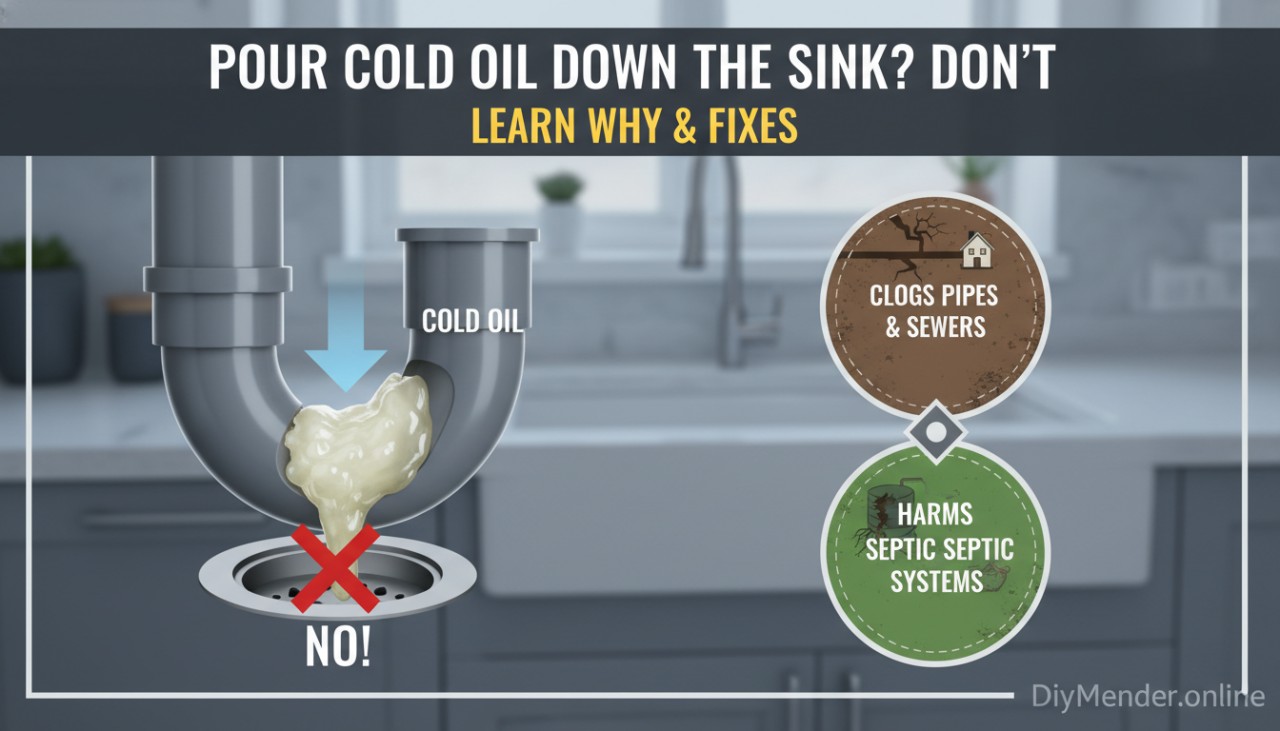
Short answer: No—you should never pour cold oil down the sink. Whether it’s olive oil, fryer oil, bacon grease, or any cooking fat, cold oil is especially problematic because it thickens and sticks to your pipes immediately. Even if it seems to go down, it coats the inside of your P-trap and lateral line, grabs onto food particles, and eventually becomes a clog. Hot water and dish soap only move the problem farther down the line, where it cools and hardens. If you’re wondering can you pour cold oil down the sink “just this once,” the safe, homeowner-tested answer is still no.
Why Cold Oil Wrecks Drains
I’ve seen the inside of plenty of kitchen drains. Here’s what’s happening when cold oil hits your plumbing:
- Viscosity spike: As temperature drops, oil gets thicker. Animal fats actually solidify. Cold oil clings to pipe walls—especially in rough cast iron—and doesn’t flush clean.
- Biofilm + grit = glue: Pipes grow a thin biofilm (a slimy layer). Oil bonds to that film and traps rice, coffee grounds, and eggshell bits into a sticky paste.
- Emulsions don’t last: Dish soap may emulsify oil into tiny droplets, but as the water cools in longer runs (basements, crawlspaces, city laterals), the emulsion breaks and the droplets redeposit as a greasy ring.
- Garbage disposals don’t help: Disposals chop solids; oil remains a liquid/semisolid that re-coats pipes downstream. You’ve just made smaller crumbs for the grease to capture.
Multiply that by an entire building or neighborhood and you get fatbergs—huge grease masses in sewers. In septic systems, oils float, smother beneficial bacteria, and shorten the life of the drain field.
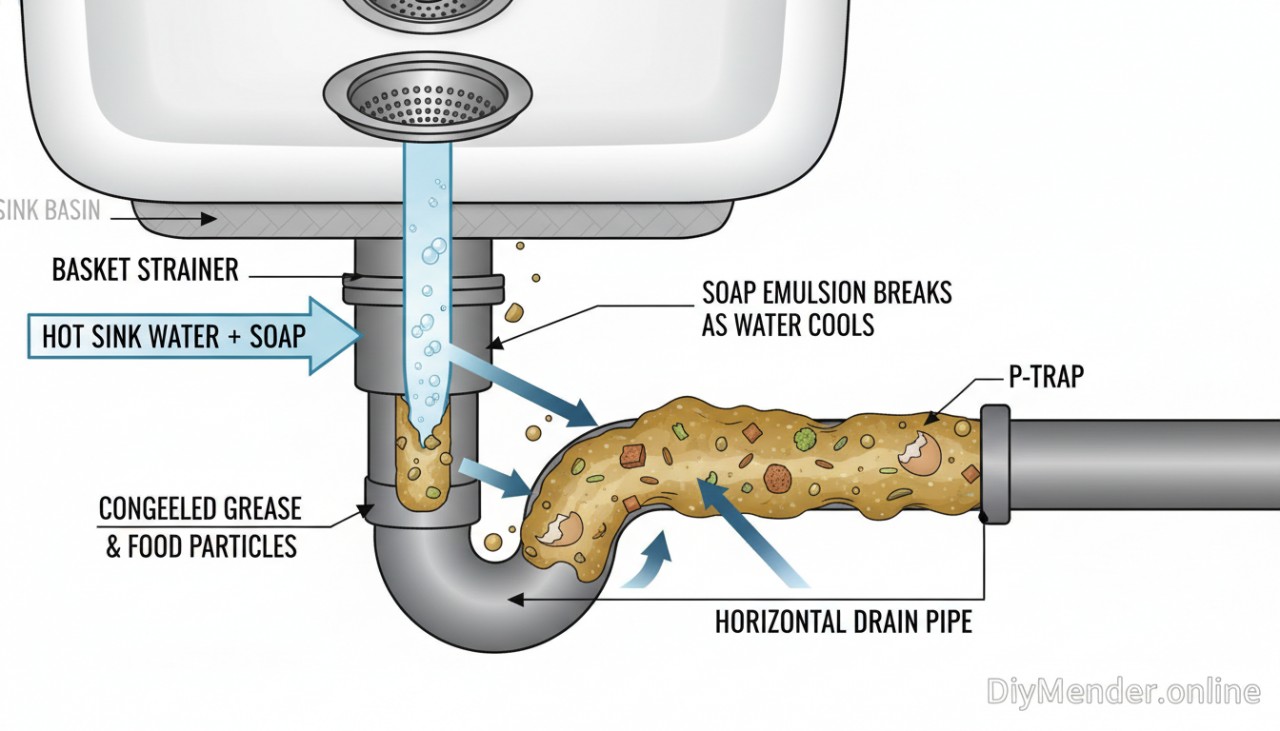 kitchen sink, showing a P-trap and horizontal drain run with layers of congealed grease catching food particles. Arrows illustrate how dish-soap emulsions break as water cools downstream. Include DiyMender.online watermark in bottom-right corner." title="Diagram: cross-section of a kitchen sink, showing a P-trap and horizontal drain run with layers of congealed grease catching food particles. Arrows illustrate how dish-soap emulsions break as water cools downstream. Include DiyMender.online watermark in bottom-right corner." class="overly-article-img">
Myths and Common Mistakes
- “Run hot water and plenty of soap.” Temporary at best. You might clear the trap today, but you’re building a clog in the colder horizontal lines or the building stack.
- “The garbage disposal will take care of it.” It can’t process liquids/fats. You end up with finely ground food adhering to a fresh coat of grease.
- “Vegetable oil is fine; bacon grease is the problem.” Animal fats solidify faster, but all cooking oils stick and build scum. Unsaturated oils still gel when cooled and bind debris.
- “Drain cleaner will melt it.” Most chemical drain cleaners don’t dissolve grease effectively and can be hazardous, especially if they sit behind a blockage or contact aluminum traps.
- “Coffee grounds help scrub the pipe.” Grounds plus oil form an abrasive sludge that wedges into elbows and the P-trap. Bad combo.
Edge Cases and Limits
- Tiny residues after wiping: If you wipe pans with a paper towel or scraper first, the light film left is generally fine to wash. I treat “a teaspoon or less after wiping” as my safe limit for a normal household sink.
- Cold vs. hot oil: Hot oil flows farther before sticking but eventually cools and coats somewhere downstream. Cold oil coats right away. Both are bad to pour.
- Septic systems: Much less forgiving. Oils float in the tank, reduce treatment efficiency, and can migrate to the drain field. Be extra strict—wipe and bin everything oily.
- Commercial kitchens: They use grease traps for a reason. Even at home, a simple sink strainer and diligent wiping drastically reduce risk.
Do This Instead: Practical, Clean Disposal
Here’s the system I use at home that keeps sinks clear and trash neat:
- Cool and strain for reuse: After frying, let oil cool, strain through a metal mesh and a coffee filter, and store in a labeled jar. Most oils handle 2–4 uses if they still smell clean and aren’t dark or smoky.
- Containerize for the trash: For spent oil, pour into a sealed, rigid container (old jug, peanut butter jar). Or solidify with an absorbent like kitty litter, sawdust, or paper towels, then bag and trash.
- Freeze-and-toss: For small amounts, freeze oil in a disposable container, then toss on trash day—no leaks.
- Recycle where available: Many municipalities or household hazardous waste sites accept used cooking oil for recycling into biofuel. Search “cooking oil recycling near me” or check your city’s waste guide.
- Wipe before washing: Scrape pans, then wipe with a paper towel or reusable cloth before they ever see water. Keep a sink strainer in place to catch strays.
If You Already Poured Oil
Don’t panic—act quickly and smartly:
- Small, recent pour: Immediately run a steady stream of hot water with a squirt of a true degreasing dish soap for several minutes to push the film into larger mains where temperatures may be more stable. This is damage control, not a green light to repeat.
- Slow drain now: Shut off water. Place a bucket, remove and clean the P-trap (it’s usually where grease collects first). Wipe the trap and tailpiece with paper towels, then rinse with hot water before reassembly.
- Beyond the trap: Use a plastic drain snake to clear the first several feet. Avoid chemical drain cleaners. If the line still backs up, a pro with a hydro-jetter can strip grease from pipe walls safely.
- Maintenance after an incident: An enzyme-based drain treatment used overnight weekly for a month can help digest residual organics on pipe walls. It’s slow but gentle.
Quick Reference
- Never: Pour cold or hot oil, bacon grease, pan drippings, or oily marinades directly down the sink. Don’t chase with coffee grounds, flour, or rice.
- Okay: After wiping pans thoroughly, wash normally. A light film is acceptable in most municipal systems; for septic, be extra thorough with wiping.
- Best practice: Reuse, recycle, or solidify and trash. Keep a strainer in the sink and a “grease jar” under it.
Bottom line: The physics and plumbing realities don’t care that it’s “just a little.” Can you pour cold oil down the sink? You can—but you’ll eventually pay for it in clogs, smells, or septic trouble. Handle oil like the sticky, persistent material it is, and your drains will stay clear.