
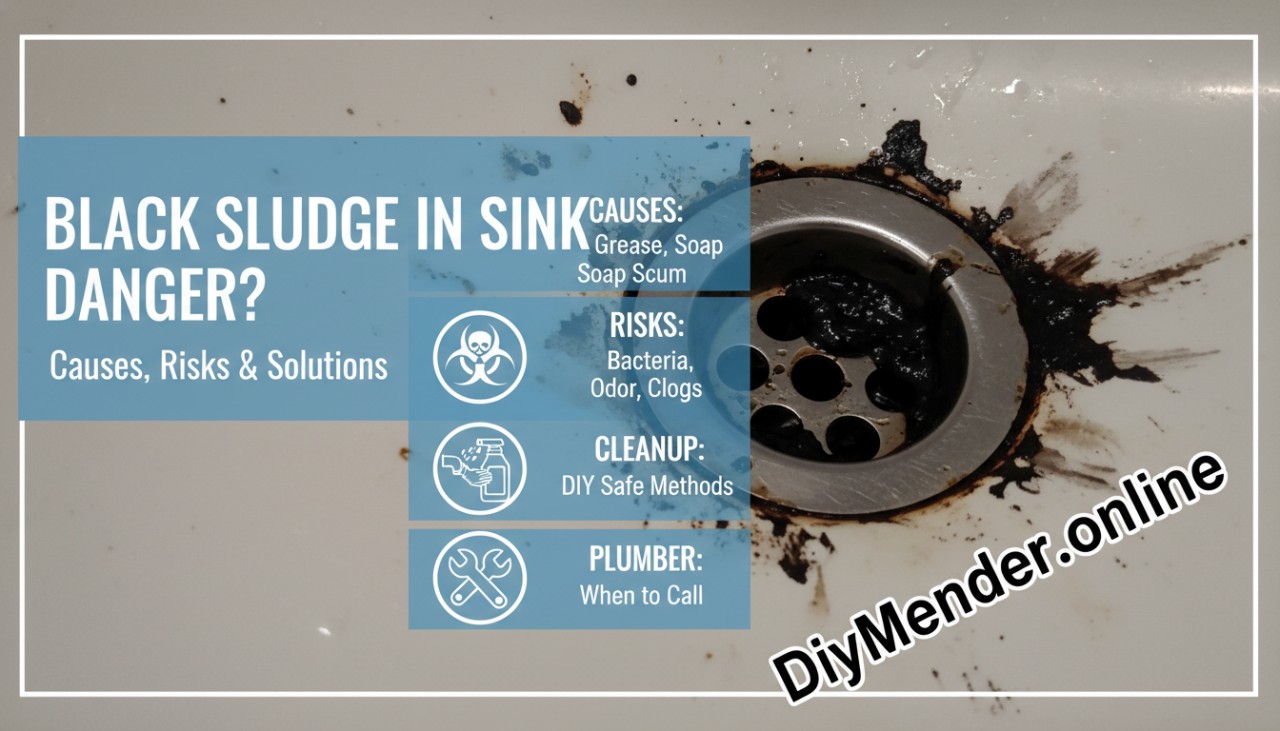
I’ve scraped, scooped, and snaked my share of nasty drains, and I’ll give you the direct answer you’re looking for: is black sludge in sink dangerous? Sometimes, yes—especially if it’s tied to sewage or heavy bacterial growth—but often it’s more gross than hazardous if you handle it correctly. The trick is knowing what you’re looking at and reading the signs around it.
What that black sludge really is
Most of the time, the black stuff is a mix of biofilm (bacteria and fungi), decomposed food grease, soap scum, toothpaste residue, and mineral grit that’s been sitting in a low-flow section of the pipe, usually the P-trap or the tailpiece right below the basket strainer. It turns black as it goes anaerobic—oxygen-starved slime darkens as sulfur compounds develop. If you’ve got a kitchen that sees a lot of oily cooking, or a bathroom sink where toothpaste and shaving cream go down daily, the buildup can get thick fast.
On older galvanized or cast-iron drains, corrosion adds a dark metallic tint. In well water areas, iron or manganese bacteria can also make black or dark-brown sludge, especially if the cold water leaves a blackish film around the drain opening.
When is black sludge in sink dangerous—and when it’s not
There are two categories: nuisance gunk and red-flag sewage conditions.
- Nuisance gunk: Slimy black buildup with a sour drain smell, mostly in one sink, and no backups elsewhere. Usually a local biofilm problem. It’s gross but manageable with careful cleaning.
- Red-flag sewage: Rotten-egg odor (hydrogen sulfide), multiple drains gurgling, water backing up into a lower fixture (like the tub or basement sink), or black water rising from the drain. This can indicate a partial sewer clog or venting problem and needs prompt attention.
Health-wise, biofilm can harbor bacteria and mold that irritate asthma, cause mild GI illness if you transfer it to food, or worsen skin irritation. Sewage contamination ups the stakes: pathogens, methane and hydrogen sulfide gases, and potential cross-contamination to food-prep surfaces. If anyone in the home is immunocompromised, pregnant, or very young/elderly, treat sludge more cautiously and skip DIY if sewage is suspected.
Quick safety checks before you start
- Smell test: A faint musty or sour drain odor points to biofilm. Strong sewer/rotten-egg odor suggests vent or sewer issues.
- Scope of symptoms: Is it just one slow sink, or do the tub and toilet gurgle too? Multiple fixtures misbehaving often means a mainline problem.
- Water behavior: Black water rising from the drain or burping back after flushing a nearby toilet is a warning sign of a downstream blockage.
- Material clues: Oily sheen and dark paste in a kitchen usually means grease; stringy, gelatinous sludge in a bathroom is typical biofilm.
Safe cleanup that actually works
Here’s what I do in real homes to cut the risk and clean effectively without wrecking pipes.
Gear up smart
- Gloves (nitrile) and eye protection. Biofilm splashes are no fun.
- Ventilation: Open a window or run the exhaust fan; you’re stirring up odors and possibly gases.
- Bucket, old toothbrush or nylon bottle brush, plastic scraper, rags, and a small cup.
- A proper enzyme or bacterial drain maintainer for later, and a degreasing dish soap for now.
Disassemble what you can reach
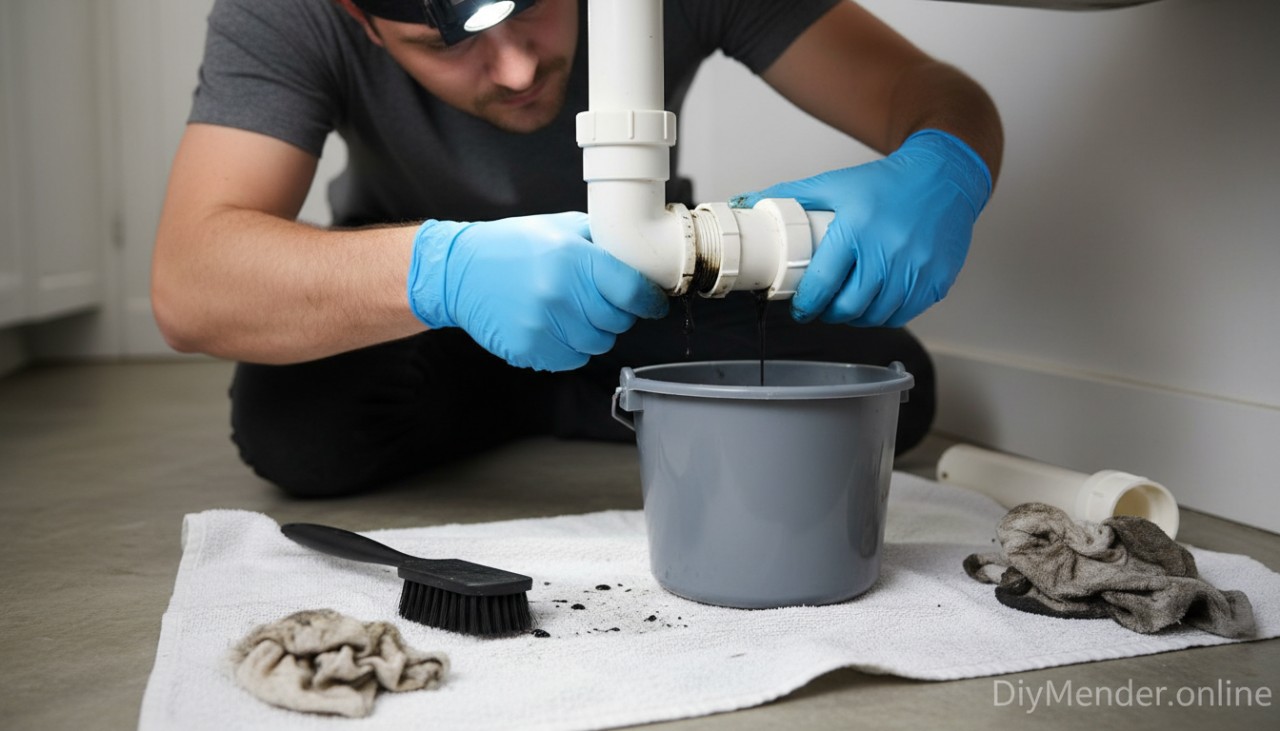
Place a bucket under the P-trap. Loosen the slip nuts by hand or with tongue-and-groove pliers. If they’re stuck, gentle pressure—don’t crush old plastic. Pour the trap contents into the bucket. Scrape and brush the inside of the trap, tailpiece, and the stub into the wall. Rinse parts in a different sink or outside, not back into the same drain you’re fixing.
Inspect the trap washer and slip washers. If they’re cracked or flattened, replace them—they’re cheap and prevent leaks after reassembly.
Degrease, then disinfect—carefully
- Degrease: Hot water and a strong dish soap break up the oily matrix. Soap first or you’ll just smear grease around.
- Disinfect: After degreasing, a diluted disinfectant (like a mild bleach solution, 1 tablespoon per quart of water) can knock back bacteria. Apply, let it sit 5 minutes, then rinse thoroughly.
Never mix bleach with ammonia, vinegar, or acidic cleaners—dangerous gases form. If you earlier used any acid or alkaline drain cleaner, skip bleach altogether and stick to soap and hot water.
Reassemble and leak-check
Reinstall the trap, hand-tighten, then snug 1/4 turn with pliers. Run hot water and check for drips at every joint. If it weeps, loosen, realign, and retighten—over-tightening can warp plastic washers.
Finish with a gentle maintainer
Once daily hot water has run for a few minutes and the disinfectant smell is gone, dose the drain with an enzyme or bacterial maintainer per label, ideally overnight. These eat the thin biofilm you can’t reach, without the pipe damage risk of harsh chemicals.
What not to do (common mistakes)
- Don’t dump caustic drain cleaner into a blocked trap. If it doesn’t clear, you’re now scooping hazardous chemicals by hand.
- Don’t rely on boiling water for plastic (PVC/ABS) traps—it can soften fittings. Use hot, not boiling.
- Don’t ignore recurring sludge. Rebuilds every few weeks point to poor venting, chronic low flow, or grease habits.
- Don’t spray disinfectant everywhere. Focus on the wetted plumbing surfaces and clean up properly—overspray on counters can be a food-safety issue.
Signs you should call a pro
- Multiple fixtures slow or gurgle, or a lower drain backs up when you run water elsewhere. That screams partial mainline clog.
- Persistent sewer odors despite cleaning the trap and tailpiece. You may have a dry or faulty trap, a cracked vent, or a misaligned trap arm.
- Black water returns quickly after cleaning, especially with toilet flush influence. You need a camera inspection or auger of the branch line.
- Older metal drains flaking inside. That corrosion can collapse; replacement is safer than repeated cleanings.
- Anyone in the home has elevated health risks. Let a plumber handle removal and sanitation.
Why this happens in the first place
Biofilm loves slow, nutrient-rich water. Grease, conditioner, toothpaste, and soap scum stick to pipe walls. Short, tepid handwashing runs don’t flush it away. A flat or sagging drain line (a belly) lets sludge settle. Poor venting makes drains gulp air instead of draining smoothly, which leaves residue behind and pulls trap water out.
In kitchens, garbage disposals can help or hurt. They grind food, but if you run them without a strong flow of cold water, the paste sits and stinks. In bathrooms, shaving and product residues make a glue that hair binds to; it blackens as it rots in low oxygen.
Simple habits that keep sludge from returning
- Rinse with purpose: After washing greasy pans, run cold water for 10–15 seconds to congeal and push fats into larger pipes, then a minute of hot water to carry it along.
- Strainers save headaches: A fine-mesh basket in kitchen and a hair catcher in bathroom sinks stop the bulk of sludge fuel.
- Monthly enzyme maintenance: A bedtime dose keeps biofilm thin. Skip on the same night you disinfect.
- Flush the trap: Once a week, run the hottest safe tap water for 2–3 minutes after dishes or showers.
- Grease protocol: Wipe pans with a paper towel into the trash; don’t pour fats down the drain, even “just this once.”
- Check slope and support: If you can see the horizontal drain under a sink, ensure it slopes slightly toward the wall. Sagging lines collect sludge.
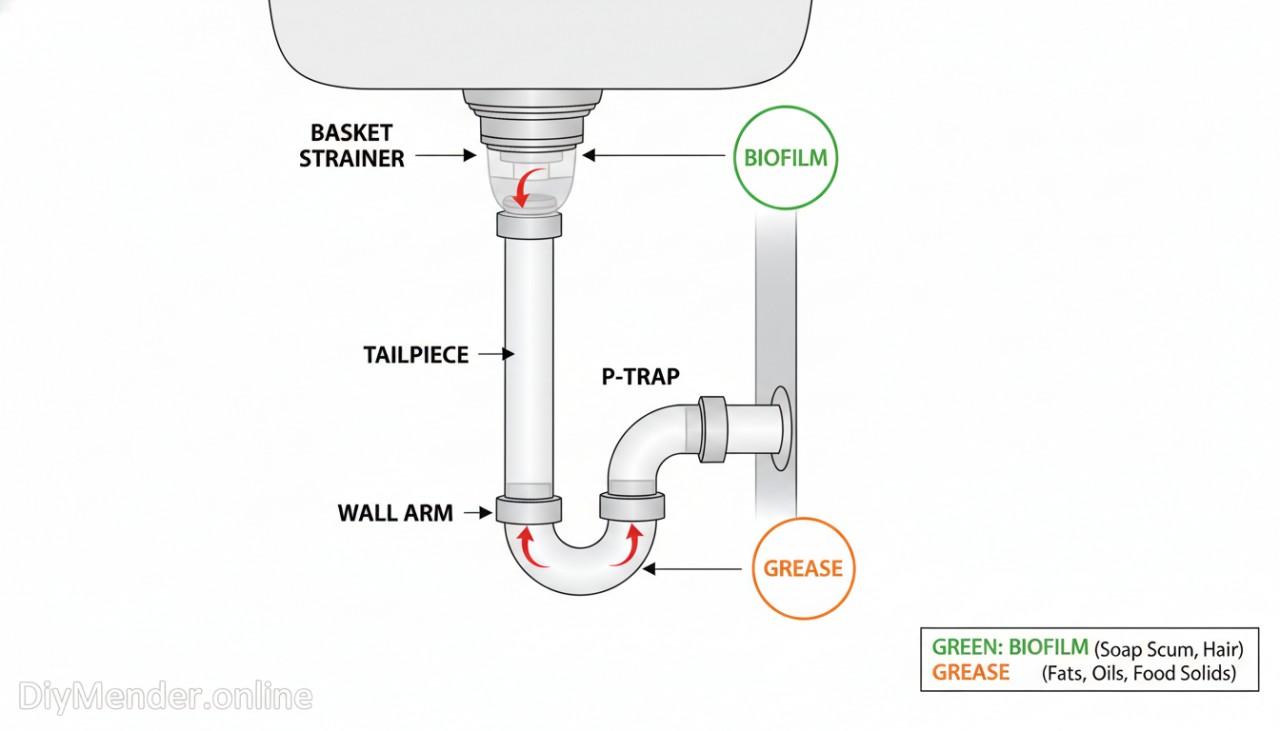 sink drain showing the basket strainer, tailpiece, P-trap, and wall arm; arrows indicating common sludge buildup points; simple color-coded callouts for biofilm vs grease; clean, readable layout; subtle “DiyMender.online” watermark" title="Labeled diagram of a typical sink drain showing the basket strainer, tailpiece, P-trap, and wall arm; arrows indicating common sludge buildup points; simple color-coded callouts for biofilm vs grease; clean, readable layout; subtle “DiyMender.online” watermark" class="overly-article-img">
Bottom line
Black sludge isn’t automatically a health emergency, but it can be more than a cosmetic problem. If it’s isolated to one sink with a mild odor, a careful trap cleanout and enzyme maintenance usually resolves it. If there’s a strong sewer smell, multiple slow drains, or black water backing up, that’s a safety issue—get the line cleared and inspected. Treat it with respect, use basic protective gear, and don’t hesitate to bring in a pro when the signs point past simple biofilm.