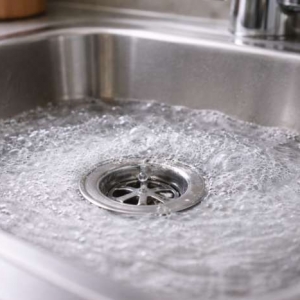
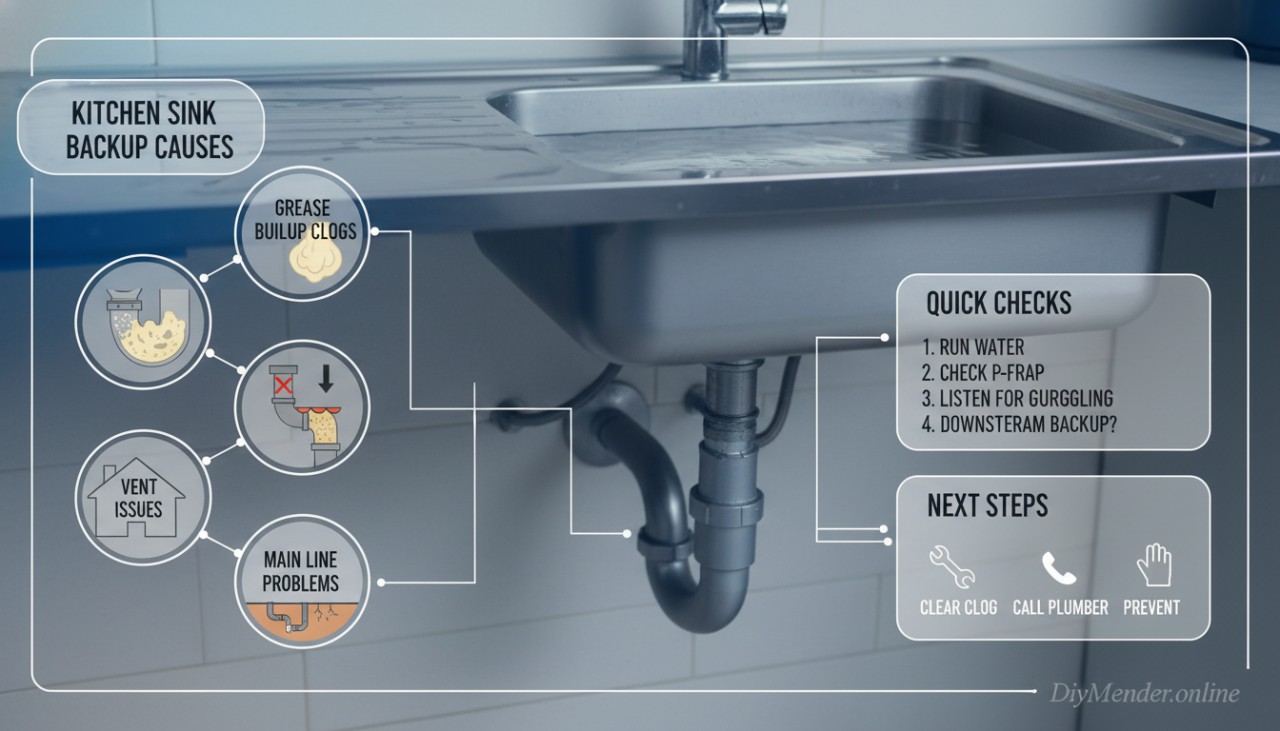
If water is rising in the basin instead of disappearing, you want to know fast what causes kitchen sink to back up. In most homes, it boils down to three things: something blocking the pipe, not enough air moving through the vent, or a problem farther down the drain line that pushes water back toward the sink.
What Causes Kitchen Sink to Back Up: The Real Culprits
Grease and fats cooling in the pipe
Liquid grease seems harmless when hot, but it congeals on the cool pipe walls. Each rinse adds another thin layer until the pipe narrows like a cholesterol-clogged artery. Mix in food particles, and you’ve got a sticky dam.
Starchy or fibrous foods
Potato peels, rice, pasta, celery, and onion skins swell, wrap around bends, and snag on rough spots. A garbage disposal only makes small pieces; it doesn’t make them disappear.
Soap scum and mineral scale
Hard water deposits and soap bind to grease, creating a crust inside the P-trap and horizontal run (trap arm). The trap’s bend is a prime catch point.
Garbage disposal issues
Dull blades and a jammed or overloaded chamber leave a wad of sludge that washes into the trap. A missing dishwasher knockout plug in a new disposal can also block dishwasher discharge and send water back into the sink.
P-trap packed with debris
The U-shaped trap is designed to hold water for sewer gas protection, but it’s also where heavy particles settle. A partially clogged trap gives you a slow drain; a fully clogged trap gives you a full backup.
Venting problems
Plumbing needs air to avoid vacuum lock. A blocked roof vent or a stuck air admittance valve means water can’t move smoothly, causing gurgling and slow or reverse flow.
Improper slope or a “belly” in the line
Horizontal lines should drop about 1/4 inch per foot. Too flat, and solids settle. A sag (belly) holds water permanently, collecting sludge until it clogs.
Main drain or sewer line trouble
If the kitchen and other fixtures back up together, the restriction is likely beyond the branch line—think tree roots, wipes, or years of buildup in the main. When the main is restricted, any water used elsewhere can send waste up into the sink.
How to Read the Clues
Slow drain that gets worse over days
Usually grease or food buildup in the trap or trap arm. It’s progressive, not sudden.
Backs up when the dishwasher runs
Points to a disposal knockout still in place, a clogged disposal inlet, a blocked air gap, or a clogged branch line near the tie-in.
Gurgling sounds after draining
Often a venting issue or a partial blockage causing air to burp through the water seal.
Both sides of a double sink fill
Obstruction is after the two bowls merge—typically the trap, trap arm, or wall bend.
Multiple fixtures slow or backing up
Think main line restriction. If the lowest fixture (often a basement drain or tub) shows problems first, that’s a big red flag.
When the pattern points to a single-basin issue after heavy cooking, suspect grease. If it’s sudden after running the disposal, suspect a jam or a knocked-loose wad stuck at the trap.
Quick Checks That Confirm the Cause
Run the disposal with cold water
If the sound is labored or humming, cut power, clear the jam with the hex key at the bottom, reset the red button, and try again. If the basin still fills, the clog is downstream.
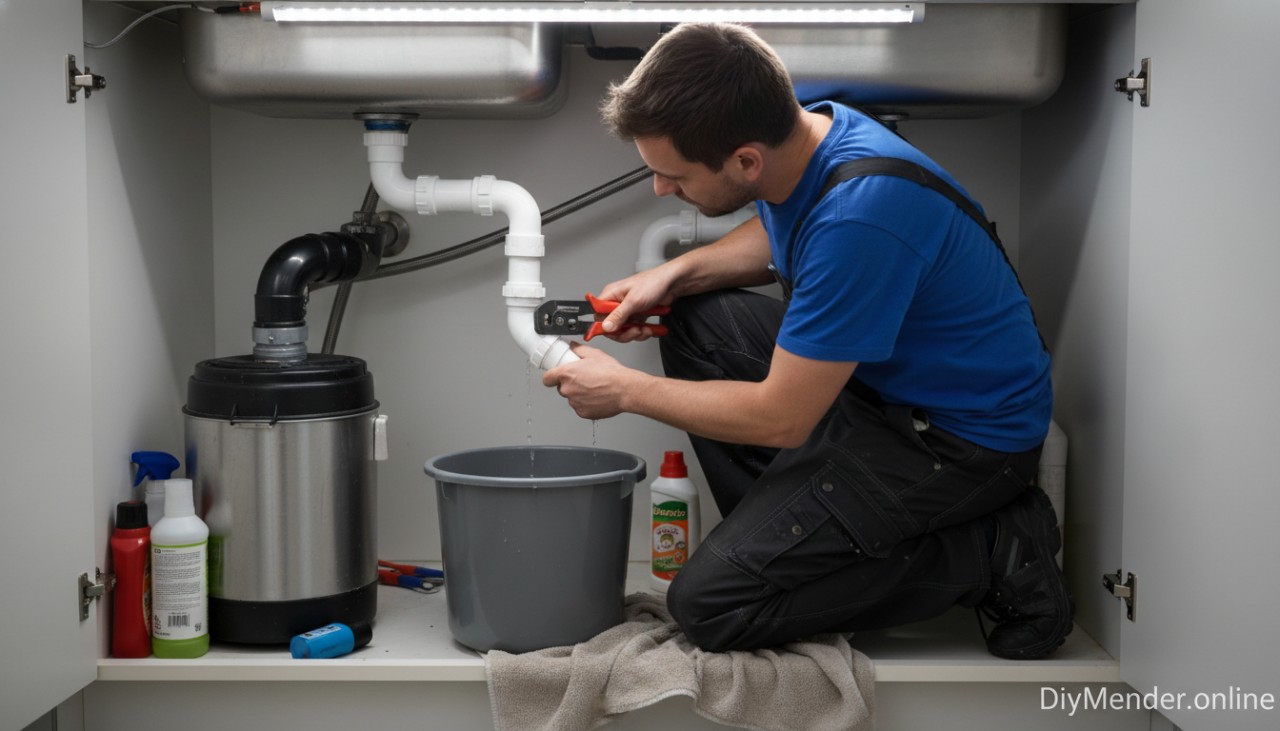
Inspect and clean the P-trap
Place a bucket, loosen the slip nuts, and remove the trap. If packed, clean it and the trap arm. Shine a flashlight into the wall bend; if it’s caked, the clog is deeper.
Check the dishwasher connection
For new disposals, confirm the dishwasher knockout was removed. If an air gap is present on the sink deck, pop the cap and clear debris.
Vent suspicion test
If the drain glugs or speeds up when you slightly loosen a clean-out cap (carefully), you likely have a vent restriction. Roof vents can clog with leaves, nests, or snow.
Why These Failures Create a Backup
Drains rely on a consistent pipe diameter, proper slope, and vented air behind the water. Grease narrows the diameter; solids bridge that narrowing; a bad slope or belly lets sludge settle; and poor venting creates a vacuum. Any one of these reduces flow. Put two together—say, grease plus low slope—and every sink of dishwater becomes a slow-moving plug until the basin fills and reverses.
What Usually Works—And What Often Doesn’t
Hot water and a squirt of dish soap
Helpful for minor grease films but useless against solid-packed traps or starch blobs.
Plunger (cup type) on one side of a double sink
Block the other drain and the overflow routes, then plunge firmly. If the water level drops and stays lower, you’ve loosened something. If it springs back, the clog is stubborn or farther down.
Enzyme cleaners (not harsh chemicals)
Safe for ongoing maintenance, slow for active clogs. They won’t chew through a potato-peel knot tonight.
Handheld drain snake
Effective if you can reach the blockage via the trap arm. If the cable returns greasy and the sink improves, you hit the right area. Meeting a hard stop near the wall may mean a tight bend or a deeper obstruction.
Chemical drain openers
They can generate heat and damage older pipes or finishes and are dangerous if you later disassemble the trap. I avoid them in kitchens.
When DIY Isn’t the Right Move
Recurring backups every few weeks
Likely a bellied line or heavy buildup deeper in the branch that needs power augering.
Sewage smell, gurgling across multiple fixtures, or backups in the lowest drain
These point to a main sewer issue. Call a pro for a camera inspection and a mainline clean-out.
Old galvanized or fragile piping
Aggressive snaking can puncture weak spots. If the trap or arm looks severely corroded, replace rather than force it.
Roof vent access hazards
Clearing a vent from a steep roof is not worth the risk. Use a plumber with proper safety gear.
Prevention That Actually Works
Catch the scraps
Use a sink strainer; scrape plates into the trash, not the disposal.
Grease discipline
Wipe oily pans with a paper towel before washing. Collect cooled grease in a can—don’t pour it down.
Cold water with the disposal
Run a strong cold stream while grinding and for 10–15 seconds after to flush the trap arm.
Periodic maintenance flush
Once a month, run very hot water for a few minutes, then follow with a gentle enzyme cleaner overnight.
Know your clean-outs
Locate the kitchen branch clean-out and the main clean-out now, not during an emergency.
Bottom Line
Backups come from restriction, lack of air, or downstream blockage. Read the clues, check the trap and disposal first, and don’t ignore signs of a main line problem. The sooner you pinpoint the true cause, the less likely you’ll be tearing apart your sink again next month.