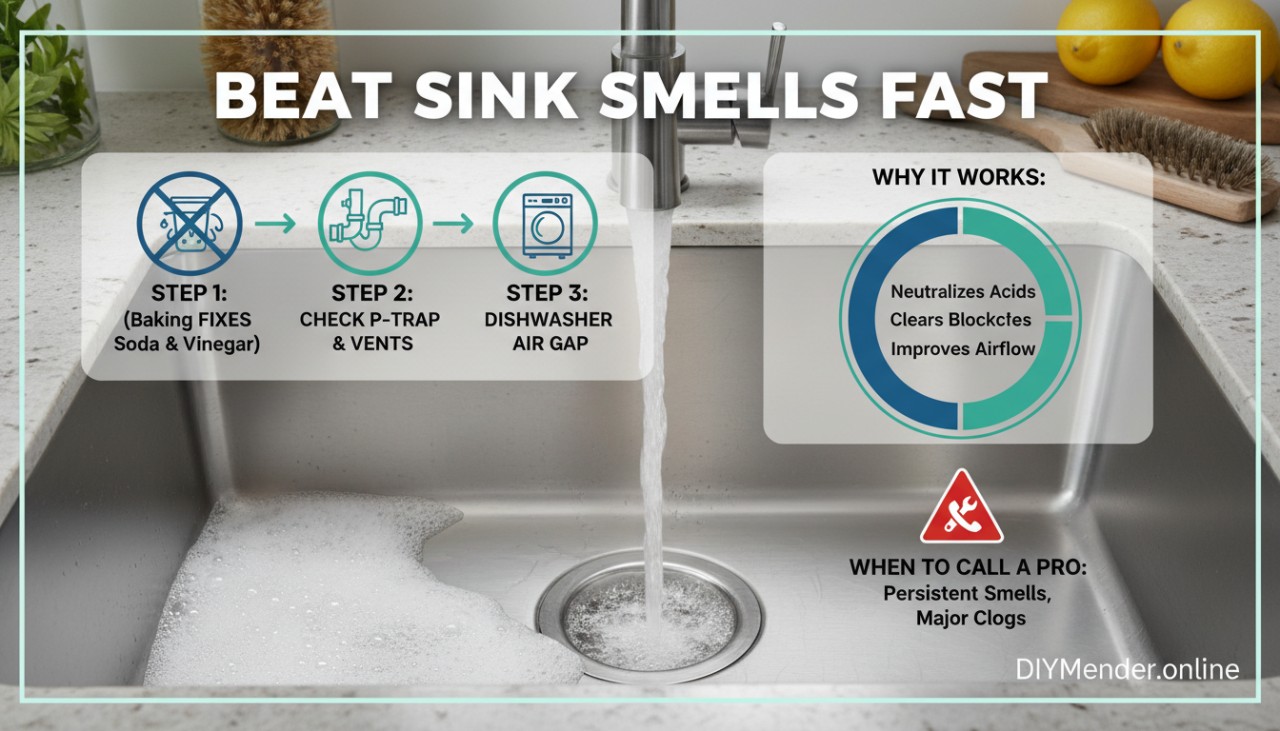
If you need how to get odor out of kitchen sink right now, do this: run very hot tap water for 2 minutes, scrub the underside of the disposal splash guard, grind a tray of ice with 1/4 cup coarse salt, flush, then dose an enzyme drain cleaner overnight. If there’s no disposal, scrub the drain basket and tailpiece with dish soap and a bottle brush, then enzyme-dose. This combo clears food films, fats, and bacteria that cause 90% of sink smells.
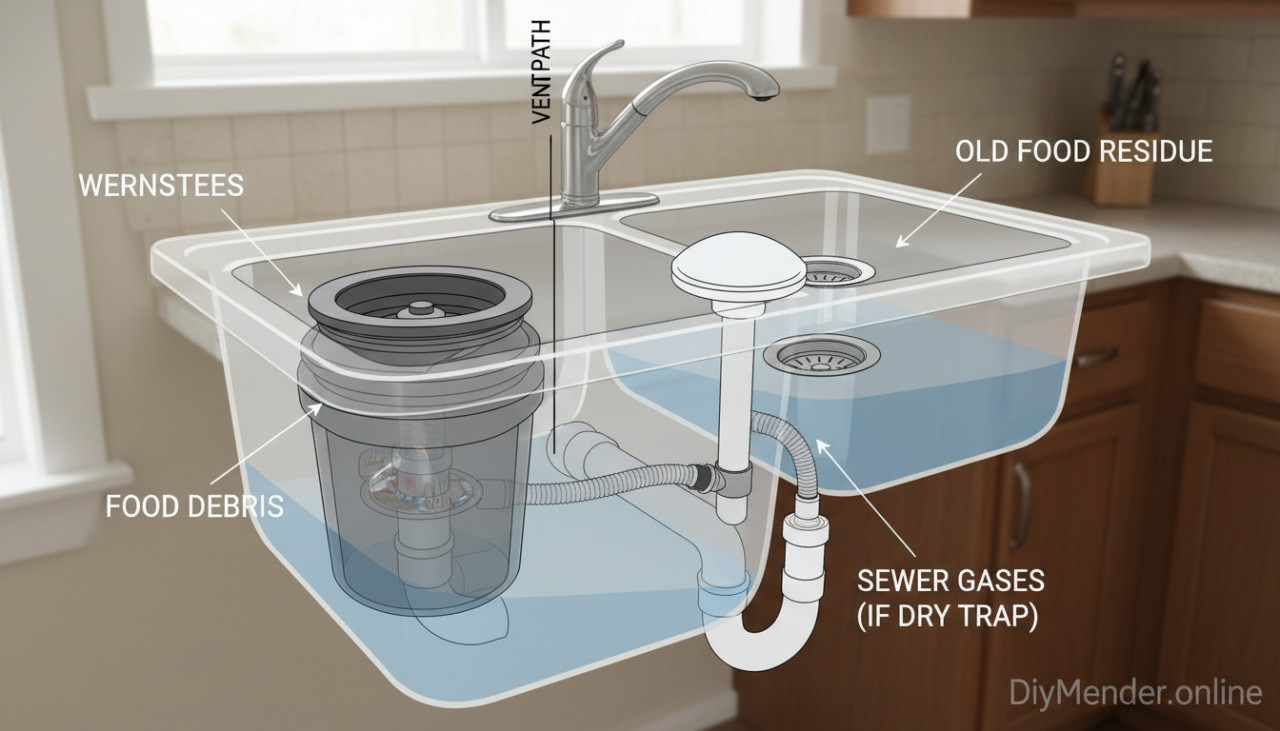
Why this works: heat softens grease, soap lifts it, ice+salt mechanically scours the disposal chamber, and enzymes digest the biofilm coating your pipes. The P-trap’s water seal blocks sewer gas; when that seal’s compromised or the trap is full of sludge, odors bypass it.
Do the 10-minute reset first:
- Flush both bowls with the hottest tap water you can manage (not boiling) for 2 minutes to soften fats.
- Pull up the disposal’s rubber splash guard. Scrub the underside and throat with dish soap and a stiff brush; this ring is a top stink source.
- Grind 2 cups ice + 1/4 cup coarse salt. The ice knocks off buildup; salt adds grit. Rinse with hot water.
- Squeeze a tablespoon of dish soap into the drain; run hot water 60 seconds to push surfactant through the tailpiece.
Then do the thorough fix (30–60 minutes):
- No disposal: Remove the sink strainer (if it lifts) and scrub the underside and the drain tailpiece. If it’s a fixed basket, scrub in place with a bottle brush and hot soapy water.
- Disposal: With power off, use a long brush to scrub the grinding chamber and the discharge port. Rinse hot.
- Dishwasher branch: Pop the air gap cap (if present), clean slime and food bits, and run hot water through it. If there’s no air gap, make sure the dishwasher drain hose has a high loop under the counter.
- Enzyme treatment: At night, pour 4–8 oz of an enzyme/bacterial drain cleaner into the smelly drain. Don’t use hot water for 6–8 hours. Enzymes eat the remaining organic film.
If smell persists, diagnose by odor type:
- Rotten food, sour, or stale dishwater: Biofilm in disposal, splash guard, tailpiece, or dishwasher branch. Repeat the clean, focus on rubber parts and the air gap. Consider replacing a permanently funky splash guard—they’re inexpensive and trap odors when cracked or moldy.
- Rotten egg/sewer gas: The P-trap may be dry, siphoned, or leaking. Run water 15 seconds and sniff again. If odor vanishes after running water then returns later, the trap is losing its seal (venting issue or evaporation). If odor is constant, check for a loose slip nut or cracked trap.
- Musty/earthy: Look inside the cabinet for a slow leak wetting wood or particleboard. Wipe every surface; if your rag smells, fix the leak and dry the cabinet thoroughly.
How to check and clean the P-trap (15–30 minutes):
- Place a bucket under the trap. Loosen the two slip nuts by hand or with pliers. Drain into the bucket.
- Inspect the trap water: black sludge or sour smell confirms biofilm. Scrub trap and tailpiece with a bottle brush and hot soapy water.
- Replace any cracked or hardened washers. Reassemble, hand-tight plus a small tweak with pliers. Restore water and check for leaks.
Why common advice fails (and what actually works):
- Baking soda + vinegar fizz looks satisfying but neutralizes to salt water and CO2. You get some agitation, little degreasing. Use it for odor maintenance at best, not deep cleaning.
- Bleach nukes bacteria but doesn’t remove grease, and mixing it (even residual) with vinegar or ammonia is dangerous. Use either enzymes or oxygen bleach, not both and never mixed.
- Boiling water can deform some PVC seals and certain composite sinks. Use very hot tap water instead of a rolling boil.
- Caustic drain openers (lye) in a disposal can damage components and create a hazardous trap clean-out later. Avoid unless you understand the risks, and never mix with other cleaners.
Edge cases and limits:
- Venting problems: If the sink glugs/gurgles and odors come back quickly, the vent may be blocked or you may have an illegal S-trap that self-siphons. That’s a plumbing correction, not a cleaning issue.
- Infrequently used sinks: Trap water evaporates. Pour a cup of mineral oil into the trap after filling; it slows evaporation.
- Septic systems: Favor enzyme cleaners; go light on bleach and antibacterial soaps that can upset your tank’s biology.
- Old metal traps: Corrosion traps odor and leaks. Replacement with PVC is usually faster than trying to rehab.
Quick smell locator checklist:
- Disposal baffle: Pull and sniff underside—clean or replace.
- Disposal chamber: Brush walls and discharge.
- Basket strainer/tailpiece: Scrub and enzyme-dose.
- Air gap/high loop: Clear slime and ensure proper routing.
- P-trap: Confirm it’s holding water and not full of sludge.
- Cabinet: Check for damp wood, mold, or dead-space odors.
When to call a pro:
- Persistent sewer gas smell despite a verified water-filled trap.
- Recurring gurgling or multiple fixtures smelling at once (likely vent or main line issue).
- Frequent slow drains returning soon after cleaning (hidden grease clog downstream or partial blockage that needs snaking or jetting).
Maintenance so the smell doesn’t return:
- Weekly: Hot water flush and a 30-second disposal run with a few ice cubes.
- Monthly: Deep-clean splash guard and dose enzymes overnight.
- After greasy cooking: Wipe pans with paper towel before washing to keep fats out of the trap.
Bottom line: Most kitchen sink odors come from biofilm and grease on rubber and pipe walls, not just “the drain.” Target the splash guard, disposal chamber, tailpiece, and P-trap with heat, surfactant, mechanical scrubbing, and enzymes. If you smell sewer gas after all that, investigate the trap and venting—cleaners can’t fix a missing water seal.