
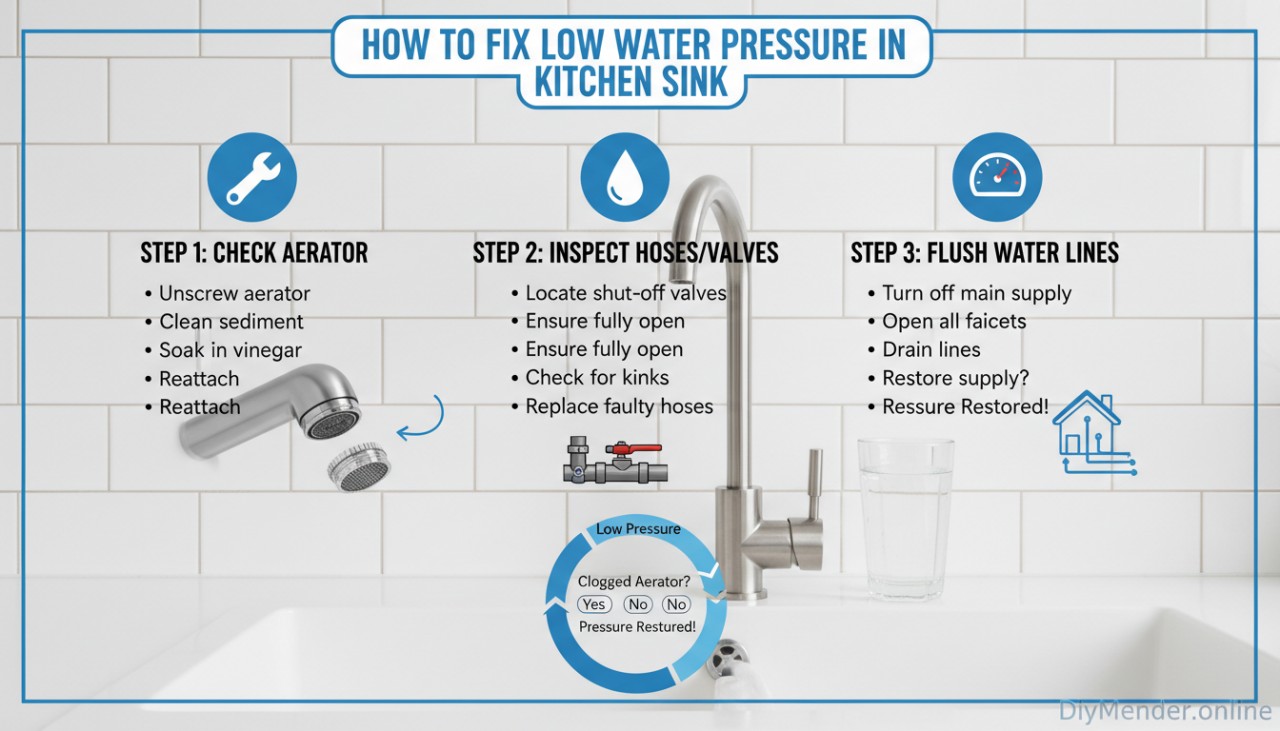
Experiencing low water pressure in your kitchen sink can be frustrating, especially when you're trying to wash dishes or prepare meals. Understanding how to fix low water pressure in kitchen sink is essential for maintaining a functional kitchen. This issue often stems from a variety of factors, including mineral buildup, leaks, or problems with the municipal water supply.
Quick Answer: To fix low water pressure in your kitchen sink, check for clogs in the aerator, inspect the supply lines for leaks or kinks, and ensure that the shut-off valves are fully open.
What It Means
Low water pressure in your kitchen sink means that the flow of water is reduced to below normal levels. This can lead to a slow fill when washing dishes or cooking, and it may also affect other fixtures in your home. Identifying the root cause of this problem allows you to address it effectively.
Why It Happens / Why It Matters
There are several reasons why low water pressure may occur in your kitchen sink:
- Clogged Aerator: The aerator is the mesh screen at the end of the faucet that can become clogged with mineral deposits over time.
- Supply Line Issues: Kinks or leaks in the supply lines can hinder water flow.
- Shut-off Valve Problems: If the valves are partially closed, this can restrict water flow.
- Municipal Supply Issues: Sometimes, the problem may lie with the municipal water supply, especially during peak usage times or maintenance work.
Addressing low water pressure is crucial because it can impact your daily activities. If left unresolved, it can lead to more significant plumbing issues or hinder your ability to complete essential tasks efficiently.
Best Options or What to Do
Fixing low water pressure in your kitchen sink can often be achieved through some simple troubleshooting steps:
1. Check the Aerator
The aerator can accumulate debris and mineral buildup, leading to reduced water flow. To clean it:
- Unscrew the aerator from the faucet.
- Soak it in vinegar for several hours to dissolve mineral deposits.
- Rinse it thoroughly and reinstall it.
2. Inspect the Supply Lines
Examine the supply lines connected to your faucet:
- Ensure there are no kinks or bends that could impede water flow.
- Look for leaks or signs of wear and tear. If you find any, consider replacing the affected section.
3. Check the Shut-off Valves
Make sure the shut-off valves under the sink are fully open:
- Turn the valves counterclockwise to ensure maximum flow.
- Inspect for any corrosion that may affect their functionality.
4. Examine the Faucet
If the previous steps haven’t resolved the issue, the faucet itself may be malfunctioning:
- Consider disassembling the faucet to check for internal clogs or damage.
- Replace any worn-out components as necessary.
How to Choose
If you find that your faucet is outdated or consistently problematic, it may be time to invest in a new one. When selecting a new kitchen faucet, consider:
- Flow Rate: Look for a faucet with a higher flow rate to ensure adequate water pressure.
- Design and Functionality: Choose a design that fits your kitchen style and offers features like pull-down sprayers for added convenience.
When Professional Help Is Needed
If none of the above steps work or if you suspect that the issue may be related to the plumbing system within your walls, it may be time to call a professional plumber. They can conduct a thorough inspection of your plumbing system to identify deeper issues, such as:
- Corroded pipes that need replacement.
- Pressure regulator issues, especially if you live in an area with fluctuating water pressure.
Prevention / Long-term Best Practices
To prevent low water pressure issues in the future, consider the following practices:
- Regularly clean the aerator to prevent buildup.
- Inspect the supply lines periodically for wear and tear.
- Maintain the faucet and plumbing system to ensure everything is in working order.
FAQ Section
What is the normal water pressure for a kitchen sink?
Normal water pressure for residential sinks typically ranges between 40 to 60 psi (pounds per square inch). If your pressure is consistently below this range, it may be worth investigating the cause.
Can I fix low water pressure myself?
Yes, many low water pressure issues can be resolved through simple DIY steps such as cleaning the aerator or inspecting supply lines. However, if you are unsure or if the problem persists, consulting a professional is advisable.
How often should I check my kitchen faucet for clogs?
It's a good practice to check your kitchen faucet and aerator for clogs every few months, especially if you notice changes in water pressure. Regular maintenance can help prevent more significant issues down the line.
Addressing low water pressure in your kitchen sink promptly helps maintain a functional kitchen environment. By understanding the common causes and employing effective solutions, you can ensure a steady water flow for all your culinary needs.