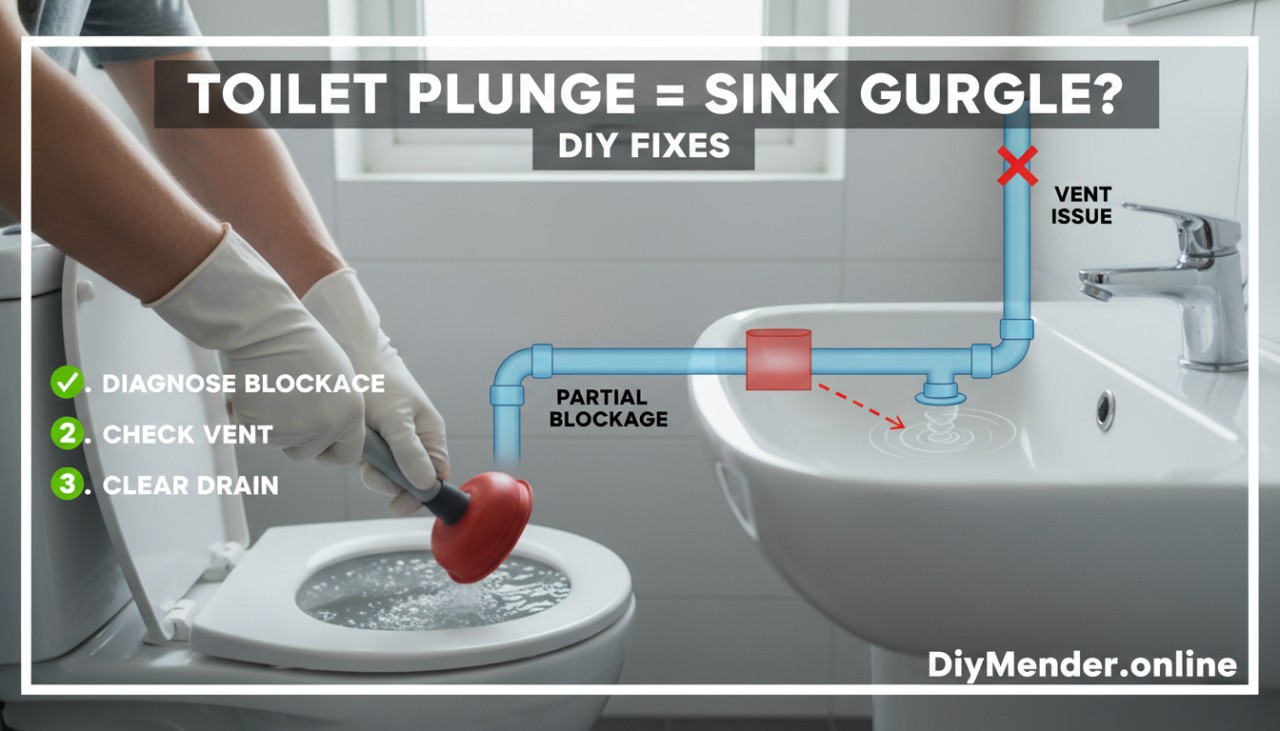
If when i plunge the toilet the sink gurgles, you’re almost certainly dealing with a shared drain or vent problem in the bathroom group. The quick answer: plunging forces water and air into the branch line; if there’s a partial blockage downstream or the vent can’t relieve pressure, air will escape through the sink and gurgle, sometimes pulling water from the P-trap. Fix it by clearing the blockage on the bathroom branch or restoring vent air flow—start with correct plunging, then a closet auger, then snaking from a cleanout, and check the roof vent or AAV. If multiple fixtures are slow or backing up, you may have a main sewer line issue.
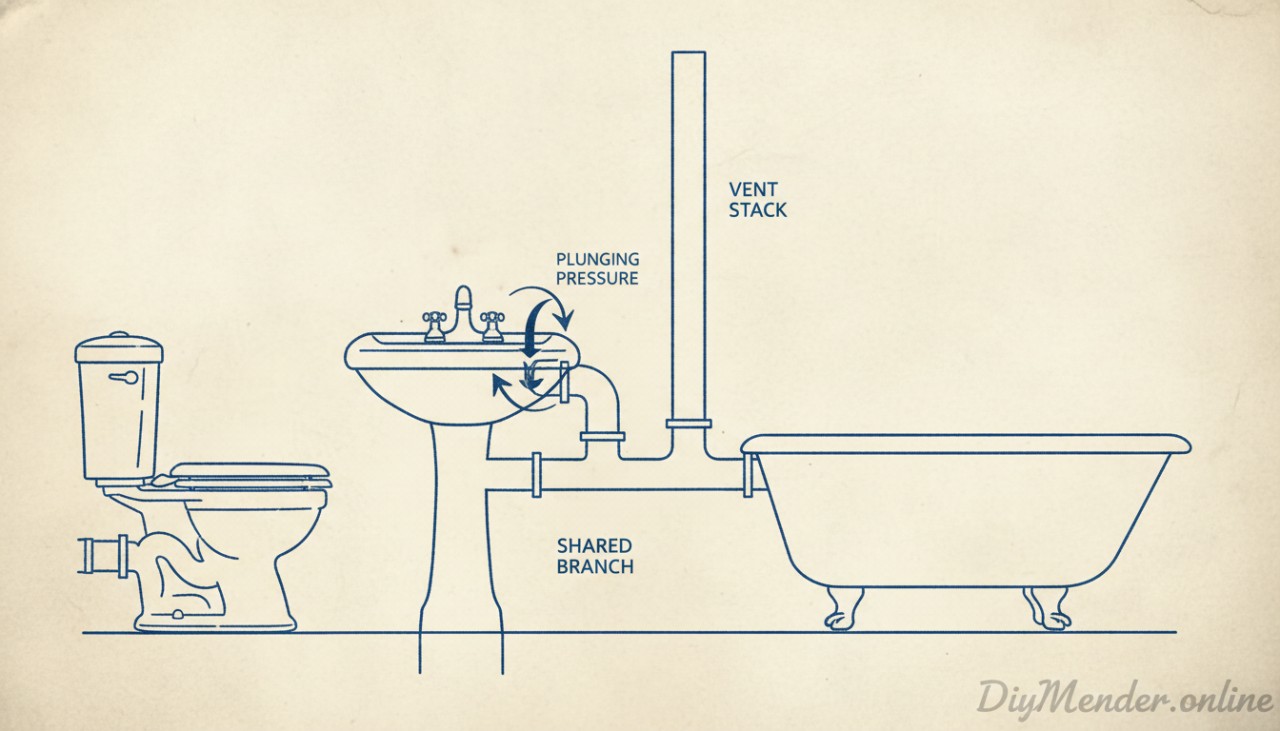
Why this happens: toilets and sinks typically tie into the same 2–3 inch branch that connects to a vertical vent stack. When you plunge, you compress air and push water down the pipe. If the path is restricted, that pressure looks for the nearest open air—often the sink drain—and you hear glug-glug as it burps. If the gurgle is strong and your sink trap level drops, the trap is being siphoned, which means the line or vent isn’t letting air in fast enough.
Think of two main culprits: a partial drain clog in the shared branch (wipes, paper, scale, hair, a toy) or a venting problem (roof vent blocked by leaves/ice, or a stuck AAV under the sink). Gurgling during plunging points more often to a downstream restriction than a pure vent issue, but both can stack up to the same symptom.
Try these quick tests in 5 minutes to narrow it down:
- Run the sink for 30–60 seconds, then plunge the toilet. Strong gurgle = pressure can’t pass the branch freely.
- Fill the sink half-full, cover the overflow with a wet rag, and plunge the sink drain firmly. If the toilet burps or the sink starts draining faster afterward, you cleared a branch clog near the sink tie-in.
- Flush and watch the tub or shower drain. If it bubbles or backs up, the restriction is downstream of the bathroom group.
- Check for an air admittance valve (AAV) under the sink. If it’s present and the gurgle is constant, the AAV may be stuck; lightly tapping or replacing it can cure vent starvation.
How I fix it step by step (least invasive to more involved):
- Use the right plunger. A flange plunger seals the toilet outlet; a cup plunger is for sinks. Seat it deep, fully submerge the cup, and use controlled strokes—10 to 15 pumps. Too much force can blow out the wax ring at the toilet base.
- Seal the sink overflow if plunging the sink. Without sealing, you’re just moving air, not the clog. A wet rag or duct tape works.
- Closet auger next. A 3–6 ft closet auger will catch rags, wipes, or toys lodged in the toilet’s trapway or right below it. Feed gently to avoid scratching porcelain. If you retrieve something or the auger passes and the flush improves, retest for gurgle.
- Snake the bathroom branch. If you have a 2-inch cleanout on the bathroom stack or under the sink, run a 3/8–1/2 inch cable 10–25 ft with a small cutter head. You’re aiming to clear sludge, hair mats, paper, or cast-iron scale where the sink and toilet meet.
- Check the vent. From the roof, look down the vent with a flashlight. Clear leaves, nests, or ice. Run a garden hose gently into the vent for a minute—you want a trickle, not full blast—to confirm flow. If water backs up, the vent’s blocked. In cold climates, frost-capped vents are common; pouring warm (not boiling) water can help.
- For AAV systems (no roof vent at that sink), replace a suspect AAV. They’re cheap and often fail silently. A stuck AAV starves the line of air and causes gurgling and siphon.
- If the whole house is slow or the lowest drain backs up, open the main cleanout outside or in the basement. If sewage is standing there, you’ve got a main line blockage—roots, wipes, grease, or a sagging pipe. Jetting or a pro-grade cable with camera is the next move.
- On septic, check tank level if accessible. A full or failing septic tank will mimic a main line clog and make every plunge gurgle elsewhere.
Why these steps work: you’re restoring a balanced system. Drains need water to move waste and a vent to supply air so traps don’t siphon. Clearing the branch or vent removes the pressure imbalance that makes the sink gurgle when the toilet is plunged.
Mistakes I see (and learned the hard way):
- Using a cup plunger on the toilet or plunging with the bowl half-empty—no seal, no force on the clog.
- Hammering the plunger like a jackhammer. You can blow the wax ring and cause a hidden leak under the toilet flange.
- Skipping the sink overflow seal. It’s like plunging with a hole in the cup.
- Pouring chemical drain openers. They rarely fix wipes or solid obstructions and can make snaking hazardous.
- Snaking aggressively through a P-trap. You can crack older traps or push a clog deeper into a tighter bend.
- Blasting a hose full-bore into the roof vent. It can flood ceilings if the vent is capped below.
Edge cases and limits to watch:
- Back-to-back bathrooms with a double sanitary tee can cross-burp; the clog may be between them.
- Cast iron lines with heavy scale create chronic partial blockages—jetting and descaling may be needed.
- Low-flow toilets plus wipes equal repeat clogs; switching paper habits and an occasional enzyme cleaner can help, but wipes must go to the trash.
- Macerating toilets or pumps (Saniflo) need their own clearing procedure—don’t snake blindly; open the unit per manual.
- Cold climates: frozen vents cause wild gurgles after long showers. Insulating the stack in the attic and keeping the vent size up through the roof helps.
When to call a pro:
- Any sewage backing up into tubs, showers, or floor drains.
- Recurring gurgling after you’ve augered and checked vents.
- Roots suspected, or if your cable keeps hitting a hard stop 20–40 ft out.
- You need a camera inspection to spot a belly, break, or bad fitting.
Typical costs vary by region, but expect $150–$350 for a basic auger job, $300–$700 for camera diagnostics, and $400–$900 for hydro-jetting a main (more if access is difficult). Money well spent if the alternative is wastewater in your tub.
Quick recap: if when i plunge the toilet the sink gurgles, you’re pushing air against a blockage or a starved vent in the shared bathroom branch. Start with correct plunging, then a closet auger, then snake the branch or main, and verify the vent (roof or AAV). If multiple fixtures act up or you find standing sewage at the cleanout, treat it like a main line issue and bring in a pro.