
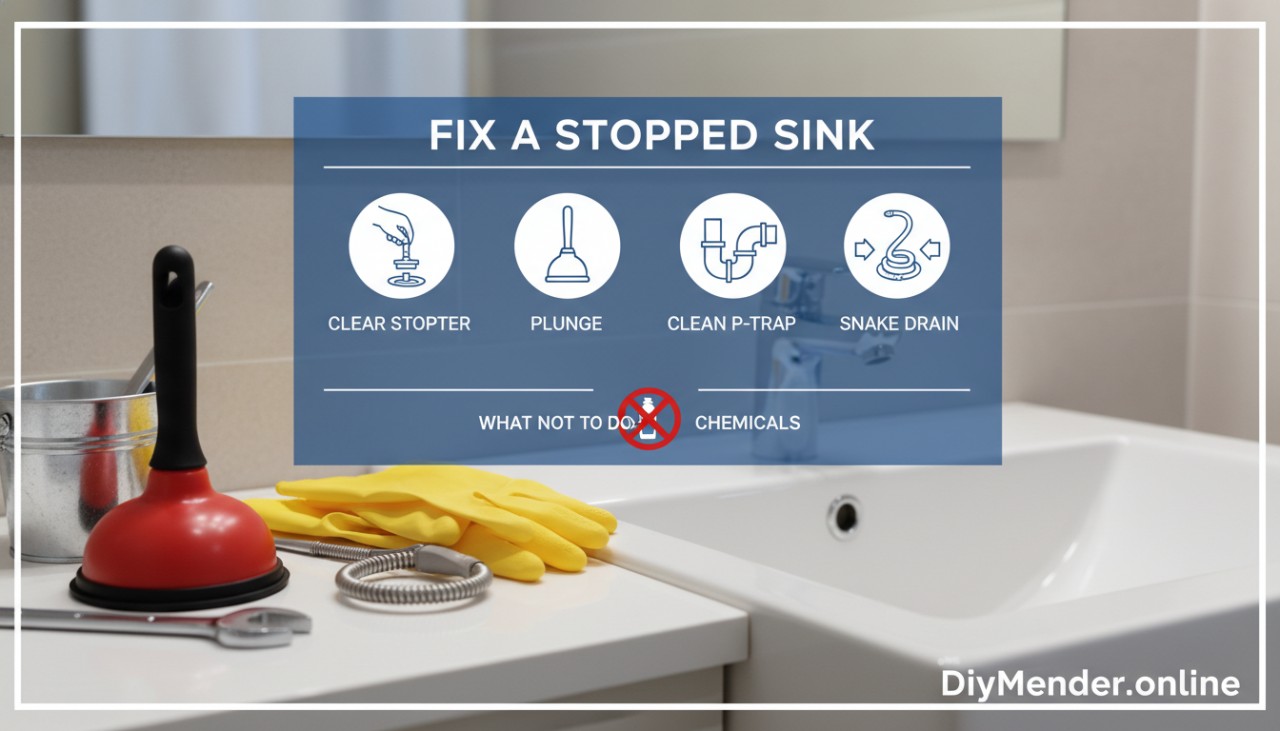
If water is pooling in the bowl, don’t panic or reach for harsh chemicals. Here’s how to fix a stopped up bathroom sink with methods I use at home and on neighbors’ sinks—fast, clean, and without damaging pipes.
Quick Read: What Usually Clogs a Bathroom Sink
Bathroom sinks clog because hair and toothpaste form a sticky net on the stopper linkage and the first few inches of pipe. Shaving stubble, soap scum, and lotion harden that mess. The blockage is usually right under the drain cap or in the trap arm going into the wall, not deep in the sewer.
Standing water that drains slowly suggests a hair-and-goo plug near the stopper
Gurgling or drain smell can point to partial blockage catching debris
If multiple fixtures back up at once, stop and call a pro—this hints at a main line issue
Tools and Prep That Save Time
Set a small bucket under the sink and keep a few towels nearby. You’ll want a flashlight, adjustable pliers (or channel locks), a plastic zip drain tool, a cup plunger, and a small brush or bottle brush. If your trap is old metal, have spare slip-joint washers on hand.
Bucket and towels to catch gray water and protect the cabinet
Flat screwdriver or needle-nose pliers to pull hair at the stopper
Plumber’s grease or a dab of petroleum jelly for reassembly
How to Fix a Stopped Up Bathroom Sink: Fast, Clean Steps
1) Clear the Stopper First
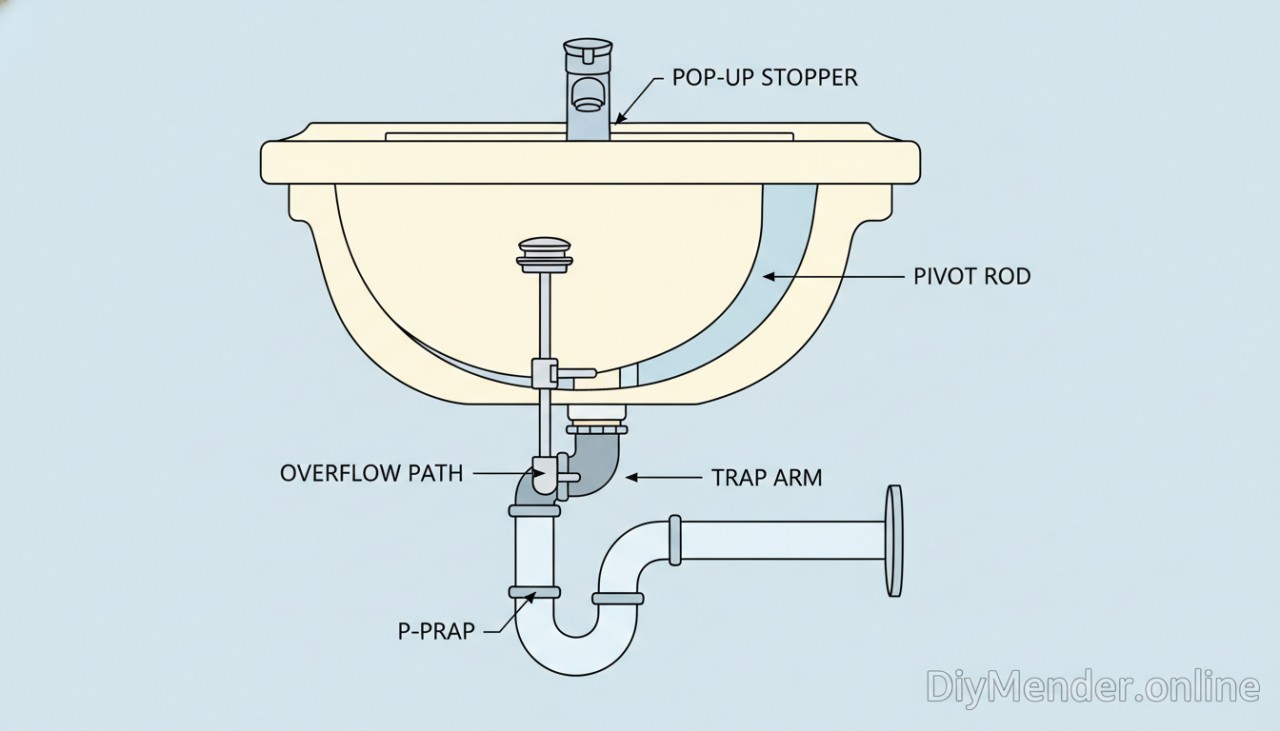
Most clogs start at the drain cap and stopper linkage. If your stopper pulls out by hand, remove it and fish out the hair mat with a zip tool or a bent wire. If it doesn’t pull straight out, look under the sink for the small pivot rod that enters the back of the drain tailpiece. Loosen the retaining nut by hand or with pliers, slide out the rod, then lift the stopper from the bowl. Remove the hair and rinse the parts. Reinsert the rod and hand-snug the nut for now.
Don’t overtighten that tiny nut—the gasket inside can deform and cause leaks later.
2) Plunge the Right Way (Overflow Blocked)
If water is still slow, fill the sink a few inches and cover the overflow hole with a wet rag to seal it. Without sealing the overflow, you’re just pushing air. Use a cup plunger (not a toilet flange plunger) and give 8–10 firm pumps. Lift to see if water drops quickly. Repeat a couple of rounds.
Skip plunging if you’ve poured caustic cleaners—splash-back can burn skin and ruin finishes.
3) Run a Zip Tool From the Top
Feed a plastic zip tool straight down the drain and wiggle it to snag hair just past the stopper seat. Pull it out slowly so the barbs drag junk with them. Rinse and repeat until it comes up mostly clean. Flush with hot water for a minute.
4) Clean the P-Trap and Trap Arm
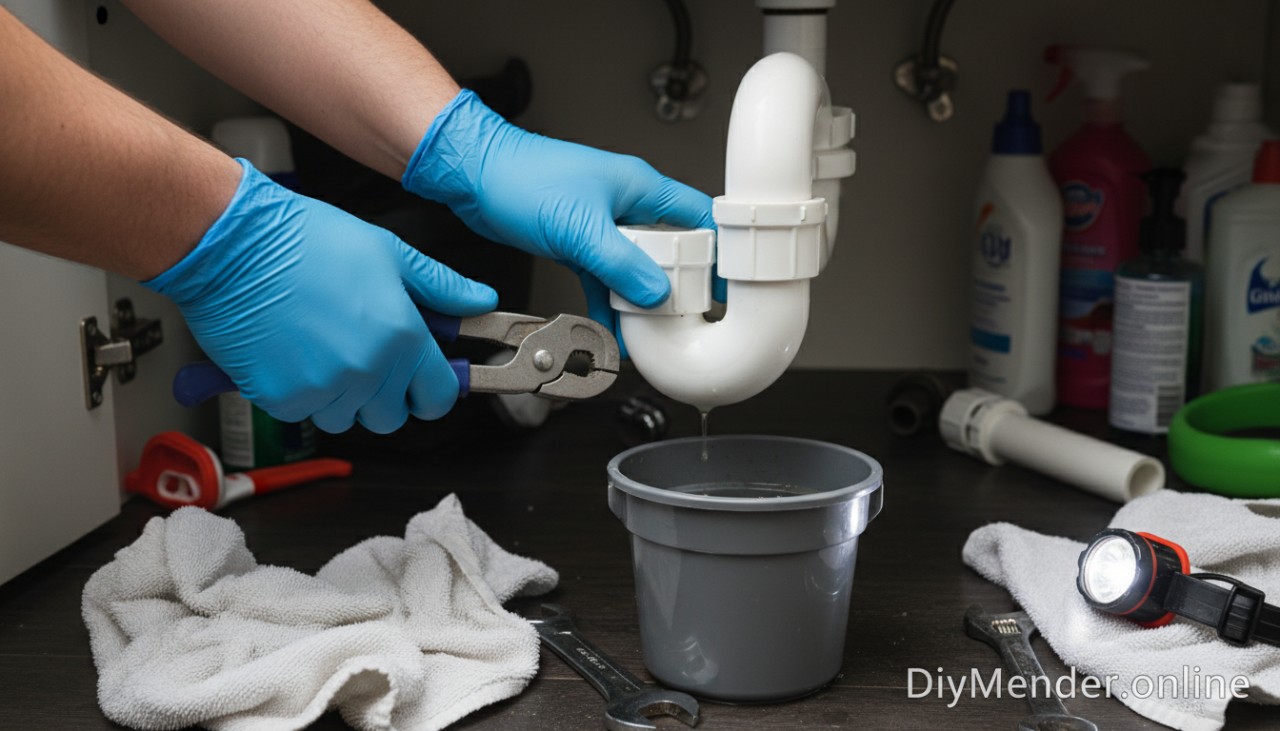
If the drain is still slow or backs up again quickly, the plug is usually in the trap or the first 6–12 inches of pipe going into the wall. Put the bucket under the trap. Loosen the two slip nuts on the P-trap and drop the curved section into the bucket. Clean out sludge with a brush. Shine a light into the trap arm toward the wall—if gunk lines the pipe, push the zip tool or a small hand snake a foot or two into the wall and twist gently. Reassemble with the slip-joint washers facing the right direction (taper toward the joint) and hand-tighten, then give each nut a quarter-turn with pliers.
Old chrome traps can crumble or split if over-torqued; PVC is more forgiving. If a washer looks flattened or cracked, replace it now to avoid drips.
5) Flush, Check for Leaks, and Adjust the Stopper
Run hot water for 2–3 minutes. Watch the slip nuts for any weeping and snug as needed. Reinstall the stopper so it seals but still lifts freely; adjust the linkage clip under the sink so the lever opens the stopper fully. A stopper that doesn’t lift high enough invites the next clog.
What Not to Do (Common Mistakes)
Don’t dump lye or acid cleaners into a stuck sink—besides the safety risk, they can soften gaskets and make later repairs miserable
Don’t shove a power drill snake through fragile drain assemblies—you can punch a hole in thin metal traps
Don’t forget the overflow seal when plunging; it’s the reason plunging “doesn’t work” for many people
Edge Cases You Might Hit
No-Overflow Vessel Sinks: Plunging won’t be effective; go straight to stopper removal and trap cleaning
Double Vanities: If both sides are slow, the clog is often in the shared tee; you’ll need to clean past the trap arm on the slower side
Pedestal Sinks: Space is tight; a compact basin wrench or mini-pliers helps with the pivot nut
Rusty or Painted-Over Trap Nuts: Heat from a hair dryer and a drop of penetrating oil can free them; if they round off, replace the trap assembly
When to Try Gentle Cleaners—and When to Skip
After you’ve removed hair and sludge, an enzyme cleaner can help keep biofilm down if used overnight and regularly. It won’t chew through a solid hair plug by itself. Boiling water, baking soda, and vinegar won’t dissolve hair; at best they move soap film. Mechanical removal is faster and reliable.
Signs You Should Call a Pro
Multiple fixtures are backing up, or a toilet gurgles when the sink drains—likely a main or vent issue
You can’t remove the trap without damaging it and don’t have replacement parts on hand
Snaking hits a hard stop immediately inside the wall—could be a misaligned tee or a foreign object
Persistent leaks at slip joints even with new washers—drain parts may be out of round or cracked
Keep It Flowing After the Fix
Once a month, pull the stopper and clear hair before it mats
Rinse with hot water after using toothpaste or shaving cream to reduce buildup
If your hair sheds a lot, use a thin mesh drain screen you can lift out and clean
Why These Steps Work
You attack the clog in the order it forms: first at the stopper, then the overflow/seat area, then the trap and trap arm. Each step either removes the physical blockage or restores full flow so residue can’t re-adhere. By avoiding harsh chemicals and focusing on mechanical clearing, you protect gaskets and finishes and make the next maintenance round easier.