
Experiencing low water pressure in your bathroom sink can be quite frustrating. Not only does it slow down your daily routine, but it can also indicate underlying plumbing issues. Fortunately, many low water pressure problems are fixable with some straightforward troubleshooting and simple tools.
Quick Answer: How to Fix Low Water Pressure in Bathroom Sink
To fix low water pressure in your bathroom sink, start by checking the faucet aerator for debris or mineral build-up and clean it if necessary. If the problem persists, inspect your valves and supply lines for leaks or kinks, and ensure they are fully open.
Understanding Low Water Pressure
Low water pressure in a bathroom sink means that the water flow is weaker than usual. This issue can affect your ability to wash hands, brush teeth, or even fill a glass quickly. It often results from blockages, plumbing issues, or faults in the water supply system.
Causes of Low Water Pressure
Several factors might lead to low water pressure in your bathroom sink:
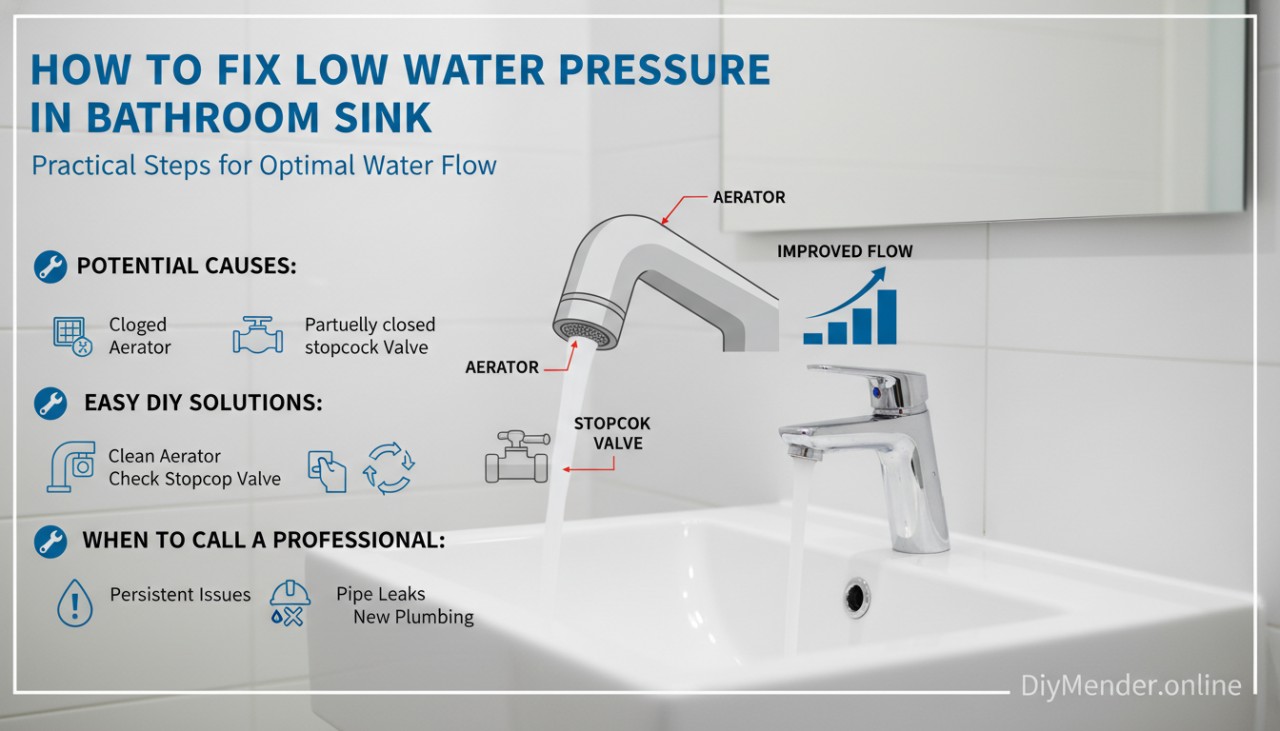
- Clogged Aerator: Over time, mineral deposits and debris can build up in the faucet aerator, restricting water flow.
- Partially Closed Valves: If the shutoff valves under the sink are not fully open, water pressure can decrease.
- Pipe Leaks or Obstructions: Leaks or blockages in the supply lines can disrupt water flow.
- Faulty Pressure Regulator: If your home has a pressure regulator, it might be malfunctioning.
Steps to Fix Low Water Pressure
1. Clean the Aerator
Remove the faucet aerator by unscrewing it from the tip of the faucet. Soak it in vinegar to dissolve mineral deposits, then scrub it clean with a brush.
2. Check the Shutoff Valves
Ensure that the shutoff valves under the sink are fully open. Turn them counterclockwise to open them completely.
3. Inspect the Supply Lines
Look for any obvious kinks or leaks in the supply lines. Tighten any loose connections and replace damaged lines if necessary.
4. Examine the Pressure Regulator
If your home has a pressure regulator, it may require adjustment or replacement. This step typically requires professional assistance.
When to Seek Professional Help
If you've tried the above steps and still experience low pressure, it might be time to call a plumber. Persistent issues could indicate complex problems such as significant plumbing system blockages or faulty pressure regulators.
Preventing Future Low Water Pressure
Regular maintenance can help prevent low water pressure. Clean your faucet aerators periodically, check valves and supply lines during routine inspections, and monitor your water pressure to catch issues early.
FAQs
Can I fix low water pressure myself?
Yes, many cases of low water pressure can be fixed with simple DIY steps like cleaning the aerator or checking the valves.
Why is my water still slow after cleaning the aerator?
There might be other issues such as partially closed valves, leaks in supply lines, or problems with the water supply system that require further investigation.
What if only hot or cold water has low pressure?
This could indicate a specific issue with the hot or cold water lines, requiring you to inspect the respective supply lines or consult a plumber for more complex issues.
Maintaining good water pressure in your bathroom sink is essential for convenience and efficient water usage. With these steps, you can address common causes of low pressure and enjoy a fully functional bathroom sink.