
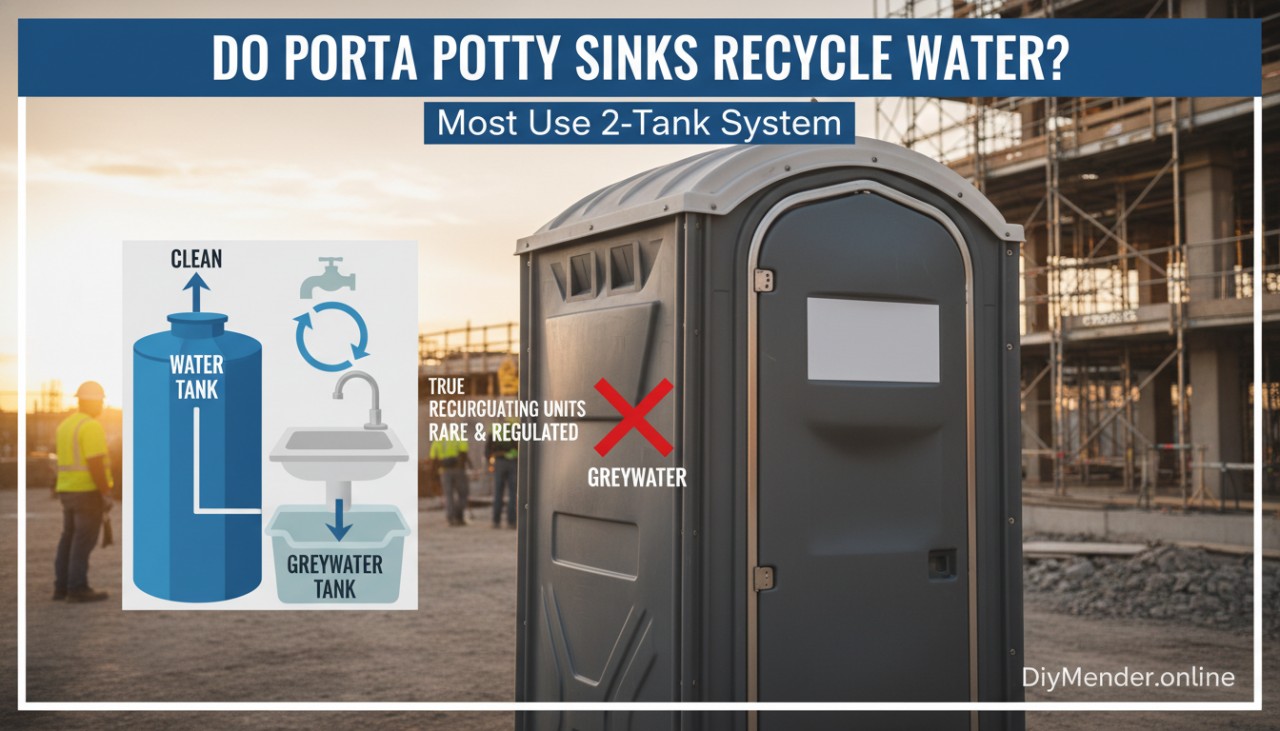
Short answer: most do not recirculate. If you’re asking, do porta potty sinks recycle water, the typical setup uses a small clean-water tank for handwashing and a separate holding tank for the used water (greywater). The water you pump to the faucet is not the same water that gets reused for the next person.
That said, you’ll see a few different designs in the wild, and some can be confusing because the toilet side often uses treated, dyed water that is recirculated for flushing. Sinks are a different story for hygiene reasons.
Do porta potty sinks recycle water?
In most rental units I’ve worked with at remodel sites and small events, the sink water is single-pass: fresh in, used water out. Recirculating sink systems exist, but they’re rare and usually restricted by local health codes, especially anywhere food is served. If you’re hosting a public event with a health department permit, expect non-recirculating sinks or stand-alone handwash stations with separate clean and waste tanks.
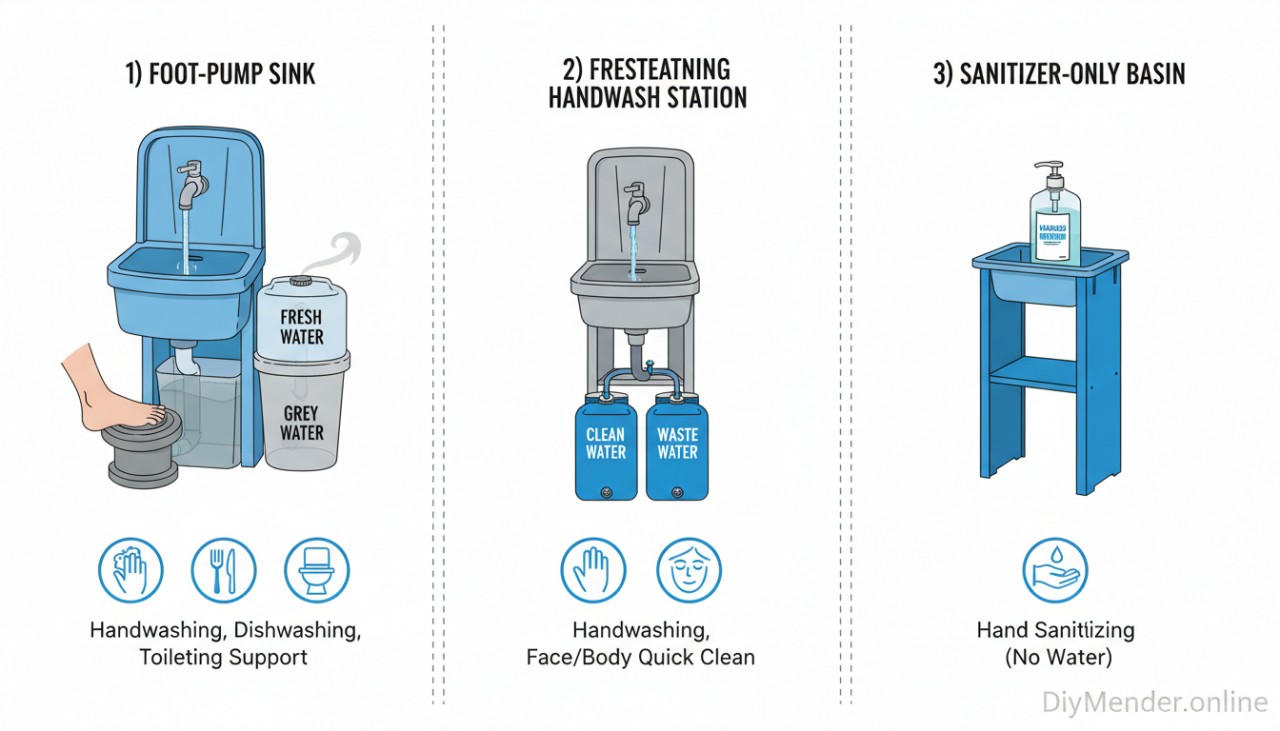
Common setups you’ll encounter
Understanding which type you’ve got helps you plan water refills and waste pumping, and it clears up the “recycled water” confusion.
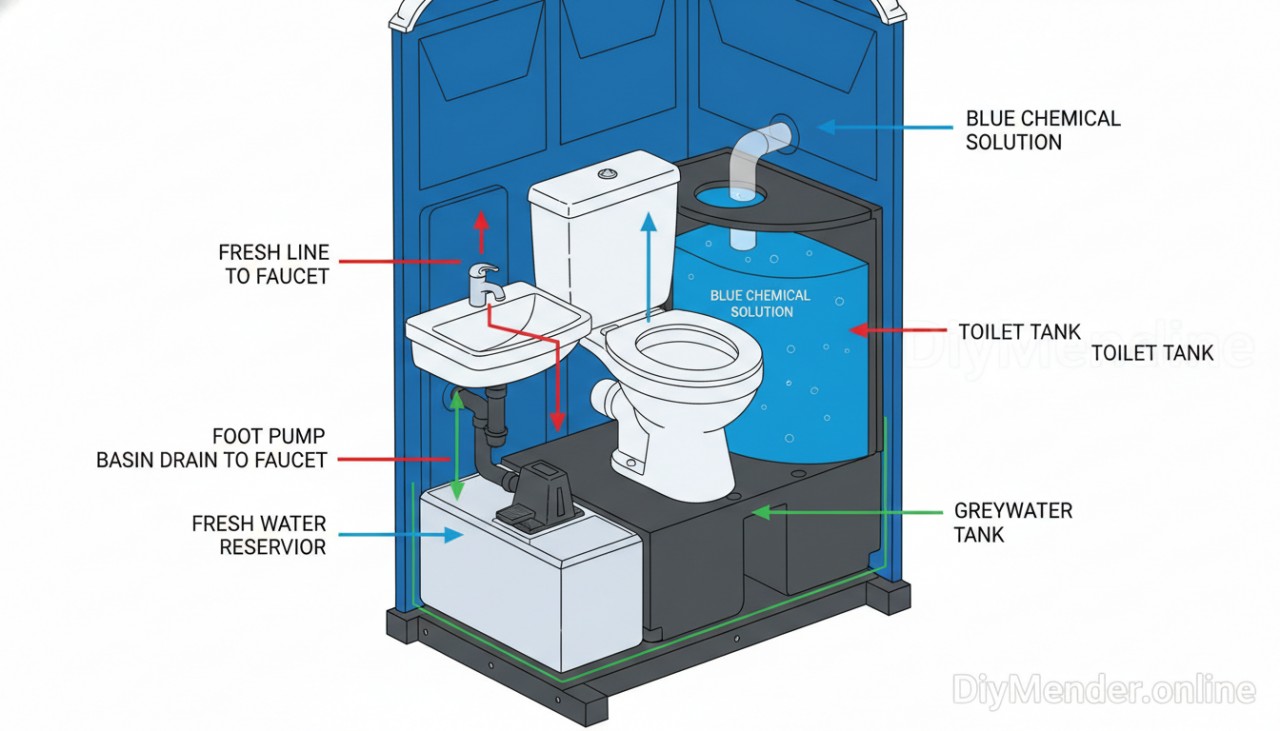
- Built-in foot-pump sink (most common): A small clean-water tank feeds the faucet via a foot pedal. Used water drains into a greywater tank. The toilet is separate and may use blue chemical water for flushing, but that’s not connected to the sink.
- Exterior handwash station: A freestanding unit with two pedals—one for soap, one for water. Again, there’s a clean-water tank and a greywater tank. These are common at food areas because they’re easier to site and service.
- Sanitizer-only “sink lookalike”: Some units have a basin shape and a sanitizer dispenser but no running water. These don’t recycle water because there is no water system at all—easy to mistake at a glance.
- Recirculating handwash units (uncommon): A closed-loop basin that treats and reuses water with biocides and filtration. You’ll usually find these in industrial or remote work sites where water resupply is tough, and even then, many jurisdictions won’t allow them for public or food-service use.
Why sinks aren’t usually recirculating
From a hygiene standpoint, reusing handwash water is a non-starter in most public scenarios. Even with chemicals, you’re dealing with oils, dirt, and microbes that filtration alone may not reliably remove. Regulations generally require potable or clean non-potable water for washing hands and a separate, sealed waste path for the runoff. That’s why you’ll see two tanks: one for supply, one for used water.
Toilets are different. Recirculating toilet systems mix waste with a strong disinfectant/deodorant solution. The goal there is odor control and reduced liquid waste volume, not cleanliness for human contact. The blue chemical water can make it look like “water is reused everywhere,” but the toilet loop is separate from the sink loop for safety.
What to check on your rental unit
Before relying on a porta potty sink at a jobsite or event, do a quick inspection. This also prevents mid-event surprises like empty tanks or non-functioning pedals.
- Foot pump action: It should feel firm and spring back. A floppy or jammed pedal often means a kinked line or an empty fresh tank.
- Water clarity and flow: The water should run clear. If it sputters or trickles, the fresh tank may be low or the pickup tube may be drawing air.
- Soap supply: Health departments often require soap and paper towels at handwash stations. Make sure dispensers are filled.
- Greywater capacity: If the sink drains slowly or backs up, the waste tank may be full. Time to call for service.
- Labels or spec sheet: Some units have a schematic on the door showing fresh and waste tank sizes. That helps you plan refills versus pump-outs.
Planning water and service intervals
For a small backyard party, a single foot-pump sink with a 5–10 gallon fresh tank might get you through the day if guests aren’t washing heavily. Construction sites wash more frequently due to grime, so expect quicker drawdown.
- Rough rule of thumb: 0.5–1.0 cup per handwash. At 10 gallons of supply, that’s roughly 160–320 handwashes, but real numbers are lower due to pedal bursts and kids “testing” the pump.
- Match service to usage: If you’re refilling clean water, you’ll also need periodic greywater pumping. Don’t overfill the waste tank; slow drainage is your early warning.
- Food service events: Health inspectors may require dedicated handwash stations, hot water in some cases, and specific soap/towel setups. Confirm requirements ahead of time.
Misconceptions that cause problems
These are the mistakes I see most often when people assume the sink “recycles” like the toilet.
- Assuming the toilet’s blue water feeds the sink: It does not. The blue reservoir is separate and not suitable for handwashing.
- Skipping refills because “it’s recirculating”: If flow is weak or stops entirely, you’re likely out of fresh water or the pickup is clogged.
- Draining greywater on the ground: In many places, that’s not allowed. The rental company should handle pumping and proper disposal.
Edge cases and exceptions
Cold weather: In freezing temps, some units are winterized using RV antifreeze in the toilet side. The sink supply is usually plain water and can freeze. If you expect hard freezes, ask for a cold-weather package, like insulated enclosures or scheduled warm-water refills. Never use automotive antifreeze in any part of a unit intended for hand contact.
Remote jobsites: Where resupply is difficult, a vendor might propose a recirculating handwash unit. If you accept that, verify local rules. Some jurisdictions allow them only for private, non-food operations, and require specific biocides and filtration media changes.
Drinking water: Sink water is for washing, not drinking. The supply tank and lines aren’t maintained like a potable water system, and you can’t assume the water is safe to consume.
Troubleshooting quick guide
If the sink isn’t working, try these basics before calling for service. Most fixes are simple and safe for a user to check without tools.
- No water at faucet: Check that the foot pedal moves. If it does and there’s still no flow, the fresh tank is likely empty. If the pedal is stuck, the linkage or diaphragm could be jammed—call the vendor.
- Weak or sputtering flow: Air in the line or low water level. A refill usually clears it. If not, the pickup tube might be loose or curled above the waterline.
- Sink doesn’t drain: Waste tank may be full, or the drain screen is clogged with paper. Clear the screen; if it still backs up, request a pump-out.
- Bad odors: That’s usually from the toilet side, not the sink. Make sure the seat lid is down when not in use and that the vent stack isn’t blocked. Service may be overdue.
When to request a different setup
If you’re hosting food trucks, a fundraiser, or anything with public food handling, ask for a dedicated handwash station with a clear freshwater and greywater setup. If hot water is required, say so upfront; some stations can be equipped with a small heater. For high-traffic events, multiple stations reduce lines and improve compliance.
Bottom line
Most porta potty sinks are single-pass systems with a clean-water supply and a separate greywater tank. That’s by design for hygiene and compliance. If someone tells you the sink “recycles like the toilet,” they’re mixing up two very different systems. Confirm what you’ve rented, plan for refills and pump-outs, and you’ll avoid the downtime and health-code headaches that come from wrong assumptions.