
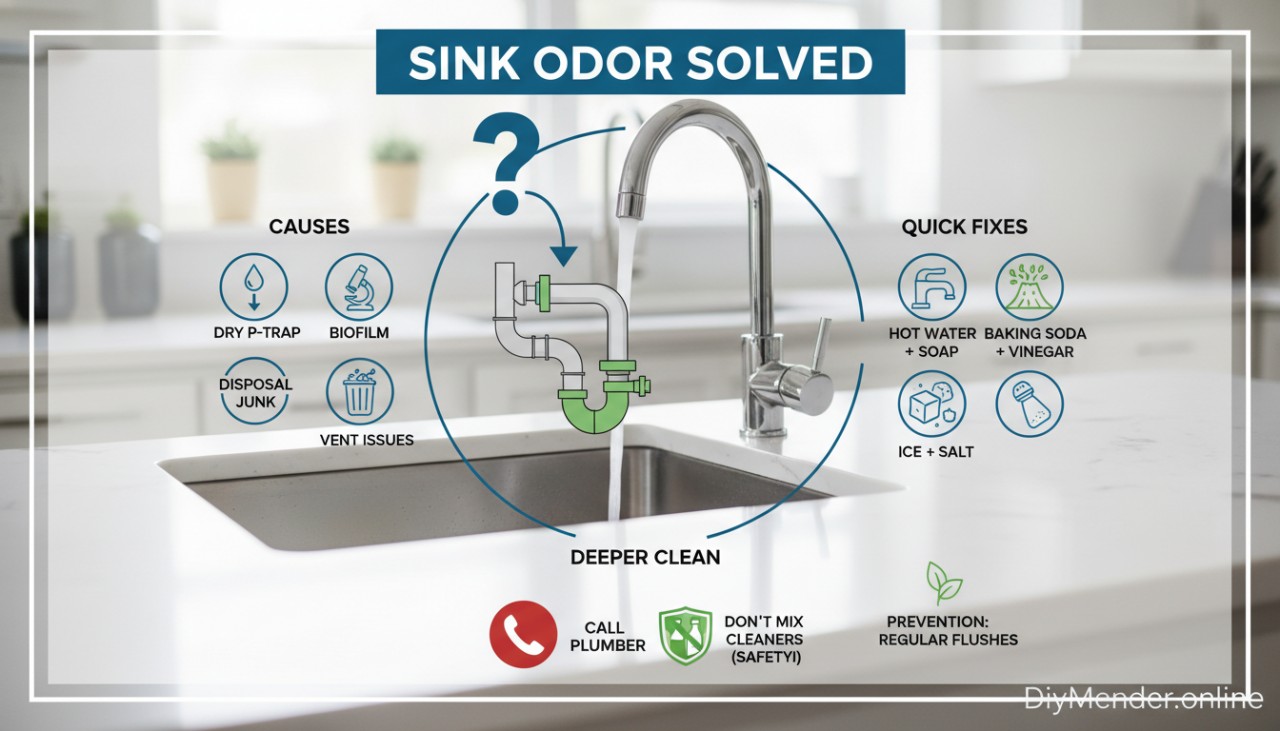
If you’re wondering how to get rid of bad smell in sink, start by figuring out what’s causing it. Kitchen smells often come from food buildup or a dirty garbage disposal. Bathroom smells usually come from gunk on the stopper, the overflow channel, or a dry P-trap. The right fix depends on the source.
Quick answer: Run hot water to re-fill the P-trap, clean the stopper and overflow, flush and deodorize the garbage disposal if you have one, and scrub out biofilm inside the drain. If odors persist, remove and clean the P-trap or use an enzyme cleaner overnight. Sewer-gas smells after basic cleaning point to a vent or trap issue—time to check connections or call a pro.
What’s behind sink odors
Most sink smells come from one of a few places:
- Dry P-trap: The U-shaped pipe under the sink should hold water and block sewer gases. If it dries out (rarely used sink, or a leak), you get that sulfur/sewer smell.
- Biofilm: Slimy buildup of soap, toothpaste, grease, and bacteria inside the drain tailpiece and overflow channel (common in bathroom sinks).
- Garbage disposal gunk: Food residue under the splash guard, on the grinder plate, and inside the chamber walls.
- Vent/air admittance issues: Poor venting can pull water out of the trap or let sewer odors seep back.
- Leaky or misaligned trap: A loose slip nut or missing washer can let trap water drain out over time.
Start with a quick diagnosis
- Run water for 30–60 seconds. If the smell improves, your P-trap was dry.
- Sniff at the drain, then at the overflow hole (bathroom sinks). If the overflow smells worse, it needs cleaning.
- Have a garbage disposal? Lift the black splash guard and sniff—if it’s sour, cleaning is due.
- Check under the sink for dampness. A slow leak can empty the trap and cause odors.
Step-by-step fixes that actually work
1) Refill and verify the P-trap
Let hot water run for a full minute. If it’s a rarely used sink (guest bath, basement), this may be all you need. Watch the trap while water runs—any dripping means a leak that will let the trap dry out again.
2) Clean the bathroom sink stopper and overflow
Hair and toothpaste paste themselves to the stopper and form a smelly film.
- Remove the stopper: Under the sink, loosen the small nut on the back of the drain tailpiece, slide out the pivot rod, and lift the stopper.
- Scrub the stopper and the drain throat with a bottle brush and hot, soapy water. A little baking soda adds grit.
- Flush the overflow: Block the drain opening with a rag, fill the basin halfway with hot water, add a cup of oxygen bleach or a squirt of dish soap, then briefly unstop the drain so solution rushes through the overflow. Repeat once.
- Reassemble the stopper. Hand-tighten the pivot nut so it moves smoothly but seals.
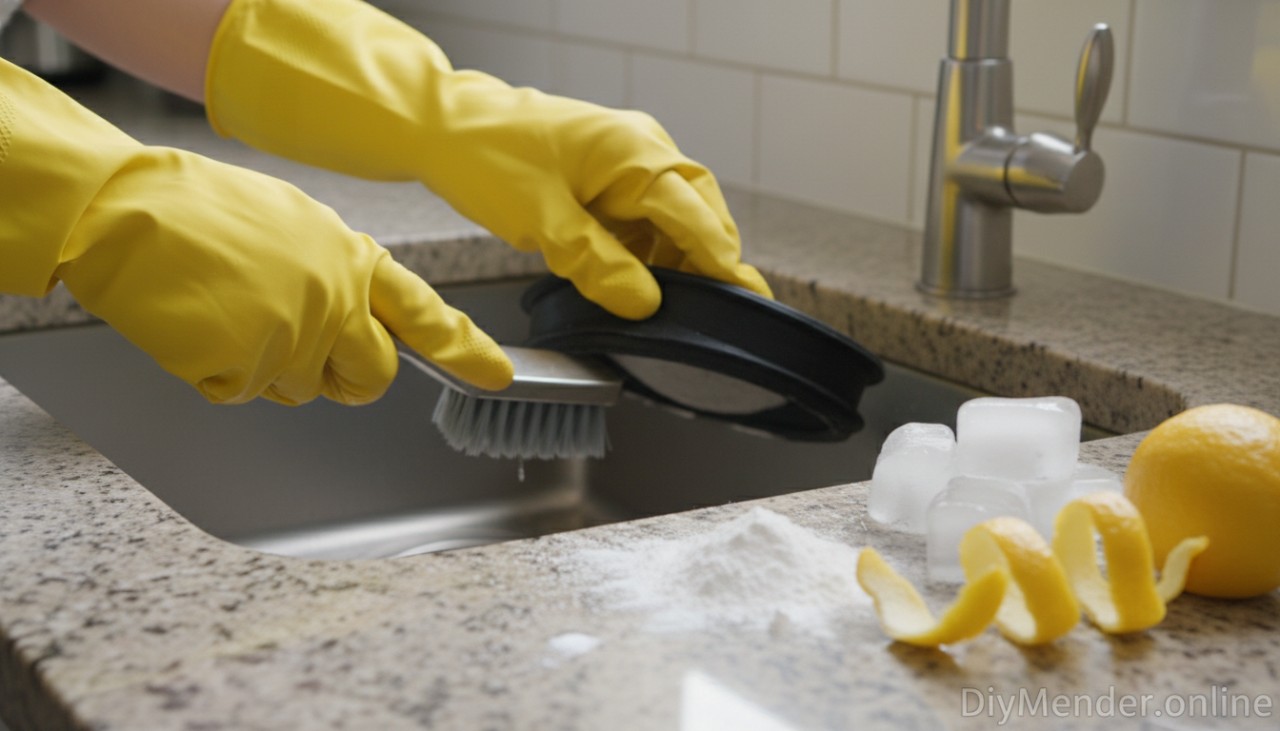 kitchen sink scene: a person wearing rubber gloves lifts the garbage disposal splash guard to scrub underneath; nearby are a brush, baking soda, ice cubes, and lemon peels on the counter. Bright, natural lighting; clear focus on the cleaning steps; include a subtle “DiyMender.online” watermark along the lower-right edge." title="Real-life kitchen sink scene: a person wearing rubber gloves lifts the garbage disposal splash guard to scrub underneath; nearby are a brush, baking soda, ice cubes, and lemon peels on the counter. Bright, natural lighting; clear focus on the cleaning steps; include a subtle “DiyMender.online” watermark along the lower-right edge." class="overly-article-img">
3) Deep-clean a smelly garbage disposal
Grease and food sludge hide under the splash guard and in the chamber. Unplug or switch off the disposal first.
- Pull out the rubber splash guard (if removable) and scrub both sides with hot, soapy water and a brush. If it’s fixed, lift the flaps and scrub in place.
- Scrub the inside walls and top lip of the disposal chamber with a long-handled brush and dish soap. Do not put your hand inside.
- Deodorize: Pour 1/2 cup baking soda into the disposal, then 1 cup hot water. After 5 minutes, run cold water and turn the disposal on with a handful of ice and a tablespoon of coarse salt to scour the grinding surfaces. Finish with a few citrus peels for a fresh scent.
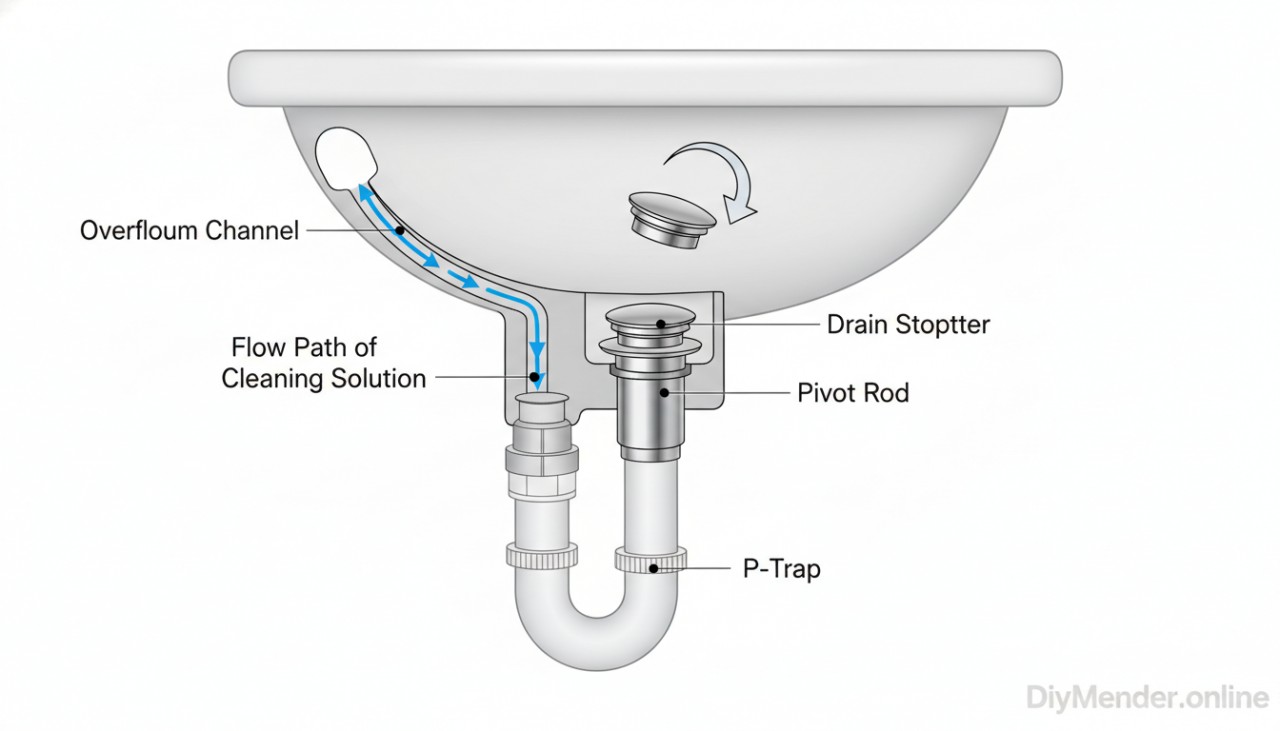 bathroom sink showing the drain stopper, pivot rod, overflow channel, and P-trap. Arrows indicate removal of the stopper and the flow path of cleaning solution through the overflow. Clean, labeled illustration on a white background; include a small, clear “DiyMender.online” watermark in the lower-right corner." title="Cutaway diagram of a bathroom sink showing the drain stopper, pivot rod, overflow channel, and P-trap. Arrows indicate removal of the stopper and the flow path of cleaning solution through the overflow. Clean, labeled illustration on a white background; include a small, clear “DiyMender.online” watermark in the lower-right corner." class="overly-article-img">
4) Break down biofilm in the drain
For both kitchen and bathroom sinks, a simple flush helps:
- Boil a kettle. Slowly pour hot (not boiling for plastic pipes) water down the drain to soften grime.
- Add 1/2 cup baking soda. Wait 5 minutes.
- Pour 1 cup hot water followed by 1 cup white vinegar. It will fizz; let it sit 10–15 minutes.
- Flush with very hot water for 1–2 minutes.
Tip: Use an enzyme drain cleaner overnight when smells linger. Enzymes digest organic slime without harsh chemicals.
5) Clean or remove the P-trap if odor persists
If you still smell funk, sludge may be sitting in the trap. It’s a 15–30 minute job:
- Place a bucket under the trap. Wear gloves.
- Loosen the two slip nuts (one at each end of the U). Turn slowly—water will spill out.
- Dump the trap into the bucket. Scrub the inside of the trap and the trap arm with a bottle brush and soapy water.
- Inspect washers. Replace if cracked or flattened.
- Reassemble, hand-tighten, then snug a quarter-turn with pliers. Run water and check for drips.
Never mix bleach with vinegar or ammonia. If you used vinegar earlier, rinse thoroughly before using any bleach-based product.
Choosing the right approach
- Bathroom sink with a strong odor when water runs: Focus on stopper, overflow, and biofilm.
- Kitchen sink with sour/rotten-food smell: Clean disposal thoroughly and flush the drain line.
- Occasional sewer smell from an unused sink: Refill the P-trap and check for leaks that let it empty.
- Odor only when dishwasher drains into the sink: The disposal or branch line needs cleaning; ensure the dishwasher drain hose has a high loop or air gap.
When to call a pro
- Sewer gas smell returns within hours of refilling the trap.
- Multiple fixtures smell at once (could be a main vent blockage).
- Persistent gurgling or slow drains along with odor.
- Corroded metal traps or seized slip nuts you can’t loosen without damage.
Prevention habits that keep odors away
- Run hot water and a dab of dish soap for 15 seconds after greasy kitchen use.
- Clean the disposal splash guard weekly; it’s the main odor culprit.
- Monthly enzyme treatment for bathroom sinks prone to slime.
- Use drains regularly. For guest baths, run water for a minute every couple of weeks.
- Check under-sink plumbing twice a year for dampness and re-tighten slip nuts gently.
- Keep the dishwasher drain hose in a high loop to prevent backflow into the sink.
FAQs
Why does my sink smell like rotten eggs?
That sulfur smell is usually sewer gas from a dry P-trap, or bacteria reacting with trapped organic matter. Refill the trap, then clean the drain and overflow or disposal.
Is it safe to pour bleach down the sink?
It can be, but use sparingly and never mix with vinegar or ammonia. For routine odor control, enzyme cleaners are safer and effective. If you’ve used vinegar, flush well before any bleach.
The smell gets worse when I run the dishwasher. Why?
Dishwasher discharge flows through the disposal or branch line, stirring up gunk. Clean the disposal and ensure the dishwasher drain hose has a high loop or air gap to stop backflow.
How often should I clean the P-trap?
Only when odor or slow drainage persists after basic cleaning. For most homes, that’s every 1–2 years, or longer if you maintain the drain and disposal.
Could a roof vent cause sink smells?
Yes. A blocked vent can siphon water out of traps or let odors linger. If smells affect multiple fixtures or return quickly, have the vent inspected.
Final check before you move on
After you clean, run water for a minute and sniff at the drain and overflow. If the smell is gone, you fixed the source. If it creeps back within a day, look for a slow trap leak or consider an overnight enzyme treatment. Consistent odors after these steps usually point to venting or a hidden blockage—worth a pro’s visit to finish the job.