
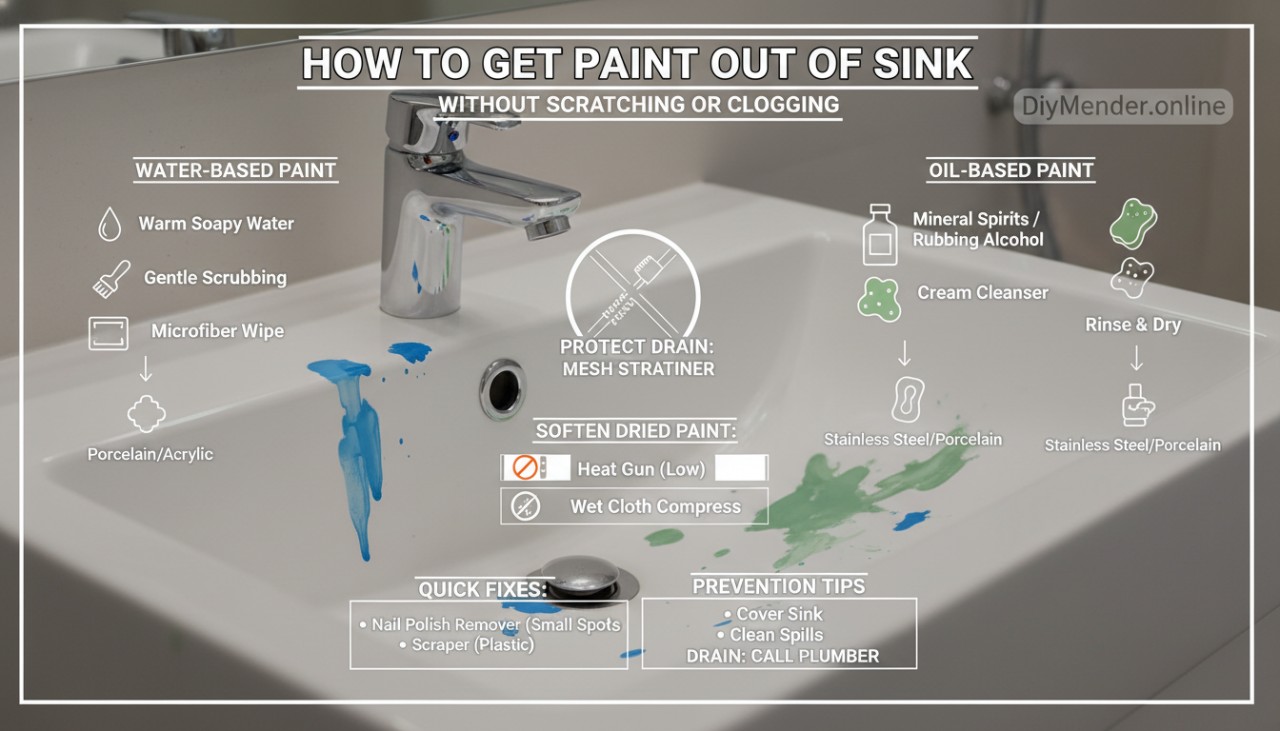
If you’re staring at paint smeared across your basin, you’re likely searching for how to get paint out of sink without scratching the surface or clogging the drain. The right approach depends on the type of paint and the sink material. Here’s a calm, practical plan that actually works at home.
Quick answer
Wipe fresh paint with paper towels, then wash with warm water and dish soap. For dried latex/acrylic paint, soften with warm soapy water or isopropyl alcohol and gently scrape with a plastic scraper. For oil-based paint, spot-treat with a little mineral spirits on a cloth (avoid acrylic sinks). Use non-abrasive cleaners on stainless; cream cleanser on porcelain. Keep paint out of the drain; use a strainer.
Why paint sticks and why that matters
Latex and acrylic paints soften with water and alcohol because they’re water-based. Oil-based and enamel paints resist water and need a solvent. Sink material matters too: porcelain is tough but can etch with harsh acids; stainless scratches with abrasives; acrylic and composite can haze or melt with strong solvents. Choose your cleaner to match both the paint and the sink.
Know your paint and your sink
- Water-based paints (latex/acrylic): Usually remove with warm soapy water, isopropyl alcohol, or a magic eraser.
- Oil-based/enamel: Often need mineral spirits or a citrus stripper; go slow and spot-test.
- Spray paint: Can be either; test with soapy water first, then alcohol, then solvent if needed.
- Porcelain/enamel sinks: Tough; cream cleansers and gentle abrasives can work.
- Stainless steel: Non-abrasive methods only; avoid steel wool and harsh scouring powders.
- Acrylic/composite: Sensitive to solvents; stick to soap, alcohol, and mild cleaners. Always spot-test.
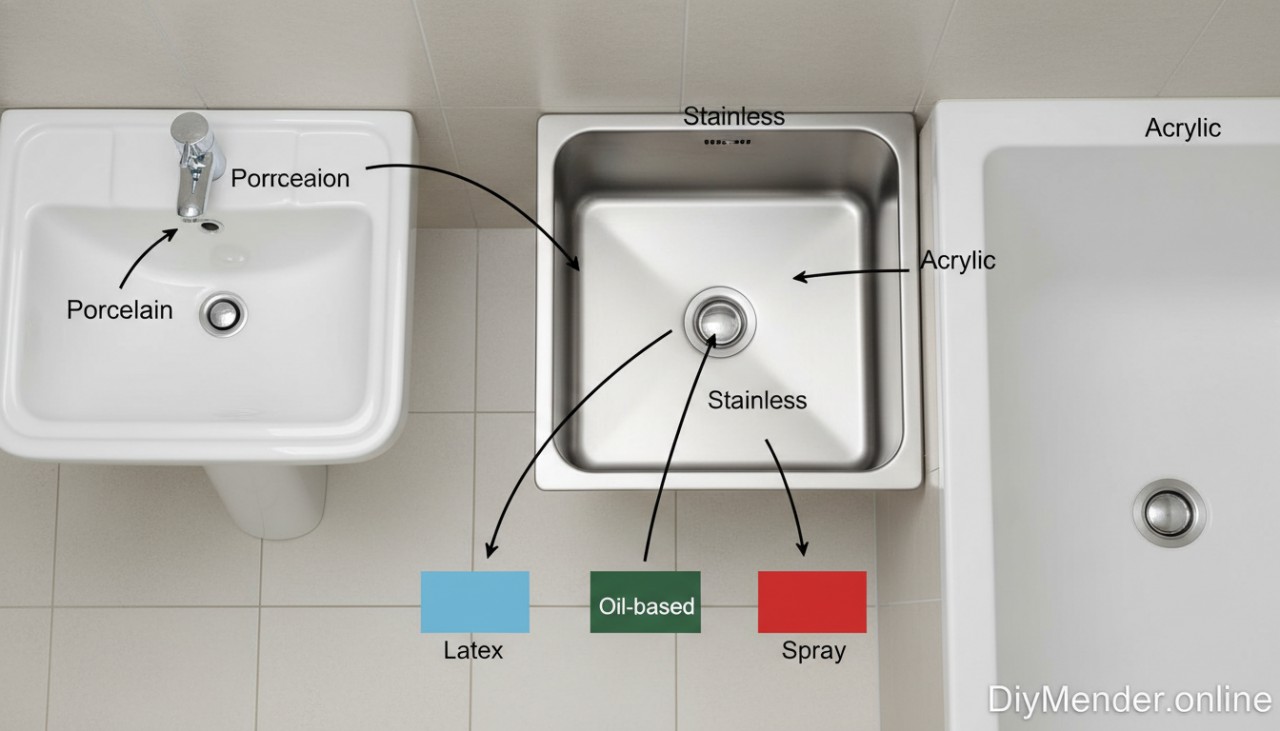 utility sink with labeled callouts: “Porcelain,” “Stainless,” “Acrylic,” alongside small labeled paint swatches: “Latex,” “Oil-based,” “Spray.” Simple diagram arrows show which cleaners pair with which surfaces. Clean, realistic lighting, neutral background, instructional style. Watermark: DiyMender.online placed in a bottom corner, semi-transparent." title="Top-down photo of a bathroom and utility sink with labeled callouts: “Porcelain,” “Stainless,” “Acrylic,” alongside small labeled paint swatches: “Latex,” “Oil-based,” “Spray.” Simple diagram arrows show which cleaners pair with which surfaces. Clean, realistic lighting, neutral background, instructional style. Watermark: DiyMender.online placed in a bottom corner, semi-transparent." class="overly-article-img">
Clean it fast: fresh spills
Fresh paint is easiest to remove. Work quickly before it skins over.
- Protect the drain: Drop in a mesh strainer or a wad of paper towel so paint doesn’t go down.
- Blot, don’t smear: Use paper towels or rags to lift as much as you can.
- Wash: Use warm water and a few drops of dish soap; wipe with a soft sponge.
- Rinse and repeat: Rinse, re-soap, and continue until the sheen is gone.
Tip: Keep a plastic scraper or an old store rewards card nearby to lift thicker globs without scratching.
Dried paint: step-by-step by paint type
For latex/acrylic paint
- Soften: Lay a warm, soapy microfiber cloth on the paint for 5–10 minutes.
- Lift: Use a plastic scraper at a shallow angle. Wipe residue as it loosens.
- Stubborn spots: Dab isopropyl alcohol (70–91%) on a cloth, press for 1–2 minutes, then rub gently.
- Edge cleanup: A magic eraser can remove haze on porcelain or stainless. Go lightly on acrylic.
For oil-based or enamel paint
- Spot-test: On an inconspicuous area, test a drop of mineral spirits on a cotton swab.
- Apply small amounts: Dampen a cloth with mineral spirits; rub the paint gently in circles.
- Scrape carefully: Use a plastic scraper as the paint softens.
- Neutral wash: Wash with warm soapy water after to remove solvent residue.
- Sensitive sinks: For acrylic/composite, avoid mineral spirits if it clouds the test spot. Try citrus-based adhesive remover or repeated alcohol instead.
For spray paint
- Try soapy water first, then alcohol if needed.
- If it resists and your sink is porcelain or stainless, use a small amount of acetone or mineral spirits on a cloth, then wash.
- Avoid acetone on acrylic sinks; it can melt or haze.
Surface-specific tricks
- Porcelain/enamel: Cream cleanser (or a non-scratch powder like Bar Keepers Friend) with a damp sponge can remove faint remnants without scratching.
- Stainless steel: Go with the grain; use dish soap, alcohol, or a gentle cleaner. If you leave swirls, finish with a stainless polish.
- Acrylic/composite: Avoid harsh solvents and abrasives. Warm soapy soaks and alcohol are your friends.
Safety notes: Ventilate when using solvents, wear gloves, and keep rags away from flames. Never mix chemicals (for example, bleach and ammonia). If you’re unsure, spot-test first.
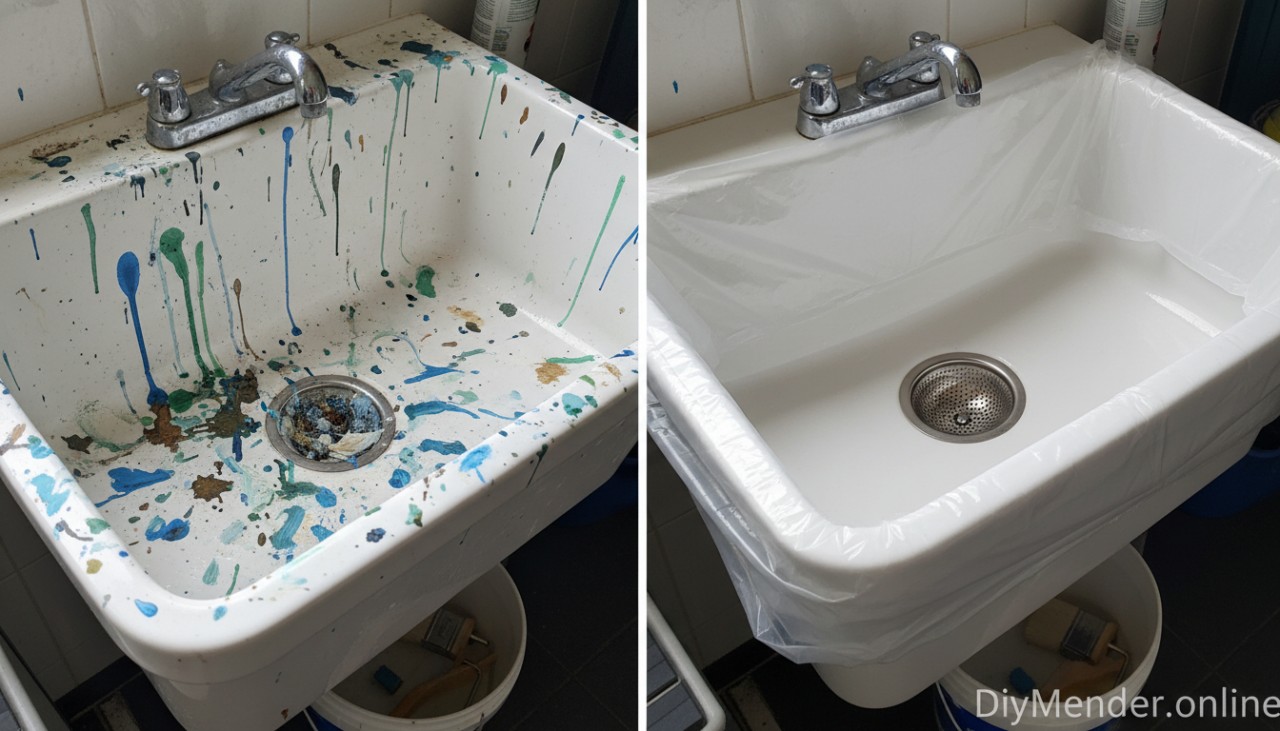
What if paint got into the drain?
Small amounts usually pass, but larger blobs can clog the trap. Don’t push more paint down trying to flush it.
- Fish out what you can: Use tweezers or a bent wire hooked at the end to remove softened paint near the drain.
- Check the P-trap: Place a bucket under the trap, loosen the slip nuts, and remove the trap. Scoop out paint and rinse the trap outdoors.
- Reassemble: Refit the trap and hand-tighten. Run water to check for leaks; snug a quarter-turn more if needed.
Skip drain cleaners for paint clogs; they’re meant for organic buildup, not cured paint. Mechanical removal works better.
How to choose your approach
- If you’re unsure of the paint: Start with warm soapy water, then alcohol, then a small solvent test.
- If you’re unsure of the sink: Treat it like acrylic—avoid strong solvents and abrasives—until you confirm.
- If time is tight: Soak with warm soapy cloths while you gather tools; softening makes everything easier.
When to call a pro
- Epoxy or two-part coatings cured on an acrylic/composite sink and you’re risking gouges or melting.
- Deep scratches already present and you need refinishing (porcelain chip repair, stainless blending, acrylic polishing).
- Recurring drain backups after paint got into the line beyond the trap.
Prevention that actually works
- Line the sink with a trash bag or plastic sheeting taped around the rim.
- Use a drain strainer any time you’re washing brushes or trays.
- Wash brushes in a bucket, not the sink. Let solids settle; pour off clear water on the lawn (for latex), trash the sludge.
- For oil-based, wipe brushes with rags and a small amount of mineral spirits; store used rags in a sealed metal container and follow local disposal rules.
- Keep a plastic scraper, dish soap, and paper towels under the sink for emergencies.
FAQs
Will vinegar remove paint from a sink?
Vinegar can soften some water-based paints, especially if heated, but it’s slower and less effective than warm soapy water and alcohol. It’s safe on porcelain and stainless, but still spot-test on acrylic.
Is acetone safe on my sink?
On porcelain and stainless, small amounts of acetone usually won’t harm the surface. On acrylic or composite sinks, acetone can haze or melt the surface—avoid it. Always spot-test first.
Can a magic eraser scratch?
Magic erasers are micro-abrasive. They’re generally safe on porcelain and stainless if used lightly. On glossy acrylic, they can dull the finish. Test in a corner and go gentle.
What if the paint is epoxy?
Epoxy is very tough once cured. Try a long warm soak, then careful scraping. Solvents like acetone may help on porcelain, but avoid them on acrylic. If it won’t budge without damage, consider a pro.
Is it okay to wash paint down the sink?
No. Keep paint solids out of drains. For latex, let paint water settle and trash the solids. For oil-based, use minimal solvent on rags and follow local hazardous waste rules.
How do I avoid scratching stainless?
Use soft cloths, plastic scrapers, and non-abrasive cleaners. Wipe with the grain, not against it. Skip steel wool and gritty powders.
Final notes
Match the cleaner to the paint and the sink, work patiently, and keep paint out of the drain. Most messes come off with warm soapy water, alcohol for latex, and cautious solvent use for oil-based—backed up by a plastic scraper and a little time. Protect the surface, protect the plumbing, and you’ll be fine.