
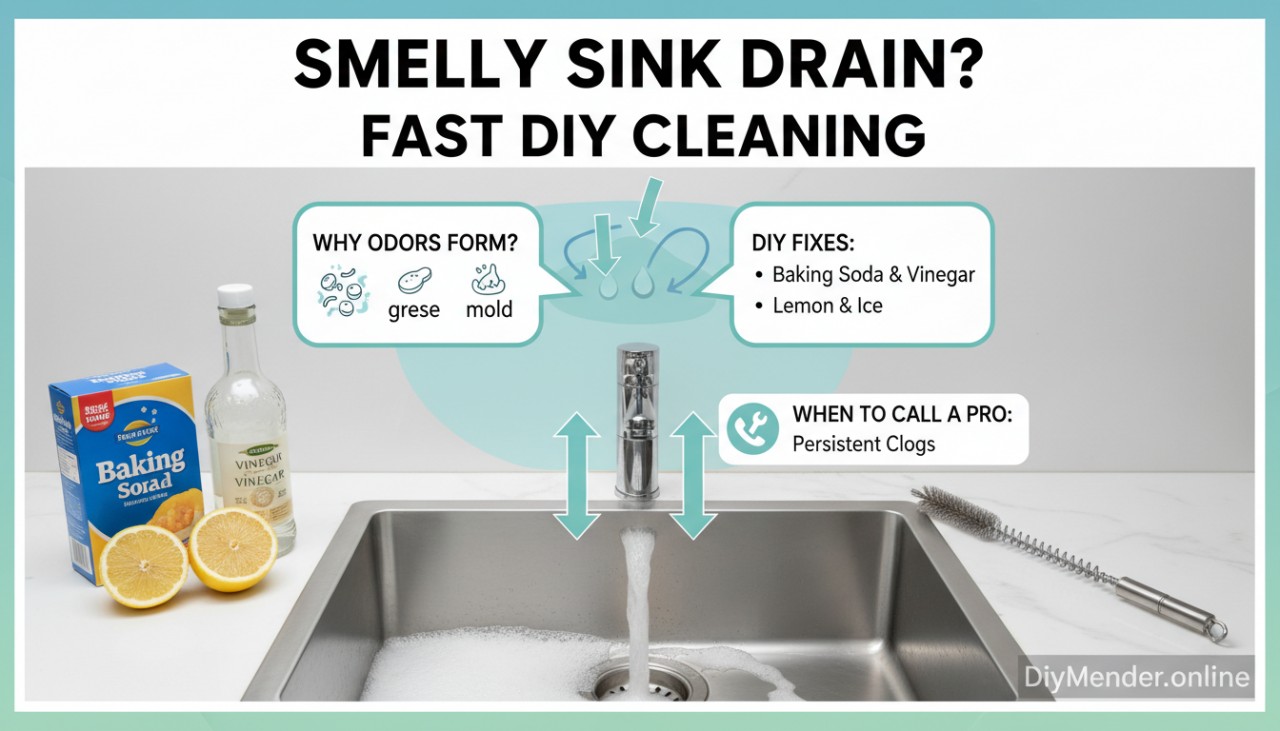
If you’re asking “how do I get rid of a smelly sink drain,” the fastest wins come from removing the gunk (biofilm) you can’t see and restoring the water seal in the P-trap. Odors persist because bacteria feast on trapped grease, soap scum, and food, producing sulfur compounds. Chemical perfumes mask it; mechanical cleaning and proper oxidation or enzymes actually fix it.
Diagnose the smell fast (1–2 minutes)
Run cold water for 10 seconds. If the odor fades, your P-trap was dry or partially empty. Top it off and add a teaspoon of mineral oil to slow evaporation (great for seldom-used sinks).
Smell stronger with the garbage disposal on? The culprit is the splash guard and grinding chamber, not the pipes.
Odor only when using hot water at multiple fixtures? That’s likely your water heater’s anode reaction (not the drain). More on this below.
Gurgling or sewer smell from multiple drains means a vent issue or a failing trap. Time to investigate vents or call a pro.
Fix it: my go-to routine that actually works
This is the sequence I use because it removes buildup where it lives, then kills the odor-causing bacteria. It beats the baking-soda-and-vinegar myth (they neutralize each other; the foam looks busy but doesn’t deep-clean).
1) Mechanical scrub (the must-do step)
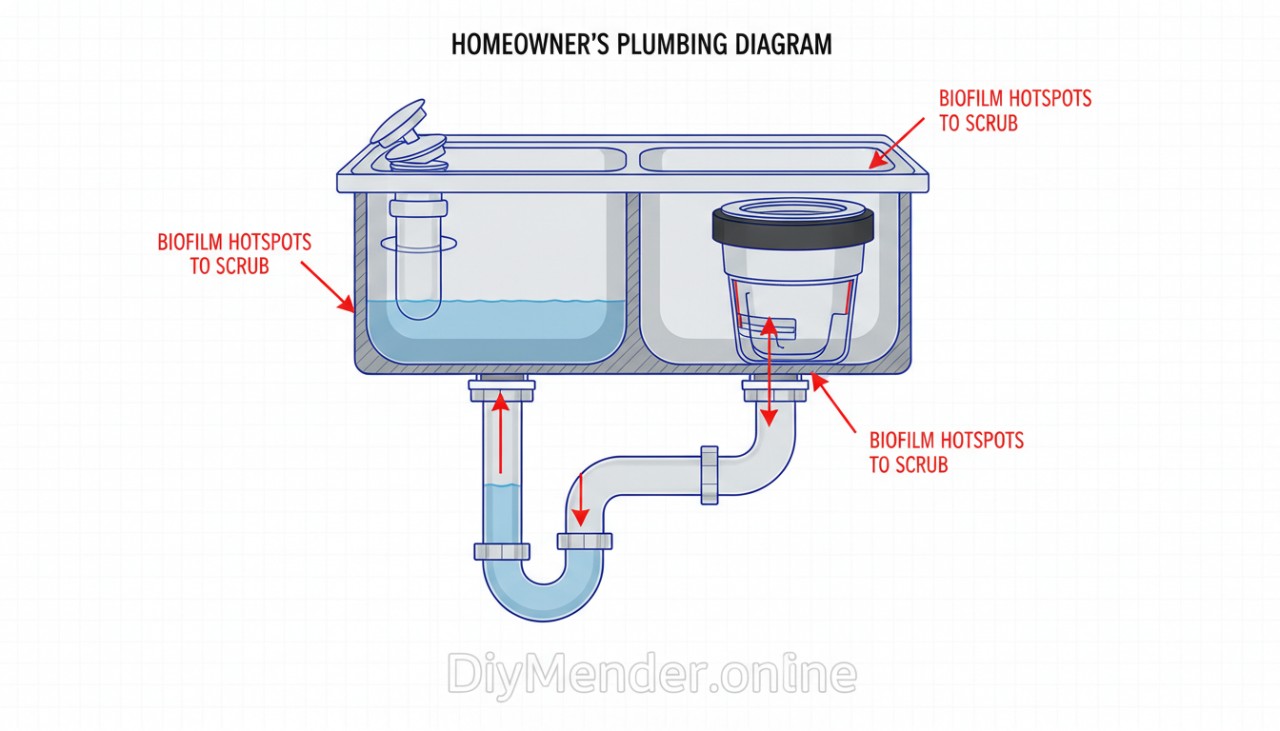
Kitchen disposal: With power off, pull out the rubber splash guard and scrub its underside with dish soap and a brush. It’s usually the worst biofilm spot. Clean the upper grind chamber with a bottle brush.
bathroom sink: Remove the pop-up stopper. Scrub the stem and tailpiece (that nasty ring is odor fuel). Feed a thin brush into the overflow hole and flush it—odors hide there.
Trap clean (if smell persists): Put a bucket under the P-trap, loosen slip nuts, remove the U-bend, and clean out sludge. Reassemble, hand-tight plus a tiny nudge. Replace worn washers if needed.
Why it works: Biofilm is a protected slime layer. Scraping it off exposes bacteria so cleaners can actually reach them.
2) Oxidize or enzyme-clean (pick one)
Oxygen cleaner: Dissolve oxygen bleach (sodium percarbonate) per label in warm water. Pour slowly, let sit 20–30 minutes, then flush hot. Oxygen breaks down smelly sulfur compounds.
Enzyme/bacterial drain cleaner (septic-safe): Pour at night and let it work 8–12 hours. It digests the organic film instead of masking it.
Skip harsh acids and lye in a disposal or older pipes; they’re risky and don’t remove the splash-guard film anyway.
3) Hot rinse—without melting pipes
Flush with very hot tap water or kettle water cooled below a light simmer (~150–160°F). Straight rolling-boil can soften some PVC and stress seals.
Kitchen disposal specifics
Salt + ice scrub: A cup of ice and 2–3 tablespoons coarse salt, run with a small trickle of water. It scours without chemicals.
Citrus finish: A small lemon wedge freshens and the peel oils help; but it’s not a substitute for scrubbing.
Disposal not used often? A tablespoon of mineral oil down the drain after rinsing can help the trap retain water longer.
Bathroom sink specifics
Overflow channel: Flush with diluted hydrogen peroxide (3% peroxide cut 1:1 with water). It oxidizes odor compounds and reaches where brushes miss.
Pop-up rod gunk: That linkage under the sink catches hair and paste-like soap scum. A 5-minute clean here makes a huge difference.
When the smell isn’t the drain
Hot water only smells like rotten eggs: Likely your water heater anode (magnesium) feeding sulfate-reducing bacteria. Confirm by running hot vs cold at multiple faucets. Fix: flush heater, sanitize, or swap to an aluminum/zinc anode (pro job if you’re not comfortable).
Dry trap in unused rooms: Pour 2 cups water plus a teaspoon of mineral oil in each drain. If it dries out weekly, you might have trap siphoning from poor venting.
Venting and other system issues
A healthy vent equalizes pressure so traps don’t get sucked dry. Signs of trouble: gurgling after draining, slow drains across the home, or odor from multiple fixtures. Roof vents can clog with leaves or nests; air admittance valves can stick. If you’re not comfortable clearing vents, call a plumber—this is beyond cleaning.
Common mistakes I see (and why to avoid them)
Bleach after vinegar (or together): They create chlorine gas—dangerous. Also, bleach can damage septic biology and some rubber parts.
Only using baking soda + vinegar: It foams but neutralizes itself; little lasting effect on biofilm.
Boiling water into plastic traps: Can soften PVC and distort seals. Keep it hot, not boiling.
Ignoring the splash guard and overflow: The topmost surfaces are the stinkiest—clean what you can touch first.
Drain openers in disposals: Many labels forbid it; can corrode metal and create hazardous splashes.
If it still smells after all this
Recheck the P-trap for leaks (feel around slip joints). Even a pinhole whiff of sewer gas can overwhelm a room.
Inspect dishwasher tie-in: The drain hose must have a high loop or air gap. Clean the air gap cap at the sink—food sludge there reeks.
Persistent sewer smell, headaches, or methane/sulfur odors house-wide: Call a pro to smoke-test vents and check for cracked pipes.
My quick-maintenance schedule
Weekly: 10-second hot rinse after greasy dishwater; quick brush of splash guard or stopper.
Monthly: Enzyme treatment overnight (or oxygen cleaner) and overflow flush.
Quarterly: Pop the trap and clean if buildup returns, or whenever you notice slow draining.
Bottom line: Scrub what you can touch, then oxidize or digest the film you can’t. Keep the trap full, verify venting, and don’t rely on fizz tricks. Do that, and the smell stays gone.