
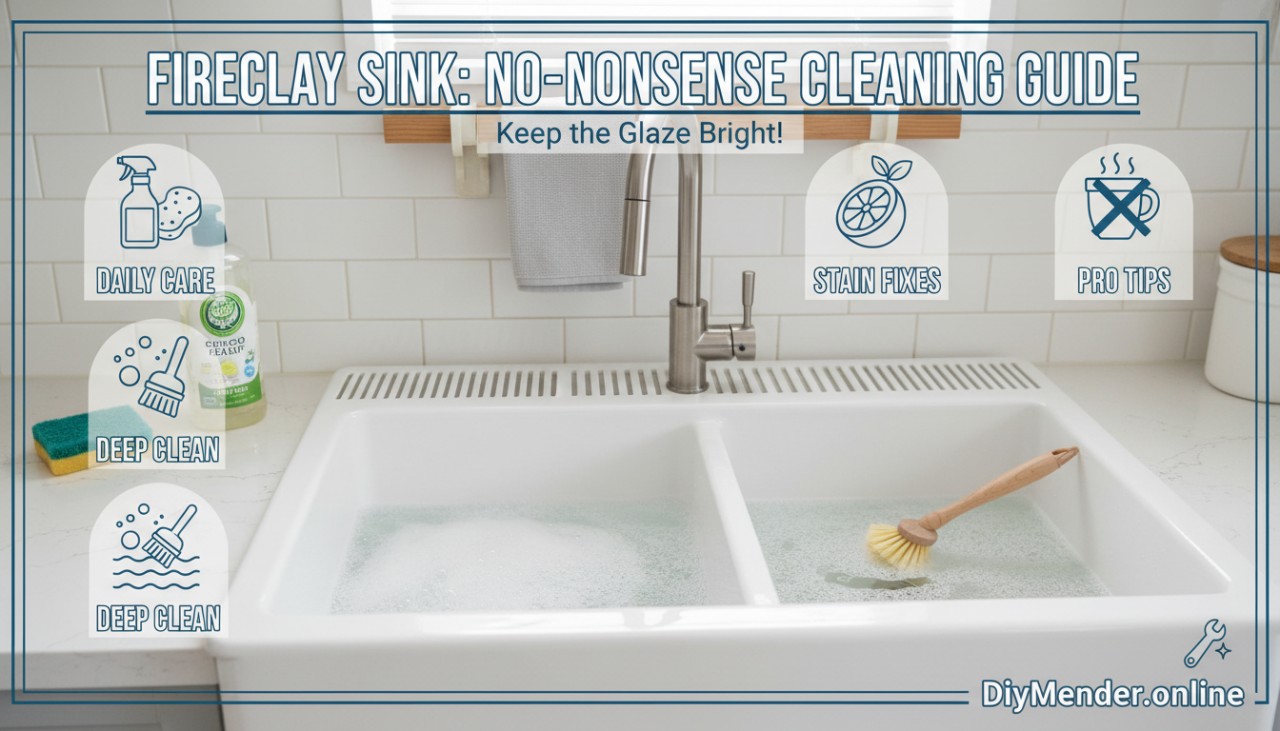
If you just want the fast, safe method for how to clean fireclay sink: after each use, rinse, add a few drops of dish soap, wipe with a soft sponge, then dry with a microfiber cloth. Weekly, sprinkle baking soda, scrub gently with a non-scratch pad, rinse, then do a 1–2 minute white-vinegar spritz on limescale spots and rinse again. For gray metal marks, use a dot of Bar Keepers Friend Soft Cleanser or a paste of the powder and water, rub lightly, and rinse well. Disinfect only with a very dilute bleach solution (1 tablespoon per gallon of water) for up to 5 minutes, keeping it away from any metal grid, then rinse and dry.
That sequence keeps the glaze glossy, removes stains, and avoids the common mistakes that make fireclay look dull.
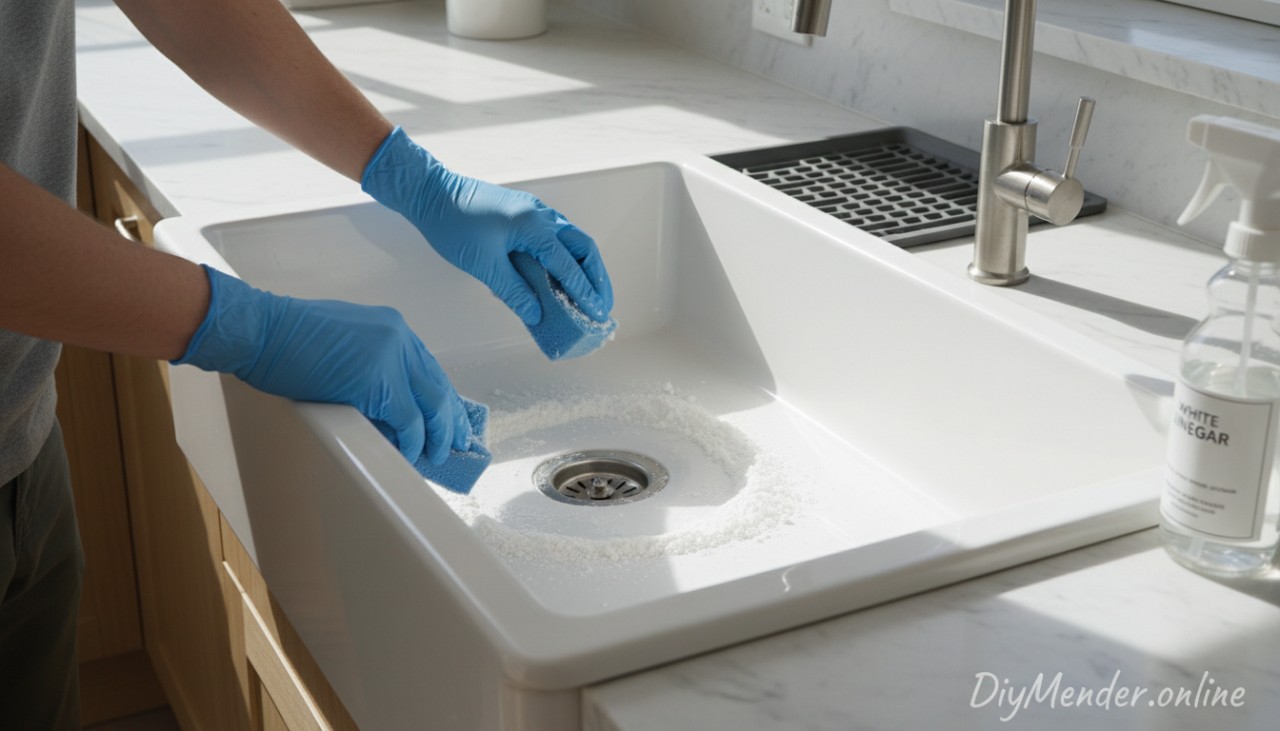 farmhouse sink in a real kitchen. A homeowner wearing gloves gently scrubs with a non-scratch sponge, baking soda sprinkled around the drain, a spray bottle of white vinegar nearby, and a silicone-coated grid resting to the side. Subtle DiyMender.online watermark in the lower-right corner." title="A bright, white fireclay farmhouse sink in a real kitchen. A homeowner wearing gloves gently scrubs with a non-scratch sponge, baking soda sprinkled around the drain, a spray bottle of white vinegar nearby, and a silicone-coated grid resting to the side. Subtle DiyMender.online watermark in the lower-right corner." class="overly-article-img">
Why these steps work (and what ruins the finish)
Fireclay sinks are cast clay fired at very high temperatures, then coated with a vitreous glaze. That glaze is essentially glass. Glass hates two things: abrasion and prolonged contact with strong chemicals (especially acids and some alkalis). Gentle surfactants in dish soap lift grease without etching. Baking soda is a mild alkali and a fine, soft particulate—it helps scrub without cutting the glaze when used with water and light pressure. A quick white-vinegar pass dissolves limescale (calcium carbonate) because acids break down the mineral; short contact is key to avoid dulling the sheen. Oxalic acid in Bar Keepers Friend chelates iron, which is why it erases gray metal marks and rust without heavy scrubbing. Bleach oxidizes organic stains but can attack metals and discolor colored glazes—hence low concentration, short time, and thorough rinse.
Daily care that prevents most stains
- Rinse food and soap off after use. Tannins (coffee/tea), tomato, turmeric, and dye transfer set as they dry.
- Add 2–3 drops of dish soap, wipe with a soft sponge or cloth, and rinse.
- Dry with microfiber. This prevents hard-water spots and keeps the glaze glossy.
- Use a silicone-coated sink grid or soft rubber bumpers to keep pots from scuffing the basin.
Weekly deep clean (10–12 minutes)
- Sprinkle baking soda over a damp basin. Make a light slurry with a wet sponge.
- Scrub with a non-scratch pad in straight lines, not circles, using light pressure.
- Rinse thoroughly.
- For mineral deposits: mist white vinegar, let sit 1–2 minutes, then wipe and rinse. Don’t soak for long sessions.
- Dry fully.
Fix specific stains and marks
- Gray metal marks from pans or flatware: Dab Bar Keepers Friend Soft Cleanser or a paste of the powder and water. Rub lightly with a damp sponge; rinse. These marks are metal transfer sitting atop the glaze, not scratches.
- Rust/orange spots: Same BKF method or a paste of lemon juice and baking soda for 2–3 minutes, then rinse. Avoid long lemon soaks.
- Tea/coffee and food dyes: Try dish soap first. If shadows remain, use oxygen bleach (OxiClean) paste for 5–10 minutes, then rinse. Safer than chlorine on colored glazes.
- Hard-water scale (white crust): Quick vinegar passes or a citric-acid spray (1–2%) for a few minutes, then rinse. Repeated short treatments beat one long soak.
- Turmeric/tomato stains: A baking-soda paste followed by a brief hydrogen peroxide (3%) dab can lift the color. Rinse well.
Common mistakes that dull or damage fireclay
- Harsh abrasives: Powdered cleansers meant for steel, scouring powders with grit, or steel wool leave micro-scratches that trap grime and make the surface look matte.
- Long acid soaks: Overnight vinegar or acidic descalers can etch the glaze, especially on matte or darker finishes.
- Strong alkali left sitting: Caustic drain cleaners or concentrated bleach sitting on the surface can haze the gloss. If you must use a drain opener, mask the basin, pour directly into the drain, and rinse any splashes immediately.
- Magic erasers used aggressively: Melamine foam is a micro-abrasive. Light touch is okay, but heavy pressure will burnish the gloss.
- Leaving metal on wet surfaces: Cast iron, carbon steel, and uncoated racks leave gray rubs or rust blooms. Keep a silicone-coated grid and dry under it regularly.
- Rubber mats that trap water: They promote mineral buildup and mildew outlines. Choose breathable grids.
- Thermal shock at corners: Fireclay handles heat, but pouring boiling pasta water into a dry, cold corner is unkind. Run cool water while dumping very hot liquids.
Edge cases and limits
- Matte or colored glazes: More prone to showing limescale and bleaching. Favor oxygen bleach for stains, keep vinegar brief, and always test cleaners in an inconspicuous spot.
- Black fireclay sinks: Hard water shows as gray haze. Daily dry-down is the cure. A quick distilled-water rinse reduces spotting if your tap water is very hard.
- Copper or brass marks/greenish stains: These are metal transfers or patina residue. Oxalic acid (BKF) removes them; don’t grind with pressure.
- Chips: The glaze can chip if a heavy pot is dropped. Touch-up kits exist, but color match is rarely perfect. Large chips may need a pro refinish.
- Permanent haze: If the glaze is etched or deeply abraded, cleaning won’t restore the original gloss. Prevention is cheaper than refinishing.
My simple kit that covers 99% of cleaning
- Soft sponge and non-scratch scrub pad
- Microfiber cloths
- Dish soap, baking soda
- White vinegar in a fine-mist sprayer
- Bar Keepers Friend Soft Cleanser (or powder used as a light paste)
- Oxygen bleach for stubborn organic stains
- Silicone-coated sink grid with feet
- Nitrile gloves and good ventilation for any chemical use
Quick routines that actually stick
End of day: 60 seconds to soap, rinse, and dry stops almost every stain before it starts. Weekly, 10 minutes for baking soda scrub, quick vinegar pass, rinse, and dry. Monthly, check under the grid for trapped minerals and give those feet a wipe. Follow those habits and your fireclay will keep that just-installed shine for years.
Final safety notes: never mix bleach with vinegar or acids; rinse between products; and keep chemicals off metal racks and drains. With a gentle routine and the right chemistry, a fireclay sink is one of the easiest, longest-lasting finishes in a kitchen.