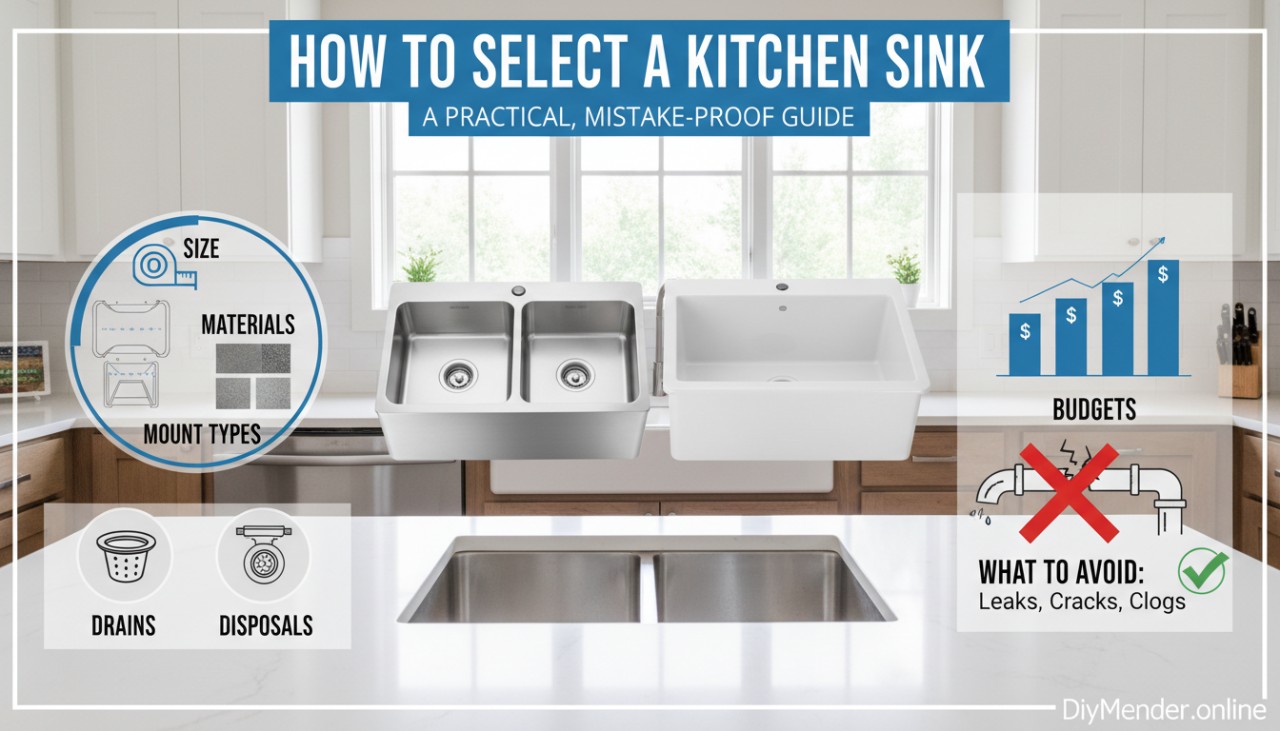
As a homeowner who’s installed and replaced more sinks than I can count, here’s the sequence I use when asked how to select a kitchen sink: lock down your fixed constraints (cabinet, countertop, plumbing), then pick the mount, size, and material that match how you actually cook and clean. This order avoids expensive rework and the most common failures I see.
Start With the Non‑Negotiables
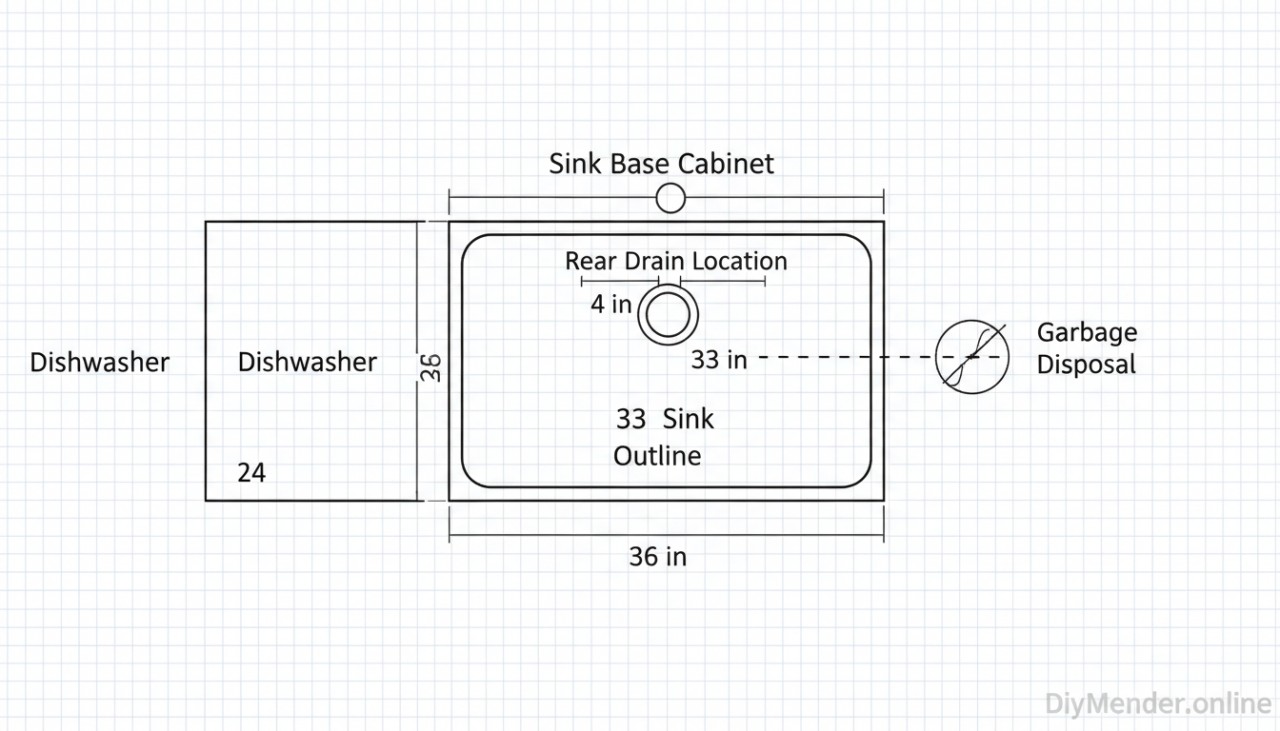
Measure the sink base cabinet and the existing countertop cutout if you’re not replacing the top. Most 36-inch sink bases accept a 33-inch sink; a 30-inch base usually limits you to 27–30 inches. Check interior clearances for garbage disposal, water filters, or pull-out trash—rear-drain sinks free up space; center drains often fight with P-traps and drawers.
- Base cabinet width: The sink must be at least 3 inches narrower than the cabinet to leave room for clips and structure.
- Countertop material: Undermount and apron-front play best with stone/solid-surface; laminate prefers drop-in to keep water out.
- Plumbing stub-out location: Offset drains save you if the drain exits the wall off-center.
- Faucet holes and backsplash: Make sure there’s 2–2.5 inches from hole center to backsplash for handle swing and deck plates.
Pick the Mount Type for Your Countertop
Undermount sinks are clean and make counter-wiping easy, but they fail when the bond to the stone is weak or unsupported. Stone expands and contracts; silicone or epoxy plus mechanical clips and support rails handle that movement. If the sink is only “glued,” a heavy disposal or a sink filled with water can sag or drop. Avoid undermount on laminate—water finds the seam and swells the core.
Drop-in (top-mount) is forgiving and often best for rentals and DIY swaps. The rim contains splashes; the trade-off is a grime-catching lip. It’s also safer for wood or laminate counters.
Apron-front (farmhouse) moves the wet zone forward, which saves backs and looks great. It fails when the face frame is cut without adding ledgers and side supports. Fireclay or cast iron aprons are heavy; plan a cradle.
Integral (solid-surface with an integrated bowl) eliminates seams entirely, wonderful for hygiene. The downside: damage to the bowl can mean refinishing or replacing the whole top.
Size & Bowl Configuration: Usable Space, Not Just Inches
A 33-inch single bowl with tight corners holds sheet pans and stockpots; a 60/40 double keeps a prep side and a rinse side. A low-divide model gives the feel of a single with some separation. The mistake I see: buying a 10-inch-deep undermount because it “feels premium,” then hating the back strain or splashing from a tall faucet. If you’re under 5'6" or your counter is higher than 36 inches, consider 8–9 inches of bowl depth.
- Workstation ledges: Fantastic for small kitchens—cutting boards and racks slide in the sink. They can splatter if paired with a high-arc, high-flow faucet; drop flow or choose a lower spout.
- Corner radius: Tighter corners maximize flat bottom area but are slightly harder to clean. Big radii wash easier but steal usable space.
- Drain location: Rear or rear-arc drains free up cabinet space and keep the trap away from the middle. They also improve dish-stacking ergonomics.
Materials Explained by How They Fail
Stainless steel: Look for 304 or 316 grade (18/8) and 16–18 gauge. Thicker steel dents less and is quieter with a disposal. Cheap 20-gauge rings, flexes, and shows “oil canning.” Coastal or chlorinated environments can cause pitting in low-grade steel. Satin finishes hide scratches better than mirror; all stainless will scratch—plan to embrace a uniform brushed patina.
Enameled cast iron: Glassy, beautiful, and quiet. Chips from dropped cast-iron pans are the failure point; exposed iron will rust. It’s heavy—undermounts need rails or a cradle. Harsh abrasives dull the gloss over time.
Fireclay: Dense ceramic, resistant to stains and heat. Edge cases: thermal shock (boiling water into an ice-filled sink) can craze the glaze. Dimensions vary a few millimeters—don’t cut stone until you have the actual sink on site.
Granite/quartz composite: Tough against scratches, but heat is the killer—resins can discolor from very hot pots. Dark colors show mineral spots; wipe and occasionally use a mild descaler. Avoid harsh alkalis and undiluted bleach. Heavier units need stout clip support.
Solid-surface: Warm to the touch, seamless with the top, and repairable. But it scratches and can scorch; use racks and be realistic about hot pans.
Copper: Gorgeous living finish and naturally antimicrobial. It will spot and patina with acids and salts—that’s normal. Choose thick (14–16 gauge) to avoid “tinny” flex; plan for extra sound control with disposals.
Concrete: Custom and textural. Needs excellent sealing and periodic maintenance. Expect micro-cracks and a lot of weight; structure matters.
Plumbing, Disposals, and Code Gotchas
Rear drains keep the trap at the back, leaving room for pull-outs; center drains are simplest for retrofits. If your wall stub-out is high, a deep sink can make achieving the required trap weir height difficult; sometimes the fix is lowering the stub-out or choosing a shallower bowl.
- Disposals: 1/2–3/4 HP is fine for most homes. Heavy units add torque—use the correct support on undermounts. For thick sinks (fireclay, composite), you may need an extended flange.
- Dishwashers: Some jurisdictions still require an air gap on the deck; others allow high loops. Check local code to avoid a failed inspection.
- Venting: Don’t “S-trap” to make a misaligned drain work; that invites siphoning and smells. Adjust layout or use approved AAVs where allowed.
Noise, Cleaning, and Daily Reality
Sound pads and undercoating on stainless matter with disposals and late-night dish sessions. In any material, tighter corners hold gunk; a bottom grid and a good pull-down faucet head reduce scraping and scratching. Matte sinks hide water spots; glossy ones show them but feel slicker to clean.
Installation Pitfalls I See Most
- Undermounts bonded without mechanical support. Use clips/rails and let adhesives fully cure before loading the bowl.
- Wrong sealants. On stone, avoid oil-based putties that can stain; use 100% silicone or stain-free plumber’s putty where appropriate.
- Apron-fronts dropped into a cut face frame with no ledgers. Always add side cleats and a front rail; let the cabinet carry the weight, not the countertop alone.
- Hole-count mismatches. If your faucet needs one hole and the sink has four, a deck plate hides them but limits accessory placement. Better to decide faucet and accessories first.
- Ergonomics ignored. Deep bowl + thick counter + tall user can be fine; short users may hate it. Mock the height with a cardboard box and a pan before you buy.
Budget: Where to Spend, Where to Save
Spend on the right mount and material for your countertop and habits; that’s what prevents leaks and chips. Save on trendy accessories you won’t use daily. A solid 18-gauge stainless undermount or a well-supported fireclay apron in a 33-inch size is a sweet spot for most families.
Quick Decision Flow That Never Fails Me
- Confirm cabinet width and plumbing location.
- Choose mount type that suits your countertop and water exposure.
- Pick size and depth that fit the base and your ergonomics.
- Select bowl configuration for your cookware and washing style.
- Match material to your tolerance for scratches, heat, and cleaning.
- Verify drain location, flange thickness, and faucet hole layout.
- Plan installation supports, sealants, and code items (air gap, AAV).
Follow that order and you’ll end up with a sink that looks good on day one and still works beautifully years later—without surprises behind the cabinet doors.