
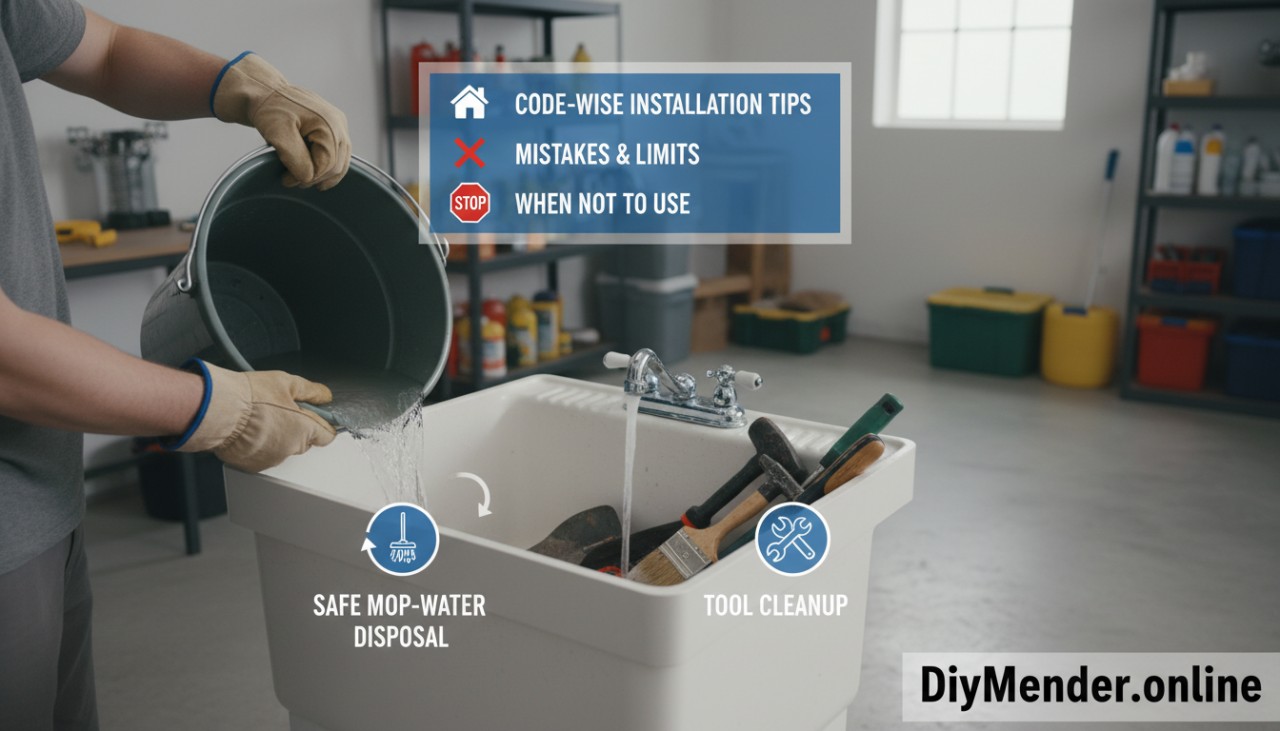
If you’re wondering what is a service sink used for, it’s the heavy-duty basin meant for dirty jobs: dumping mop water, rinsing muddy tools, filling buckets, and washing items that would wreck or contaminate your kitchen or bathroom fixtures. A service sink (often called a mop sink, janitor sink, or slop sink) isolates grime, chemicals, sand, and paint residue from your living-space plumbing and food-prep areas. The “why” is simple: preventing cross-contamination and protecting finishes and drains. These sinks are deeper, tougher, and designed to accept hose connections and heavy buckets without splashing filth everywhere.
In my house, adding one in the garage was a gamechanger. I no longer cringe at rinsing paint rollers or dumping bucket water; it all goes in the service sink with a proper strainer and a faucet that can take a hose. Keeping that mess out of the laundry or kitchen sink is the difference between a calm weekend and an emergency call to unclog a P-trap full of sand.
What makes a service sink different
Compared with a laundry or utility sink, a true service sink is built to contain splash and abuse. Common differences:
- Depth and durability: Deep basins, heavy-duty materials (molded stone/terrazzo, polypropylene, or stainless) handle impacts and sandy slurry.
- Faucet with backflow protection: Hose-thread spout plus an atmospheric vacuum breaker or integral backflow preventer keeps dirty water from siphoning into potable lines.
- Ergonomics for buckets: Floor-mounted mop receptors sit low so you can roll a full bucket in; wall-hung service sinks sit higher but still accept bucket filling and tool rinsing.
- Drainage built for debris: Larger outlet and strainers to catch grit and rags before they enter your plumbing.
Using a kitchen or laundry sink for mop water seems convenient—until grit scours the finish or a hose back-siphons dirty water into your supply lines. Service sinks are purpose-built to avoid those failures.
Typical uses at home
- Dumping mop/cleaning water without fouling a kitchen or laundry sink.
- Rinsing garden tools, pots, and muddy boots—grit stays in the strainer, not the drain lines.
- Cleaning paint gear: water-based products only; oil-based finishes go to hazardous waste, not the sink.
- Filling large buckets for mopping, pressure-washer tanks, or wallpaper removal.
- Washing pet crates and trays (use a hair/mesh catcher—fur can clog anything).
In workshops, they’re also handy for rinsing concrete tools, but let sludge settle and toss solids—do not wash wet cement, grout, or joint compound directly down the drain.
Why they work (and when they don’t)
They work because they isolate dirt and chemicals and provide the right hardware: a rugged basin, a hose-ready faucet with backflow protection, and drainage sized for debris. They fail when we treat them like trash chutes. Oils, solvents, concrete slurry, and adhesive waste can clog pipes, damage septic systems, or violate local codes. If you’re on a septic system, be extra cautious with disinfectants and paint residue; repeated dumping of harsh chemicals can kill the tank’s biology.
Installation notes from a DIYer
Most homeowners install in a garage, mudroom, or utility room with easy access to supply and drain lines. A few practical guidelines:
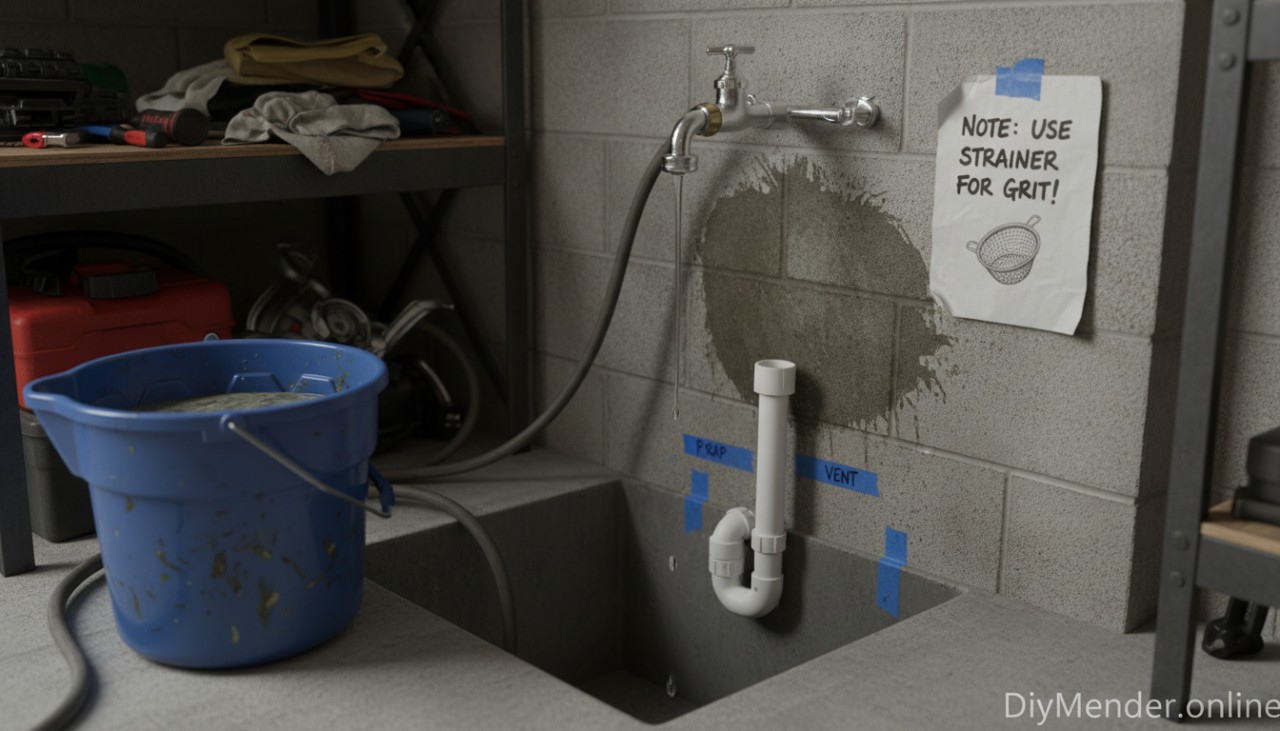
- Supply: 1/2-inch hot and cold is typical. Use a service or mop-sink faucet with hose threads and an atmospheric vacuum breaker (or integral backflow device). Keep the spout above the flood rim for an air gap when filling buckets.
- Drain: Many service sinks use a 2-inch P-trap and waste line; some jurisdictions require larger outlets for floor-mounted mop receptors. Check your local code.
- Vent: The trap needs a vent within the code-allowed distance (commonly in the 5–8 ft range for 2-inch under major codes). No vent = slow drains and sewer gas risk.
- Trap primer: Usually not needed for a frequently used service sink. If it sits unused for long stretches, add a teaspoon of mineral oil in the trap occasionally or consider a primer to keep it wet.
- Surfaces: Expect splash. Use wipeable wall protection (FRP panel, tile, or high-gloss paint) behind and beside the sink.
- Mounting: For wall-hung units, hit studs or use rated anchors. Floor-mounted receptors must sit level and fully supported.
Common mistakes I see: skipping the vacuum breaker, tying into a too-small or unvented drain, and rinsing “just a little” solvent or grout—those shortcuts bite back with odors, clogs, or contamination.
Limits, edge cases, and code cautions
- Not food-safe: Never wash produce or cookware in a service sink.
- No hazardous waste: Oil-based paints, solvents, motor oil, pesticides, or strong acids/alkalis belong at hazardous-waste facilities.
- Septic systems: Go light on bleach and paint residue; repeated chemical dumping can disrupt the tank.
- Outdoor installs: Protect from freezing; use frost-proof supplies and drain-down options.
- Commercial vs residential: Restaurants and shops have stricter rules (like mandatory service sinks and specific backflow preventers). Don’t copy a commercial setup without checking local code.
Cleaning and upkeep
Use a removable strainer to catch rags, gravel, and pet hair. Rinse after messy jobs, scrub scale and soap scum, and disinfect surfaces that contact mop water. If odors appear, clean the trap and confirm the vent isn’t blocked.
Cost snapshot
Expect around $120–$600 for the sink/receptor, $80–$250 for a proper faucet with vacuum breaker, plus piping and wall protection. DIY with open walls can be a weekend project; hiring a plumber typically adds $300–$900 depending on distances and venting.
Quick take
If you do real cleanup—mopping, gardening, painting, pets—a service sink belongs on your short list. It’s the right place for dirty water and messy tools, keeps the rest of your plumbing clean, and, with backflow protection and proper venting, it stays code-friendly and trouble-free.