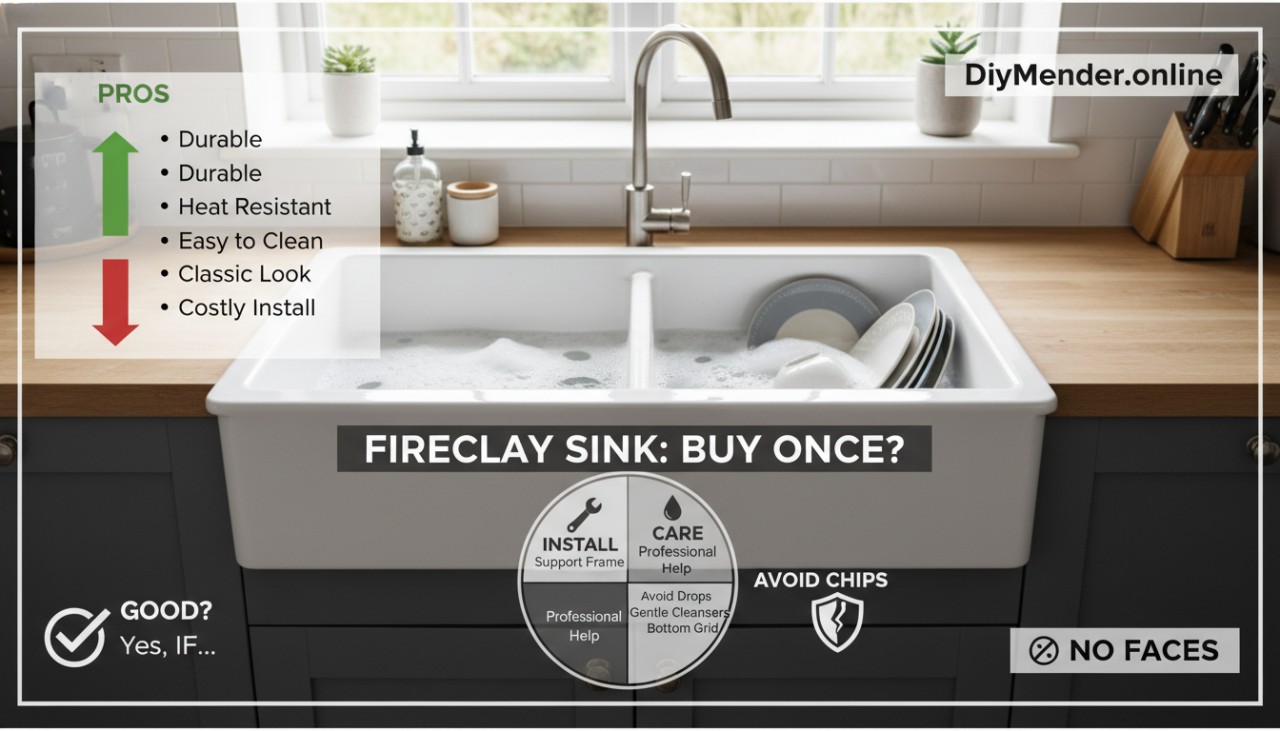
Short answer: yes, fireclay is a good sink material if you want a classic, glossy farmhouse look, quiet use, and excellent heat and stain resistance. It succeeds because the clay body is vitrified (fired to near-glass) and coated with a fused glaze at very high temperatures, creating a dense, non-porous surface that shrugs off boiling water, tomato sauce, coffee, and daily scrubbing. But it’s heavy, can chip at the edges if you slam cast iron, and absolutely requires proper support during installation.
Why it works: fireclay is essentially a ceramic engineered for kitchens. The firing process fuses minerals so the body doesn’t absorb water and the glassy glaze becomes chemically bonded. That glaze is hard and slick, so stains don’t sink in; you can usually rinse or soap-sponge them away. Thermal expansion is low and the mass is high, so a hot pan won’t shock it the way some plastics or thin porcelains can. The weight also dampens noise better than thin stainless steel.
Where it struggles: the same hardness that resists scratches can chip if a heavy, sharp object hits an exposed rim or corner. Think: dropping the corner of a cast-iron skillet or a full Dutch oven. Chips aren’t common in the bowl center; they happen at edges, drain openings, or where the glaze is thinnest. And because many fireclay sinks are handmade, sizes can vary by up to 1/2 inch—cabinet and countertop prep must be done after you have the sink in hand.
Real-world pros I’ve seen in my installs and my own kitchen:
- Heat and stain resistance: You can set down a hot pot briefly without scorch marks; coffee and wine don’t penetrate.
- Quiet and solid feel: The mass soaks up clatter compared to thin-gauge stainless.
- Classic look: The high-gloss enamel fits farmhouse/apron-front styles and modern kitchens alike.
- Easy daily cleaning: Dish soap, soft sponge, rinse. Metal scuffs from pans lift with a non-scratch pad and a gentle cleanser.
Real drawbacks and costs to plan for:
- Impact chipping at edges: A pot dropped on an apron front or at the drain flange can chip the glaze.
- Weight and install complexity: 80–120+ lb; needs a support cradle, careful shimming, and silicone bedding. Not a “drop it in and go” job.
- Dimension variability: Especially on handmade farmhouse sinks; template after you receive the unit.
- Price: Typically higher than stainless and many composites; often $500–$1200+ before install.
How to make fireclay last (and what actually matters):
- Use a bottom grid: It keeps pots off the glaze and prevents impact chips around the drain.
- Build a support cradle: A 3/4 in plywood deck or rails across the cabinet sides, with shims to level, so the sink rests from below—not just on the countertop.
- Mount disposals correctly: Use the proper mounting ring and ensure the disposal’s weight is borne by the cradle/cabinet, not the sink lip.
- Clean gently: Dish soap and a soft sponge daily; for marks, use a non-abrasive cleaner. Avoid abrasive powders and hard scouring pads that can dull the shine.
- Mind thermal shock at the extremes: Don’t go from a screaming-hot cast iron pan to an ice bath in the bowl. Normal hot water and cooking use are fine.
If you’re a visual person, picture this cross-section: a thick, vitrified clay body with a glassy glaze on top, sitting on a plywood cradle inside the cabinet, with silicone between sink and countertop to float and seal it. That support, not the countertop alone, carries the load and tamps down vibrations from a disposal.
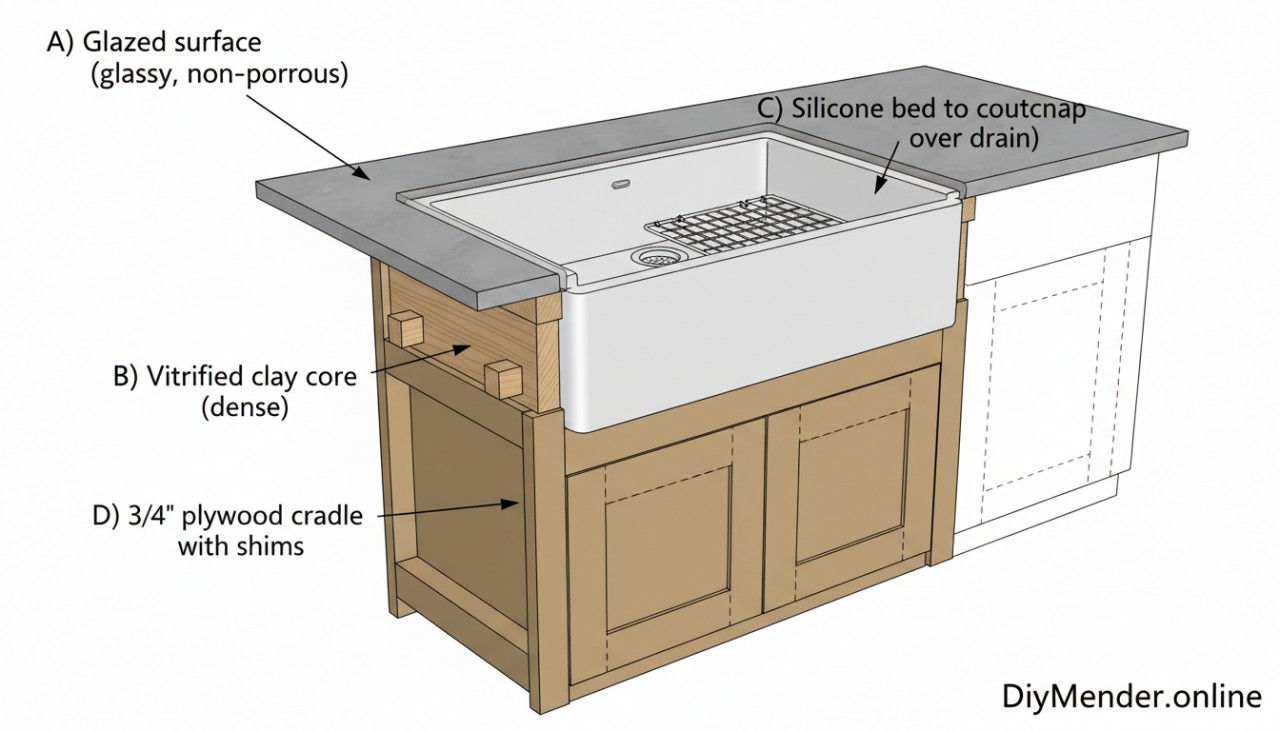 fireclay sink in a base cabinet. Labels: A) Glazed surface (glassy, non-porous), B) Vitrified clay core (dense), C) Silicone bed to countertop, D) 3/4" plywood cradle with shims, E) Bottom grid over drain. DiyMender.online watermark." title="Diagram: cross-section of an apron-front fireclay sink in a base cabinet. Labels: A) Glazed surface (glassy, non-porous), B) Vitrified clay core (dense), C) Silicone bed to countertop, D) 3/4" plywood cradle with shims, E) Bottom grid over drain. DiyMender.online watermark." class="overly-article-img">
Common mistakes I see (and easy fixes):
- Hanging the sink off the counter only: Leads to hairline cracks over time. Fix: add a cradle or rails under the sink.
- Over-tightening the drain flange: Can spider-chip the glaze. Fix: snug plus a dab of plumber’s putty; don’t muscle it.
- Using harsh chemicals or abrasives: Bleach soaks and strong acids can haze the glaze. Fix: mild cleaners; for hard water, a quick diluted vinegar wipe then rinse—don’t soak.
- Skipping a grid: Most bowl chips I’ve repaired were at the drain without a grid.
Edge cases—when fireclay might not be the best choice:
- Rough handling households or rentals: If pans get tossed or kids drop bottles, stainless (16–18 gauge) or granite composite may survive better.
- Ultra-hard water: Mineral film shows on glossy white. Manageable with regular rinsing and a weekly gentle de-scale, but if you dislike maintenance, consider matte composites.
- Laminate counters with farmhouse cutouts: Undermount/apron-front on laminate is tricky; you’ll want solid-surface, quartz, or stone tops for best results.
Repairs and reality check: Small chips can be filled with a two-part porcelain repair or color-matched epoxy. They’re cosmetic band-aids; under bright light you’ll notice them. Structural cracks through the body mean replacement. Most reputable brands offer good warranties against manufacturing defects but exclude impact damage—read the fine print.
How it compares quickly to popular alternatives:
- Cast iron enamel: Similar look and weight; excellent durability; slightly more prone to surface scratching but less edge-chippy than some fireclay.
- Stainless steel: Best for impact resistance and easy installs; louder and shows water spots but very forgiving.
- Granite composite: Tough against impact and scratches, matte look, good value; can show lighter scuffs that need a conditioning oil.
My verdict as a hands-on DIYer and homeowner: fireclay is a great sink material if you value a timeless, glossy basin and you’re willing to install it right and use a grid. In a cooking-heavy household that handles cast iron with care, it will look new for years. If your kitchen is hard on gear or you need a simpler install, go stainless or a quality composite instead. Choose based on how you actually cook and clean—not just the showroom shine.