
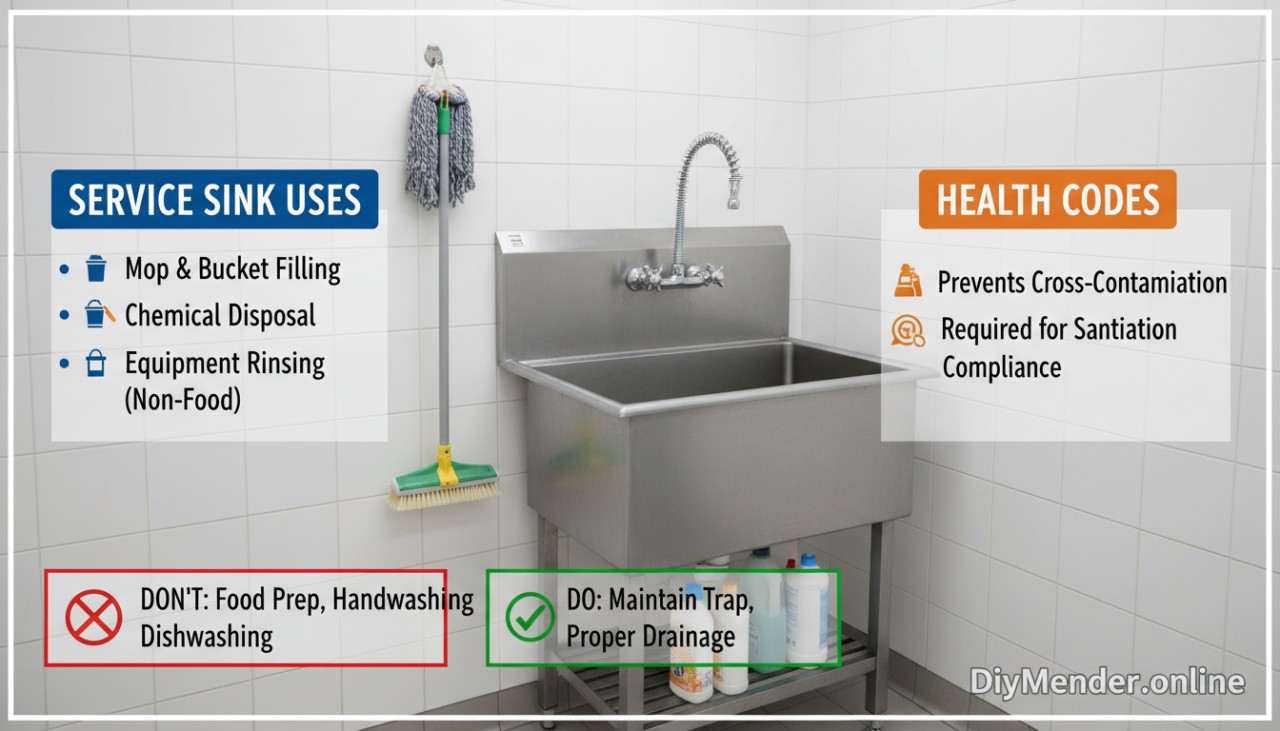
A service sink—often called a mop sink or janitor sink—is the dedicated place to fill and dump mop buckets, rinse mops and squeegees, and dispose of dirty floor water and cleaning solutions. In short, that is what is a service sink used for in a restaurant. It is not for food prep, dishwashing, or handwashing. Segregating these tasks keeps pathogens and chemicals away from food and clean wares, which is exactly what health codes are trying to enforce.
Why a separate fixture? Because dirty floor water and sanitizers carry debris, detergents, and microbes you don’t want anywhere near prep sinks or the dish machine. A true service sink is built for abuse: floor-mounted or deep-basin, chemical-resistant, tall splash walls, and a faucet with a vacuum breaker/backflow prevention. All of that limits splash, backflow, and cross‑contamination. It also saves your grease interceptor from being overloaded with silt and detergents (jurisdiction dependent).
What belongs in the service sink versus elsewhere:
- Do use it to fill/dump mop buckets, rinse mops, squeegees, and floor signs, and to dispense/dilute cleaning chemicals via a compliant dispenser.
- Do not use it for hands, produce, thawing, soaking utensils, or dumping fryer oil or grease—ever. Don’t empty food scraps there either; that’s a fast track to clogs and smells.
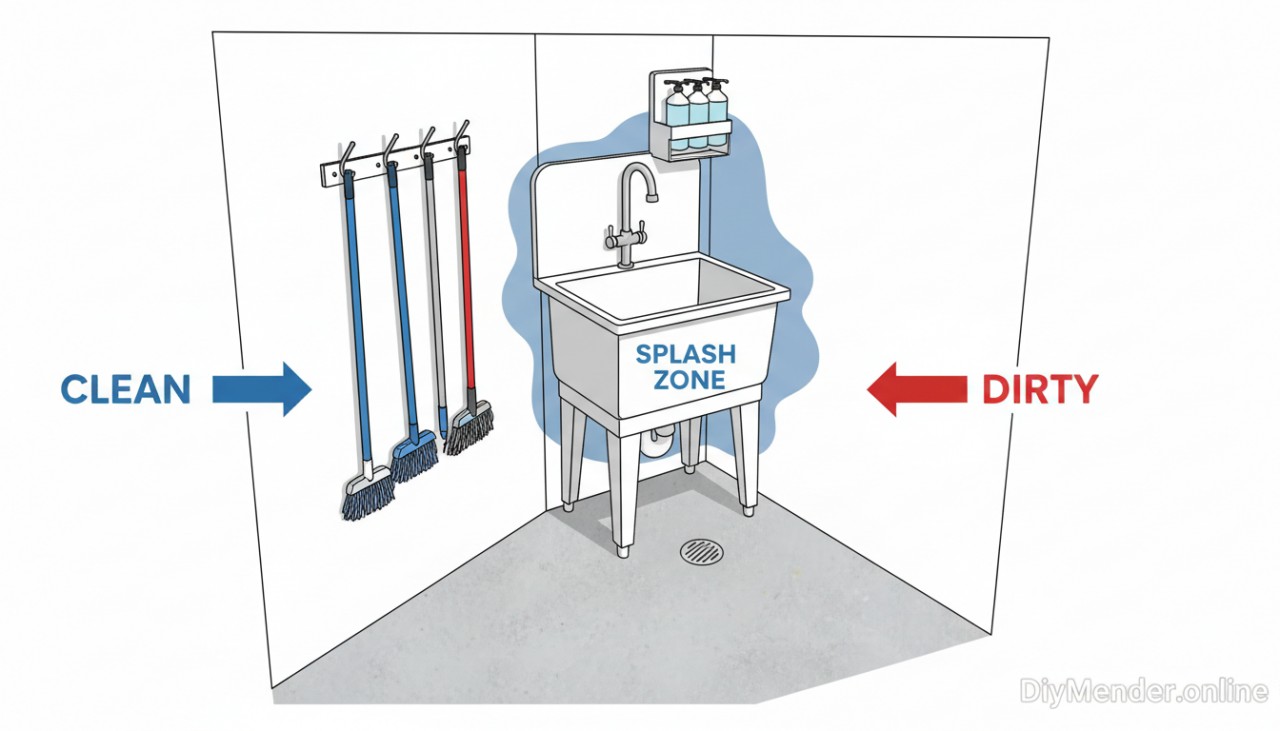
How I lay out a janitor closet that works: keep the service sink away from food prep paths, allow bucket clearance (at least 3 feet front access), mount a mop holder, store chemicals below eye level but not above the sink bowl, and use wall panels you can sanitize. Provide a hose bib with a vacuum breaker and a chemical dispenser with an air gap or backflow device rated for chemicals.
Common mistakes I see (and why they bite you):
- No vacuum breaker/backflow preventer on the hose: a submerged hose in a dirty bucket can siphon contaminated water back into the potable line during a pressure drop. Inspectors nail this instantly.
- Using a hand sink or prep sink as a mop sink: aerosolized filth and chemicals near food or hands equals violations and illness risk.
- High-pressure nozzles that atomize dirty water: you end up breathing it and coating nearby shelves. Use a gentle stream and keep splash within the sink’s walls.
- Routing the service sink through the wrong interceptor: some areas require the mop sink to bypass the grease interceptor; others want it tied in downstream or upstream depending on local code. Get this wrong and you either clog the interceptor with silt or fail inspection. Always check with your AHJ.
- Storing chemicals above the sink: drips contaminate the basin, and accidental mixing can be dangerous. Keep incompatible chemicals apart and below shoulder height.
- Letting wet mops sit in the basin: it turns into a bacteria farm. Use a wall-mounted rack so they dry over the sink, not in it.
Installation pointers from jobs I’ve done and corrected:
- Pick the right basin: terrazzo or composite floor-mounted mop sink for heavy traffic; stainless or deep utility sink for light duty coffee bars. Size for your biggest bucket plus splash clearance.
- Faucet: a wall-mount with vacuum breaker (ASSE 1011/1022) and a bucket hook/ledge saves backs and meets code. A dedicated chemical dispenser with an air gap prevents cross-connection.
- Drainage: large strainer/grate to catch strings and debris. If use will be infrequent, a deep-seal trap or trap primer prevents sewer gas.
- Surrounds: waterproof wall panels, coved base, and non-slip floor. Slope the floor toward the sink to keep water contained.
- Clearances: 36 inches in front for bucket maneuvering, good lighting, and a door that opens fully without hitting the bucket.
- Labeling: "Service Sink Only—No Handwashing/Food." It guides staff and satisfies inspectors.
Edge cases and limits I’ve run into:
- Tiny cafés and espresso bars: some jurisdictions let a deep utility sink stand in as the service sink if it’s fully separated from food areas. Others demand a floor-mounted mop sink. Ask your inspector before you build.
- Food trucks: usually you can’t dump mop water on-site—use the commissary’s service sink or a permitted dump station.
- Grease interceptor tie-in: only fixtures that produce grease must go through the interceptor in many codes; mop/service sinks often do not. Confirm locally.
- Chemical-heavy programs: consider an eyewash station nearby if caustics are in use; some workplaces require it.
- ADA: service sinks in janitor closets aren’t typically public fixtures, but overall employee route accessibility may still apply. Plan the path and door hardware accordingly.
Care and maintenance that actually prevent problems:
- Daily: remove debris from the strainer; rinse down splash walls.
- Weekly: descale faucet aerators/nozzles; sanitize basin and walls.
- Monthly: check vacuum breaker for leaks and proper function; inspect seals and caulk lines.
- Quarterly: snake the trap if drain slows; confirm chemical dispensers draw and vent correctly.
Quick checklist I give owners:
- Dedicated service sink, not shared with food or handwashing
- Vacuum breaker/backflow prevention on any hose or dispenser
- Proper drain connection per local code (interceptor routing verified)
- Mop rack, chemical storage below shoulder height, clear labeling
- Non-slip floor, waterproof walls, adequate lighting and access
Bottom line: a service sink is the dirty-work zone that keeps the rest of your kitchen clean, compliant, and efficient. Install it with backflow protection, smart layout, and the right materials, and it’ll prevent cross-contamination, reduce clogs, and help you pass inspections without drama.