
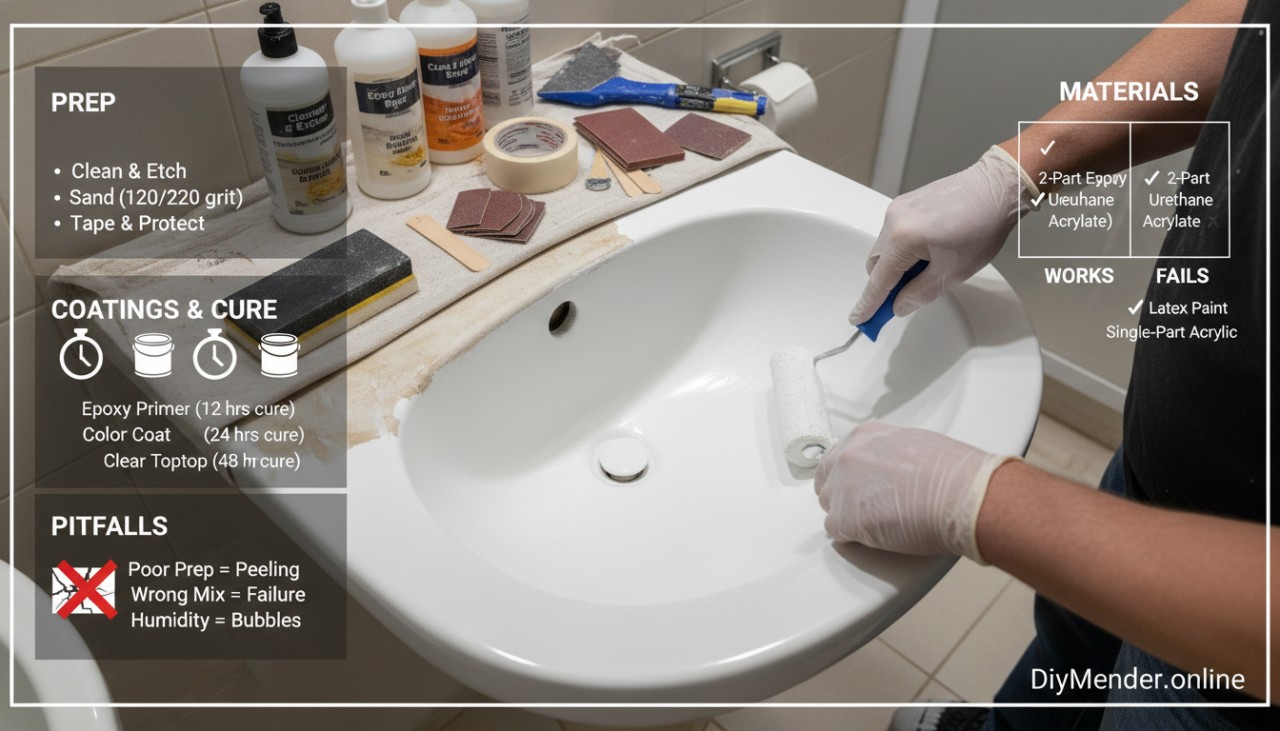
If you’re searching for how to resurface bathroom sink, the short version is: deep-clean and de-silicone, scuff-sand to degloss, repair chips, solvent-wipe, then spray a two-part epoxy or acrylic urethane topcoat in thin passes, allowing proper flash times and a full 48–72-hour cure. It works because the coating bonds mechanically to a clean, dull, stable surface and chemically through an adhesion promoter—skip any of that and it peels.
What You Can and Can’t Resurface
Best candidates: vitreous china/porcelain, enameled cast iron/steel, and cultured marble (polymer/resin vanity tops). These are non-porous and stable, so refinishing adheres well. Avoid or reconsider: acrylic sinks (soft and heat-sensitive), heavy crazing (spiderweb cracks that telegraph through coatings), structural cracks, active rust-through, or sinks flexing on a flimsy vanity. Reglazing hides cosmetic wear; it won’t fix structural issues.
Tools and Materials That Actually Work
- Cleaner/degreaser (alkaline) and solvent (acetone or denatured alcohol)
- Single-edge razor and plastic scraper (for silicone removal)
- Abrasion: 220–320 grit sandpaper and 400 grit for between coats
- Filler: two-part epoxy or polyester filler for chips; glazing putty for pinholes
- Adhesion promoter/bonding agent (especially on porcelain)
- Coating: two-part epoxy or 2K acrylic urethane refinish kit; HVLP sprayer or high-quality aerosol system
- Masking: painter’s tape, masking paper/plastic, drop cloths
- Respirator with organic vapor/P100 cartridges, gloves, eye protection, ventilation fan
Step-by-Step That Won’t Peel Later
1) Strip Contaminants (Most People Undercook This)
Scrub with an alkaline cleaner to remove soap scum and body oils, rinse hot, repeat until water sheets evenly. Silicone caulk is the enemy: shave it off with a razor, then wipe residue with a silicone remover or mineral spirits twice. If any silicone remains, coatings fisheye.
2) Degloss and Feather Defects
Sand all glossy areas with 220–320 grit until uniformly dull; feather chips and worn edges. On cultured marble, avoid cutting through the gelcoat—just degloss. Vacuum dust, then wipe with a clean microfiber.
3) Repair Chips and Pinholes
Mix a small batch of two-part epoxy or polyester filler. Fill chips slightly proud; once cured, block-sand flush with 320. Address pinholes with glazing putty and a quick 400-grit pass. If you can feel an edge with your fingernail, it will print through the finish.
4) Solvent Wipe and Tack
Use acetone or denatured alcohol on a lint-free cloth; two clean passes. Follow with a tack cloth. Don’t touch the surface with bare hands afterward—skin oils cause fisheyes.
5) Mask and Control the Environment
Mask the countertop, faucet, drain, and backsplash. Remove or mask the overflow opening—overspray inside can flake later. Aim for 65–75°F and low humidity. Set up ventilation with a box fan exhausting out a window and make-up air from a doorway.
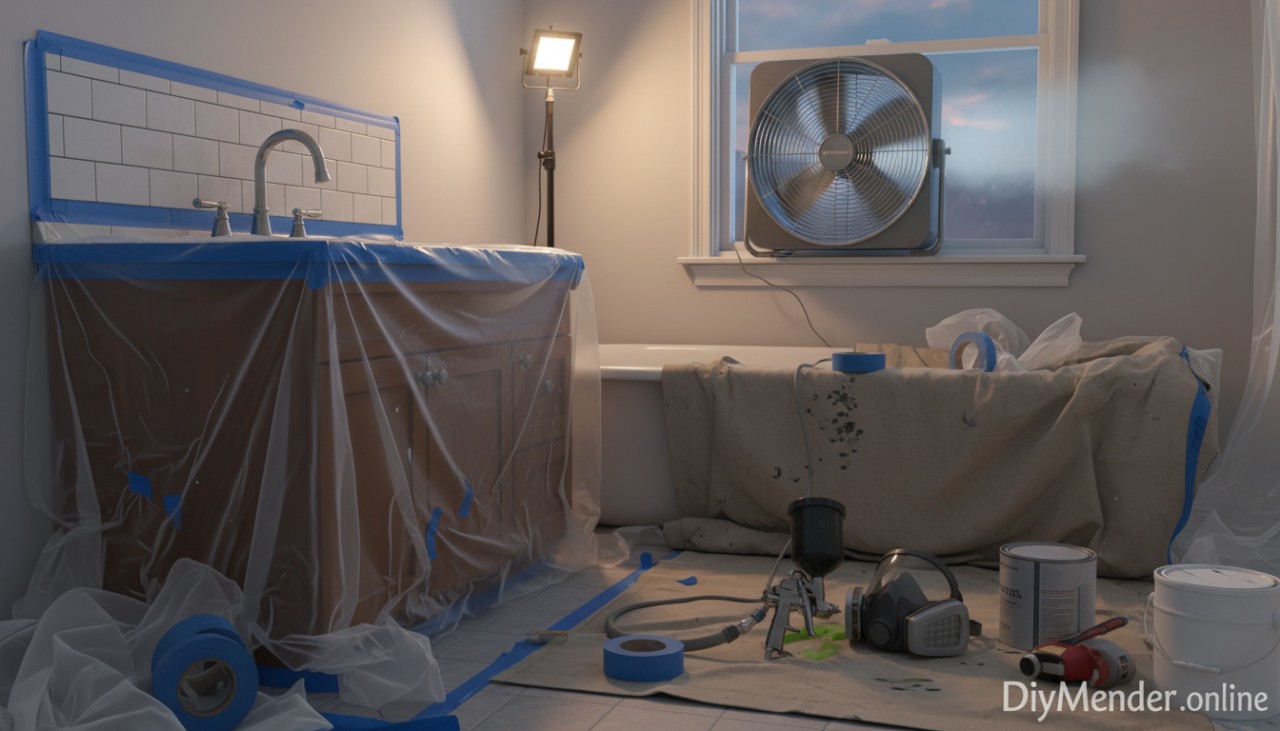
6) Adhesion Promoter/Primer (Porcelain’s Secret)
Porcelain is glassy; an adhesion promoter made for tile or porcelain makes a big difference. Light, even coat—follow the product’s flash time (often 10–20 minutes). Some kits include a specific bonding agent—use it.
7) Mix and Apply Topcoat
Two-part epoxy: very durable and chemical-resistant, slightly thicker look; yellowing risk under UV (fine for bathrooms). Two-part acrylic urethane: pro-level feel and color stability, cures harder, but more finicky with temperature and mix ratio. Mix only what you can spray in 30–45 minutes. Apply 2–3 thin coats: a light tack coat, then 1–2 medium-wet coats with 10–15 minutes flash between. Keep the gun moving; overlap 50%. Watch edges and the drain rim—runs there are common.
8) Flash, Inspect, and Fix Dust Nibs
After the second coat flashes, you can nib-sand dust with very light 600 grit and re-mist that area. If you sand through, stop and touch up with another thin pass—don’t bury problems under a heavy coat or you’ll get solvent pop.
Why These Steps Work (And Why Shortcuts Fail)
Resurfacing depends on mechanical key (scratch profile from sanding) and chemical adhesion (bonding agents). Oils, silicone, and glossy glaze block both, causing fisheyes or sheets of coating to peel. Thin coats allow solvent to escape; thick coats trap solvent and later blister. Temperature and humidity control curing—too cold and it sags; too humid and blushing or dullness appears.
Common Mistakes I See
- Leaving silicone: even a hairline of residue creates craters and delamination.
- Skipping adhesion promoter on porcelain: adhesion is 50% prep, 40% chemistry, 10% luck.
- Heavy first coat: runs near the drain and at vertical transitions.
- Rushing cure: setting a toothbrush cup on a 12-hour-old finish leaves permanent rings.
- Using abrasive cleaners afterward: they scratch the new film and dull the gloss.
Edge Cases and Limits
- Crazing: thousands of micro-cracks in old enamel will telegraph through; coatings may bond but pattern shows. Replacement is smarter.
- Active rust at drain: treat rust to bright metal, epoxy prime spot, then coat—or replace the drain hardware. If the metal is thinned, refinishing won’t save it.
- Acrylic bowls: can be done, but soft substrate moves; expect shorter life and easy scratchability.
- Color change to bright white over dark: plan an extra coat for opacity.
Curing and Aftercare
Dust-free in 2–4 hours, handle-light in 24, water exposure after 48, full cure 5–7 days (check your product). Re-caulk only after full cure. Clean with non-abrasive bathroom cleaners—no bleach immersions, no scrubbing pads. Use a soft cloth and mild soap. Don’t leave dye-heavy products (hair dye, blue mouthwash) sitting on the finish.
Cost, Time, and When to Replace Instead
DIY materials: $80–$200 for a quality kit plus abrasives and PPE. Time: a meticulous weekend plus a few days’ cure. Expect 3–7 years of service depending on use and cleaners. If your sink is cracked, badly crazed, or the vanity is failing, replacement is usually cheaper long-term than coating a moving or failing substrate.
Quick Recap
Success hinges on cleaning, de-siliconing, sanding, proper filler work, adhesion promoter, and disciplined thin coats with the right 2K coating. Do that, and a tired porcelain or cultured marble sink can look factory-new and stay that way.