
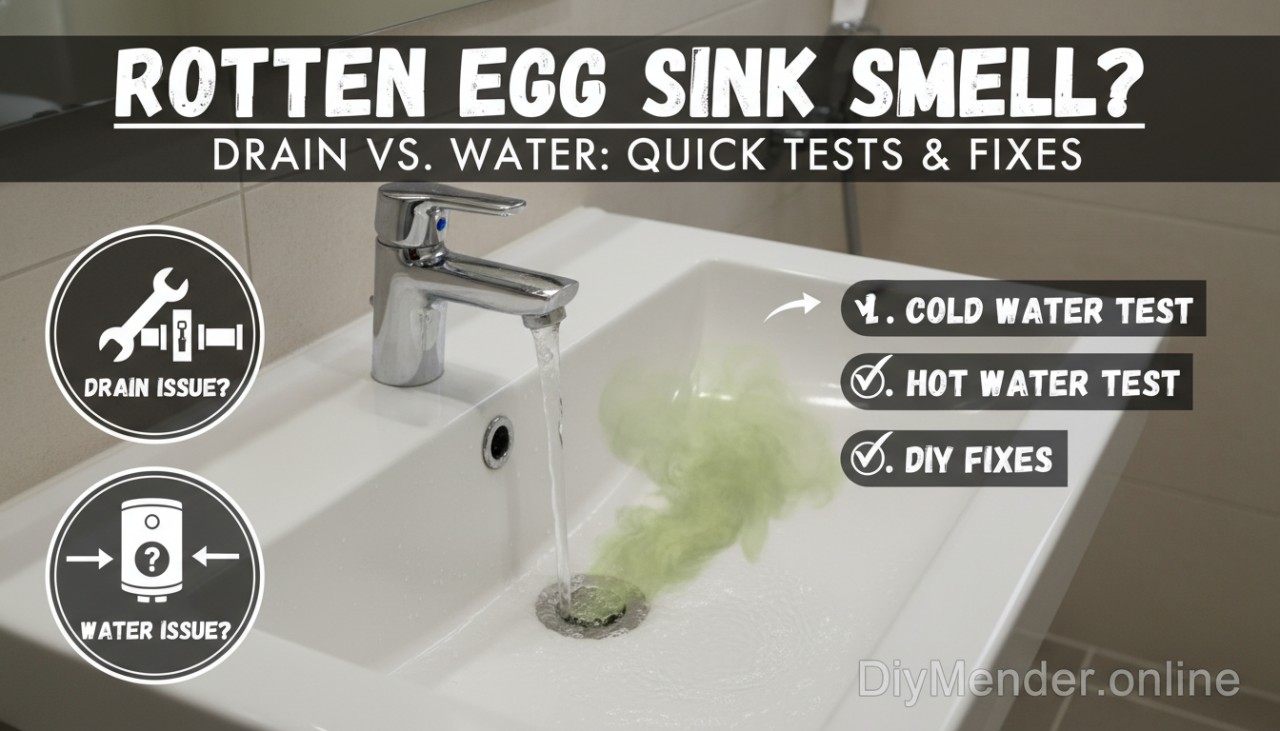
Short answer: the rotten egg smell is hydrogen sulfide (H2S). In a bathroom sink, it almost always comes from one of three places: the drain (biofilm in the overflow, tailpiece, or P-trap), the hot water heater (anode reaction or bacteria), or the incoming water (well water with sulfur-reducing bacteria). If you asked “why does my bathroom sink water smell like rotten eggs,” start with these tests—because where you smell it is the key to the fix.
Three quick tests to find the source
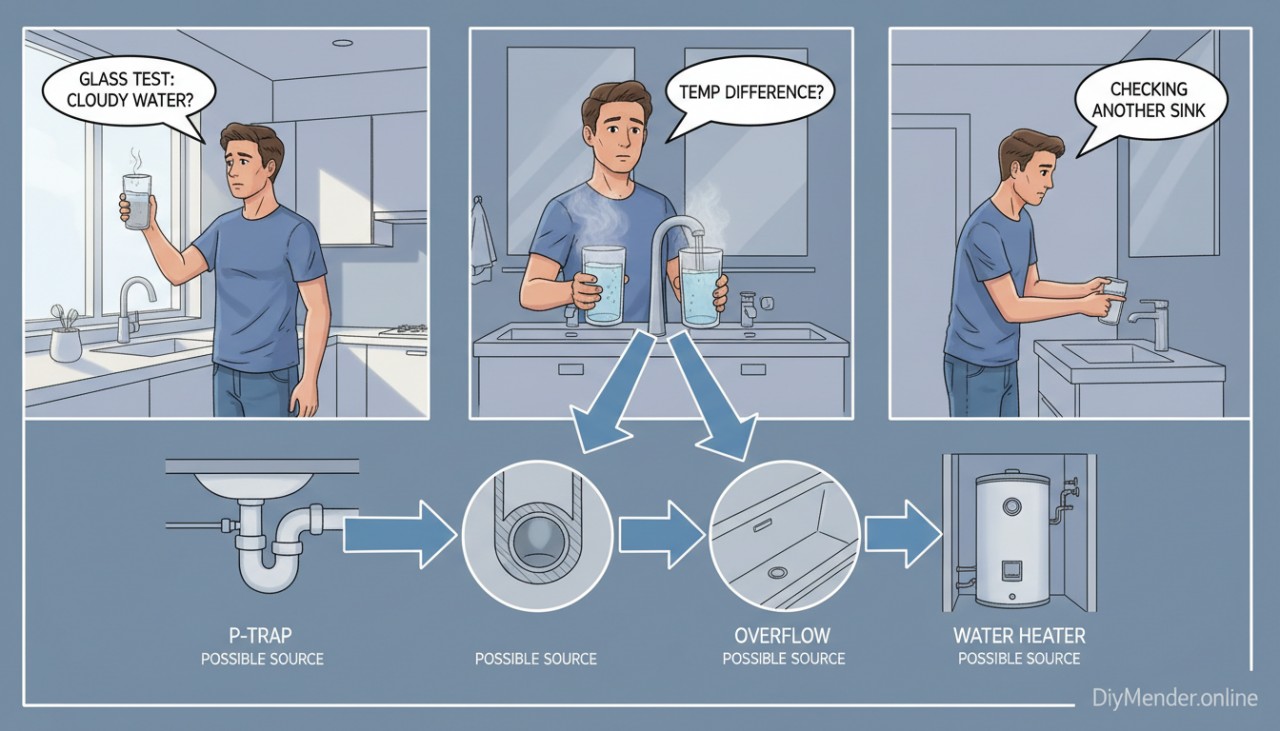
Glass test (separates water vs. drain): Run the suspect tap for 10–15 seconds. Fill a clean glass, step into another room, and smell the water. If the odor is gone in the other room, the smell is from the drain/overflow, not the water.
Hot vs. cold: If only hot water smells, suspect your water heater anode or heater bacteria. If both hot and cold stink, it’s either the drain or your incoming water. If only the drain smells (see glass test), the supply is fine.
Other fixtures: Check another bathroom and the kitchen. If only one sink smells and the glass test is clean, it’s that sink’s drain. If the whole house smells, test your source water (especially if you’re on a well).
If it’s the drain: deep clean the biofilm
Why it stinks: anaerobic bacteria live in the slime (biofilm) lining the tailpiece and overflow channel. When you run water, you aerosolize H2S rising from the drain, so it smells like the water itself. Bleach often fails because it doesn’t penetrate the slime or reach the overflow channel long enough.
Do this (30–60 minutes, $10–$25):
Pull the stopper. Scrub the tailpiece and crossbars with a narrow bottle brush. Pay attention to the underside of the flange where gunk hides.
Overflow cleaning: Tape the overflow hole, fill the basin with very hot water, add an enzyme drain cleaner or foaming drain cleaner, then un-tape and let it draw into the overflow. Alternatively, use a foaming cleaner specifically labeled for overflows.
Remove and clean the P-trap: Place a bowl, loosen slip nuts, and scrub the trap and horizontal arm. Replace worn washers. Reassemble snug—not overtight—to avoid leaks.
Flush with hot water, then finish with an enzyme treatment overnight to rebuild a healthy, low-odor biofilm.
Mistakes to avoid: Don’t pour bleach then vinegar (creates chlorine gas). Don’t rely only on liquid chemicals; mechanical brushing is what removes the stink layer. If your sink drains slowly or gurgles, check venting or an S-trap that siphons dry; a dry trap can let sewer gas in. For rarely used sinks, add a teaspoon of mineral oil after running water to slow evaporation.
If it’s only hot water: fix the water heater
Why it stinks: hydrogen sulfide forms when magnesium anodes react with sulfates, or when sulfur-reducing bacteria colonize warm, low-oxygen water—often worse with water softeners.
DIY steps (45–120 minutes, $15–$250):
Thermal disinfect (temporary): Set the heater to 150°F for 2–4 hours to suppress bacteria, then return to safe temperature (120°F) and flush a few gallons from the drain valve. Use anti-scald mixing valves and caution—150°F can cause burns in seconds.
Peroxide rinse (safe, effective on bacteria): Turn off gas/power. Close cold inlet, open a hot tap to relieve pressure. Add 1–2 cups of 3% hydrogen peroxide per 40–50 gallons via the anode port or hot outlet (follow manufacturer guidance). Refill, sit 2 hours, then flush. Peroxide breaks down to water and oxygen.
Swap the anode: Replace a magnesium anode with an aluminum–zinc alloy or install a powered anode (best long-term). This reduces the chemical reaction that makes H2S. Do not remove the anode permanently—your tank will rust out.
Flush sediment: Sediment harbors bacteria; drain and flush until clear.
Limits and notes: If you have a softener, the smell may be stronger; a powered anode is often the permanent cure. Anode removal can be tight—use a breaker bar; if you’re unsure, call a plumber. Never seal the tank without an anode.
If both hot and cold water smell everywhere
This points to the water supply. On wells, H2S is common; on municipal water, it’s rare and usually a drain issue instead. Confirm with the glass test in multiple rooms.
Well water fixes:
Shock chlorinate the well and plumbing: A proper well shock with unscented bleach or chlorine pellets can knock down sulfur bacteria. Follow your state extension’s procedure; flush until odor and chlorine dissipate.
Continuous treatment: Options include aeration + carbon, oxidizing filters (air-injection iron filters for H2S/iron), or chlorine feed with contact tank + carbon. Size equipment to your flow and lab results.
Test water: Get a lab panel for H2S, iron, manganese, pH, hardness. Treatment choice depends on levels; for example, 0.5–2 ppm H2S often responds well to air-injection + catalytic carbon.
Municipal supply: True H2S is unlikely. If you still smell sulfur in the glass away from the sink, flush the building lines (let cold run 5–10 minutes), open and clean aerators, and eliminate dead legs. If it persists, contact the utility and a licensed plumber.
Edge cases I see a lot
After vacations: The P-trap evaporated; run water for a minute, then add a teaspoon of mineral oil to slow evaporation. Don’t forget the tub and floor drains.
Only when the faucet is running, not from the glass: That’s aerosolized drain odor—clean the overflow and tailpiece.
Dishwasher or washer stink: Often a biofilm problem in the standpipe or a mis-plumbed drain allowing cross-odors.
Gurgling sink with odor: The vent may be blocked or you have an S-trap that’s siphoning. Fix the venting, or the smell will return.
When to call a pro
If the smell returns quickly after a full drain cleaning, if you can’t break the anode loose, if you need well shock guidance or treatment sizing, or if you notice headaches or nausea (uncommon but possible with poor ventilation), bring in a licensed plumber or water specialist.
Fast decision cheat sheet
Smell at tap, not in glass elsewhere: Clean drain/overflow/P-trap.
Only hot water smells: Treat water heater; swap anode if needed.
Both hot and cold everywhere (in-glass): Test and treat supply (well).
Intermittent after disuse: Refill/maintain traps.
Once you match the symptom to the source, the fix is straightforward. Most cases I handle are just drain biofilm or a magnesium anode swap—cheap, fast, and the rotten egg smell is gone the same day.