
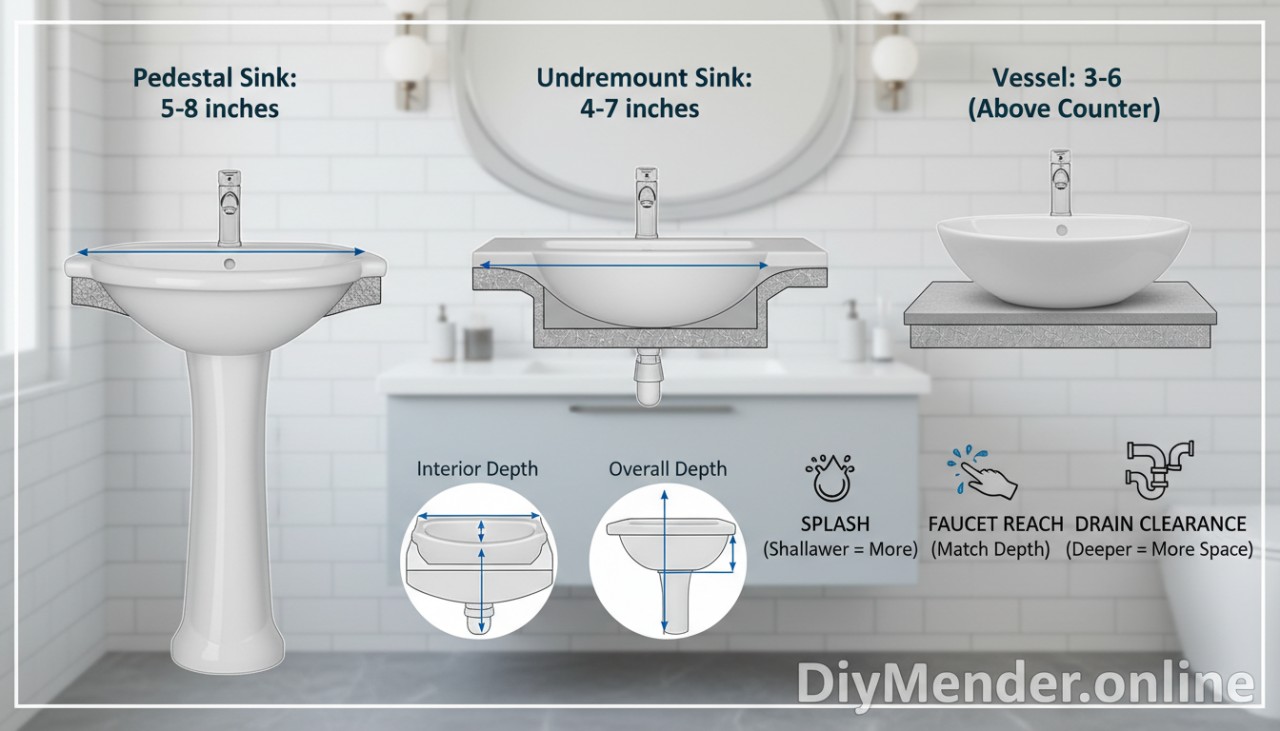
If you’re choosing a new basin or troubleshooting splash and ergonomics, you’re probably asking, how deep is a bathroom sink? In most homes, the usable interior bowl depth lands between 4.5 and 6.5 inches. Overall depth from rim to bottom can run closer to 5 to 8 inches, depending on style and mounting. That sweet spot balances comfort, splash control, and space for the drain and P-trap.
How Deep Is a Bathroom Sink? The Real-World Range
After installing and swapping plenty of sinks, here’s what actually shows up in real bathrooms and why it matters.
Undermount and drop-in (most common): 4.5–6.5 inches interior depth. Comfortable for adults, good splash control with standard-height vanities and faucets.
Shallow or compact basins: 3.5–4.5 inches. Useful for tight vanities and powder rooms; may splash more and feel cramped for face washing.
Deep basins: 6.5–8 inches. Great for rinsing bulky items and containing splash, but can strain your back if the vanity is tall, and can eat into cabinet space and trap clearance.
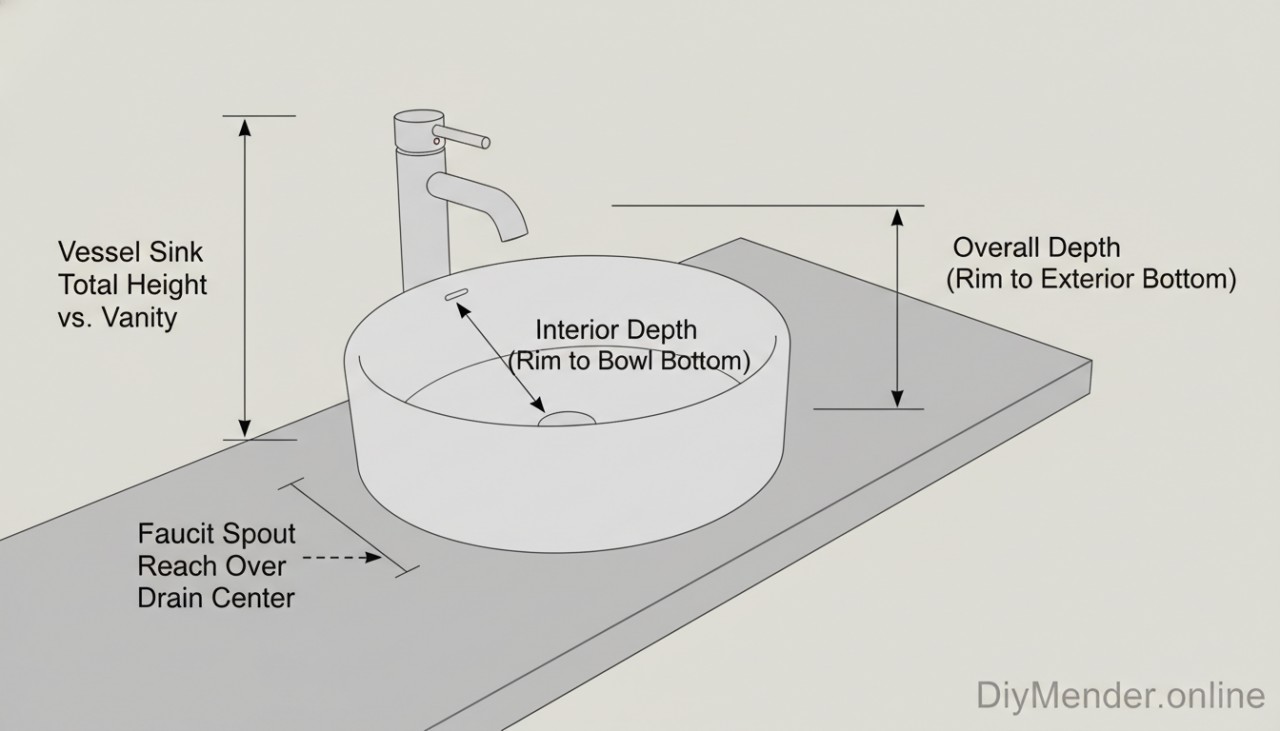
Vessel sinks: Bowl interior depth varies 4–6 inches, but the rim sits on top of the counter. Total height jumps, so they often need a shorter vanity or low-profile faucet to stay comfortable.
Pedestal and wall-mount sinks: Usually around 4.5–6 inches. Depth is balanced against wall clearance and trap concealment.
The reason these ranges persist is simple: go too shallow and you splash everywhere; go too deep and you bend more and lose cabinet space for the drain assembly.
Why Depth Affects Everyday Use
Depth isn’t just a spec on a box—it changes how the sink behaves and how your body feels using it.
Splash control: Deeper basins keep the water line lower and catch more spray. Pair with an aerated faucet and moderate flow to tame messy counters.
Ergonomics: Deeper bowls plus tall vanities mean more forward bend at the waist. If your vanity top is already 36 inches, a very deep sink may feel awkward for shorter users and kids.
Faucet compatibility: Short spouts or low arc faucets can hit the back wall of a deep bowl, causing back-splash. A spout that lands roughly over the drain center usually behaves best.
Drain and P-trap clearance: Extra-deep bowls drop the tailpiece lower. If your wall drain rough-in is set high, the trap may not align without reworking plumbing.
Storage and access: Tall basins reduce room for organizers, bottle traps, or water filters under the sink.
How to Measure Sink Depth the Right Way
Manufacturers describe depth differently, and that’s where people get burned. Measure what matters to you.
Interior (usable) depth: From the highest point of the rim down to the deepest point of the bowl, inside the sink. This dictates comfort and splash behavior.
Overall depth: Outside rim to the very bottom of the sink body. This determines drain height and cabinet clearance.
Undermount vs. drop-in: For undermounts, add the counter thickness if you’re comparing to a top-mount spec sheet. What your hands feel is the distance from counter surface to bowl bottom.
Overflow location: If the overflow slot sits low, effective fill depth is reduced. It won’t change ergonomics much, but it changes how full you can run the sink.
Vessel sinks: Measure the bowl depth, then consider counter height plus bowl height together. This overall height is what your elbows and back will notice.
Picking Depth by Household and Room
Use the space and users you have to choose the bowl depth, not just what’s in stock.
Main family bath: Aim for 5–6 inches interior depth. It’s the most forgiving combo for mixed ages and tasks like face washing and shaving.
Powder room: 4–5 inches is fine. Shallow saves space and still works for hand washing.
Kids’ bath: 4.5–5 inches helps reduce bending and splashing. Prioritize a faucet with gentle flow.
Tall users or 36-inch vanities: Consider staying near 5 inches to keep ergonomics comfortable.
Heavy washing (hair dye bowls, small buckets): 6–7 inches helps contain mess and water.
Common Mistakes That Lead to Regrets
I’ve seen these trip people up more than once.
Deep bowl with short spout: Water hits the back of the bowl and sprays. Check spout reach to land near the drain center.
Ignoring trap height: Replacing a 5-inch bowl with a 7-inch bowl can drop the tailpiece below the wall stub-out. You end up with an S-curve or back-pitched trap—both wrong.
Vessel sink on a standard-height vanity: Looks great, feels too tall. Either lower the vanity or pick a low-profile vessel and shorter faucet.
Chasing capacity over comfort: Deep is not always better. If you mainly wash hands, shallower can be easier on your back and just as tidy with the right faucet flow.
Codes, Accessibility, and When to Get Help
Accessibility rules focus on rim height, knee/toe clearance, and approach—not just bowl depth. A deeper bowl can intrude on knee space under wall-hung or open-base sinks. If you need an accessible setup, verify local code and plan the sink, trap, and insulation of supply lines together so clearances are met.
Call a pro if the new sink depth forces changes to the drain rough-in in a tiled or stone wall, if you need to core stone countertops for a new drain position, or if you’re combining a very deep bowl with a wall-mount faucet and need precise spout placement to avoid splash.
Quick Decision Checks
Comfort first: With shoes on, stand at the vanity and mock the bowl depth with a tape measure. If your shoulders lift or you hunch, it’s too deep for that height.
Faucet fit: Spout should reach near the drain center and sit a few inches above the rim to reduce turbulence.
Plumbing clearance: Confirm the P-trap and tailpiece can connect with proper slope; avoid double-bends.
Room use: Powder room leans shallow; family bath sticks mid-range; utility-heavy use leans deeper.
Bottom Line
Most homeowners end up happiest with a 5–6 inch interior depth for standard vanities. Go shallower in tight spaces or for kids, deeper when you need splash containment—just confirm faucet reach and trap alignment before you buy. Getting those two details right makes depth feel “just right” every time you turn on the tap.