
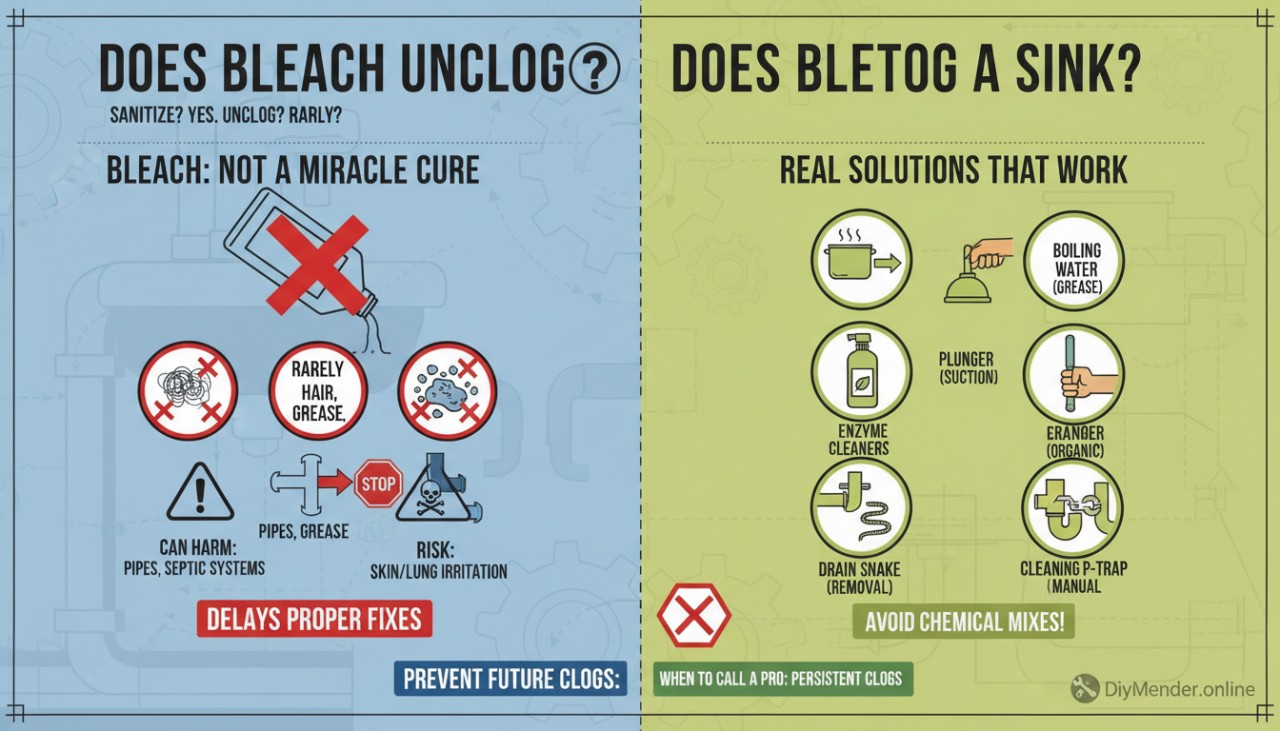
If you’re asking “does bleach unclog a sink,” you’re likely staring at slow water and hoping for a quick fix. I’ve been there. Bleach seems strong enough to melt anything, but drains are a different story. Here’s what bleach can and can’t do, and the steps that actually clear a clog without making a bigger mess.
Quick answer
Bleach rarely unclogs a sink. It doesn’t dissolve hair, food, or hardened grease—the most common culprits. It can sanitize and reduce odors, but it may sit on top of a blockage and do nothing, and it can harm septic bacteria. Use mechanical methods (plunger, snake) and targeted cleaners instead. If you already poured bleach, flush well with water and don’t mix it with other chemicals.
Why bleach usually doesn’t work
Most sink clogs are physical blockages: hair knotted with soap scum, grease that cooled into a waxy plug, or food stuck in the trap. Household bleach (sodium hypochlorite) disinfects and lightens stains, but it doesn’t break down hair or solidified fats. At best, it’ll kill odor-causing bacteria and loosen slime on pipe walls, not the main plug.
Bleach can also cause side issues: it’s harsh on rubber gaskets, irritating to skin and lungs, and it kills the good bacteria in septic systems that your tank relies on. Worst-case, people mix it with other drain chemicals and create dangerous fumes.
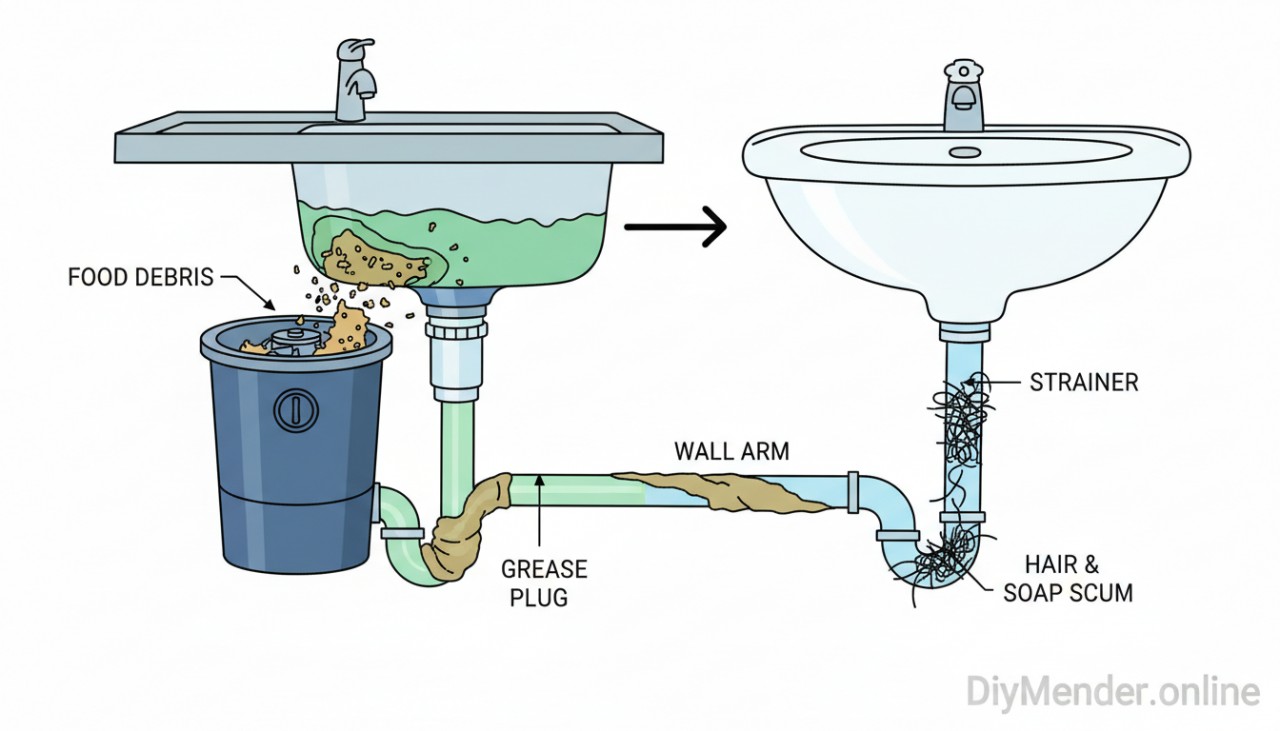 bathroom sink drain showing common clog zones: strainer, disposal chamber, P-trap, and wall arm. Labels identify hair/soap scum, grease plug, and food debris. Bright, clean diagram with simple arrows and captions. Subtle “DiyMender.online” watermark in the lower-right corner." title="Detailed cutaway illustration of a kitchen and bathroom sink drain showing common clog zones: strainer, disposal chamber, P-trap, and wall arm. Labels identify hair/soap scum, grease plug, and food debris. Bright, clean diagram with simple arrows and captions. Subtle “DiyMender.online” watermark in the lower-right corner." class="overly-article-img">
Before you try anything
Safety matters with drains:
- Never mix bleach with ammonia, vinegar, or any drain cleaner. Toxic gas can form.
- If bleach is already in the drain, run the tap with plenty of cool water for several minutes before doing anything else. Better yet, wait a day and flush again.
- Ventilate the area and wear gloves if you’ll open the trap or use a snake.
Methods that actually clear clogs
1) Flush with hot water (good for mild grease)
For a slow kitchen sink, heat a kettle. For metal pipes, boiling water is fine; for PVC, use very hot (not boiling) water. Pour slowly in two to three stages, letting it work between pours. This can melt light grease and push it through.
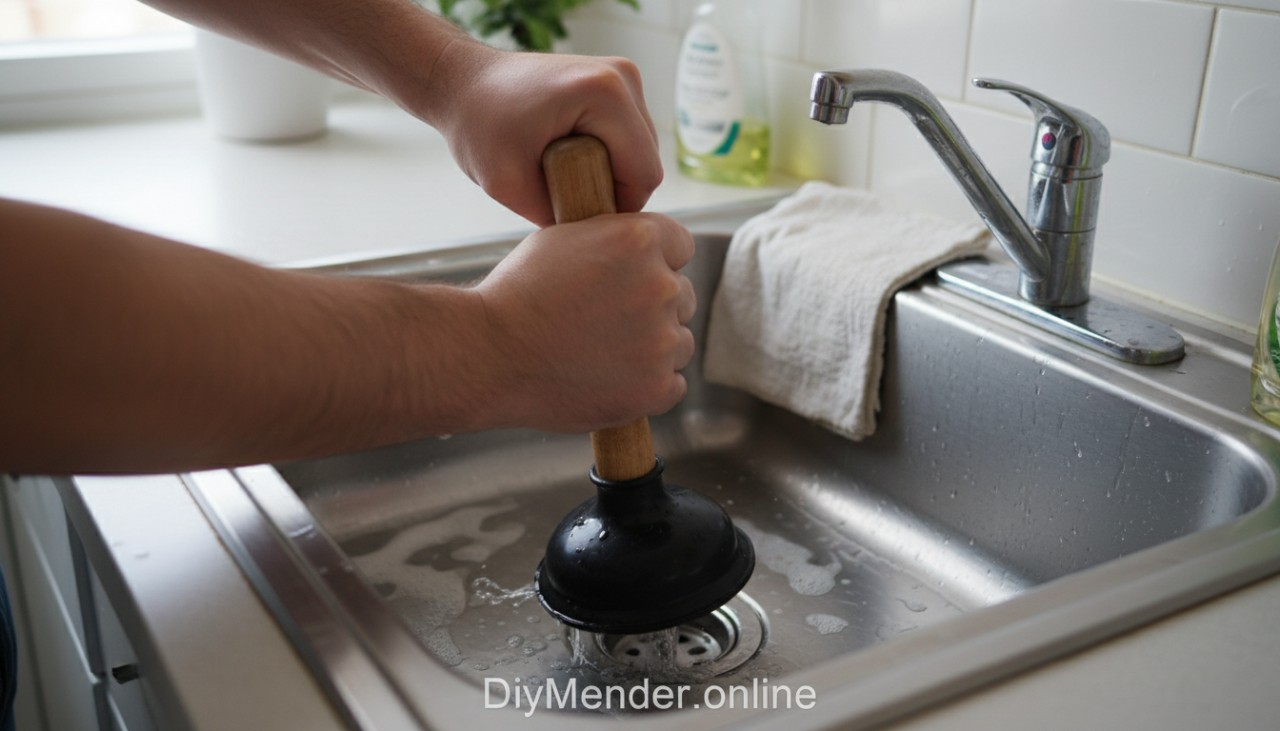
2) Plunge the sink
Use a cup plunger (not a toilet flange plunger). Fill the sink with a few inches of water. Block the overflow hole with a wet rag, or if it’s a double sink, plug the other drain. Place the plunger over the drain and give 10–15 firm, vertical pumps. Lift to check flow. Repeat a few rounds.
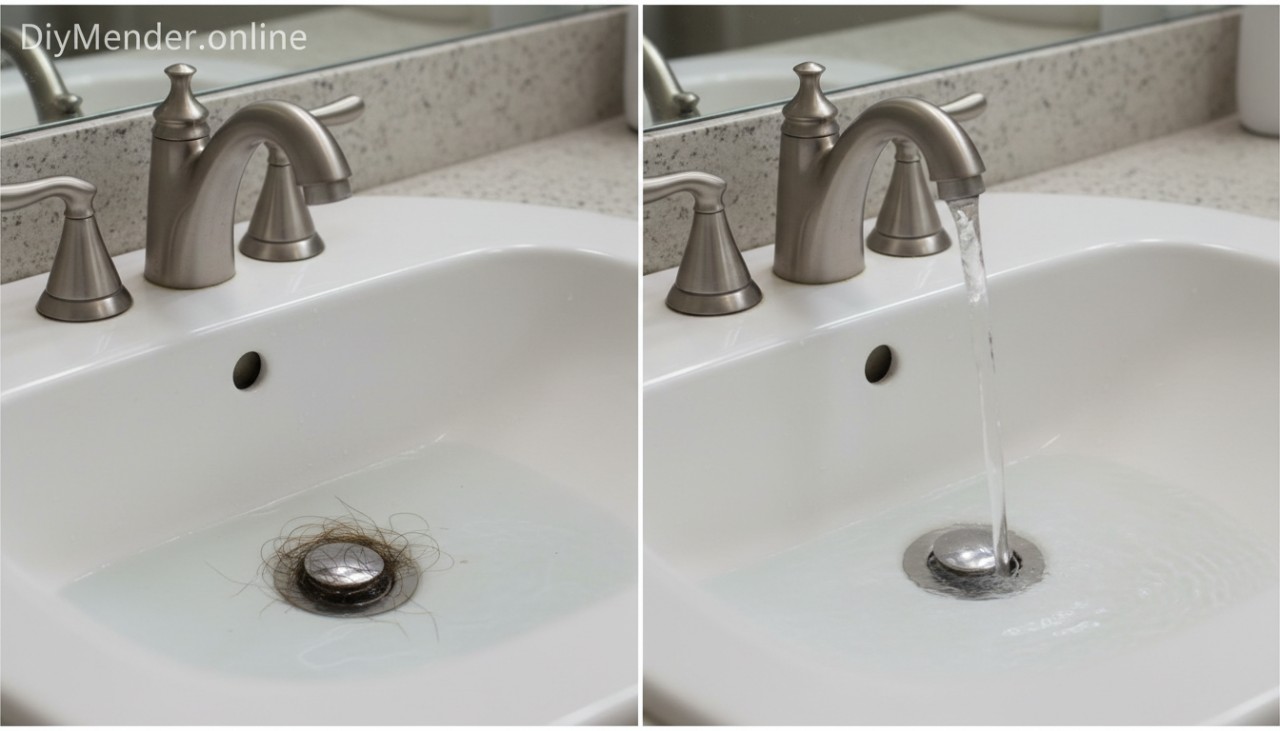
3) Use a hair clog tool or small drain snake
For bathroom sinks, a thin plastic barbed tool or a 1/4-inch hand auger can snag hair just below the stopper. Remove the stopper: many pull straight up after rotating; others require loosening the pivot rod nut under the sink. Feed the tool down, twist, and pull debris out. Rinse with hot water.
4) Clean the P-trap
Still clogged? Place a bucket under the P-trap (the U-shaped bend). Loosen the slip nuts by hand or with adjustable pliers, remove the trap, and dump the gunk into the bucket. Check the trap and the wall pipe for buildup, then reassemble with the washers seated correctly. Run water and check for leaks.
5) Enzyme or bacterial cleaners (for organic buildup)
These aren’t instant, but they work overnight on soap scum and biofilm and are safe for septic. Only use them if you haven’t poured bleach or other harsh chemicals recently—flush the line well first. Follow the label and let it sit undisturbed.
6) Wet/dry vacuum trick
Set a wet/dry vac to liquid mode, seal the hose over the drain with a wet cloth, and pull a vacuum for 30–60 seconds. This can yank out clogs near the top. Cover the vent/overflow or second basin beforehand.
Special notes for kitchen sinks with disposals
- Press the reset button on the bottom if it’s tripped.
- Shine a flashlight inside. If jammed, cut power at the breaker and turn the grinder via the hex key slot underneath.
- Never pour bleach into a disposal regularly; it can dry out rubber components. Use cold water during and after grinding.
How to choose the right method
- Slow drain, greasy kitchen line: Try hot water flush, then plunger.
- Bathroom sink with standing water and hair: Pull the stopper and use a hair tool; then hot water.
- Repeated clogs right at the sink: Clean the P-trap.
- Gurgling in multiple fixtures or toilets backing up: Skip DIY chemicals—call a pro to check the main line or vent.
What to do if you already poured bleach
- Run cool water for several minutes to dilute it in the pipe.
- Do not add vinegar, ammonia, or any drain opener afterward.
- Switch to mechanical methods (plunge, snake, clean the trap).
- If you need a cleaner later, wait 24 hours and flush with lots of water first.
When to call a professional
- Multiple fixtures are slow or backing up at once.
- You hear gurgling and smell sewage from other drains when one is used.
- The clog returns quickly after cleaning the trap.
- Older galvanized pipes with heavy scaling (snakes can get stuck).
- You suspect a main-line blockage, tree roots, or a collapsed pipe.
Preventing future clogs
- Use sink strainers and clean them daily.
- Never pour fats or grease down the drain; wipe pans with a paper towel first.
- Run hot water for 15–30 seconds after using the sink, especially kitchens.
- Monthly: an enzyme cleaner overnight (avoid the week you’ve used bleach).
- Every few months: remove and rinse the P-trap—quick, cheap, effective.
- For disposals: cold water during grinding, small loads, fibrous foods in small amounts only.
FAQ
Will bleach damage my pipes?
Short exposures in modern PVC or copper usually don’t cause immediate damage, but frequent use can degrade rubber gaskets and finishes. It’s not a good routine drain cleaner.
Is bleach safe for septic systems?
Large or frequent doses can harm the bacteria your tank needs. Use septic-safe enzyme cleaners for maintenance and reserve bleach for surface disinfection, not drains.
Does bleach help with drain odor?
Sometimes, but it’s temporary. Odors usually come from biofilm or a dry trap. Cleaning the P-trap and using enzyme cleaners works better; make sure traps hold water.
How long should I wait before using vinegar or enzyme cleaner after bleach?
At least 24 hours, with plenty of water flushed through first. Never mix chemicals directly in the drain.
Can boiling water hurt PVC?
Yes, repeated boiling water can soften PVC and joints. Use very hot (not boiling) water for PVC; boiling is fine for metal pipes.
Are chemical drain openers a better choice than bleach?
They can work on some clogs but carry risks: heat, splashes, pipe damage, and dangerous mixing. I use them as a last resort. Mechanical removal is safer and often faster.
Final thoughts
If you’re weighing whether bleach unclogs a sink, consider it a sanitizer, not a de-clogger. For real blockages, rely on hot water, plunging, a hair tool or snake, and a quick P-trap clean. Save chemicals for when you need them, never mix them, and build simple habits that keep the line clear.