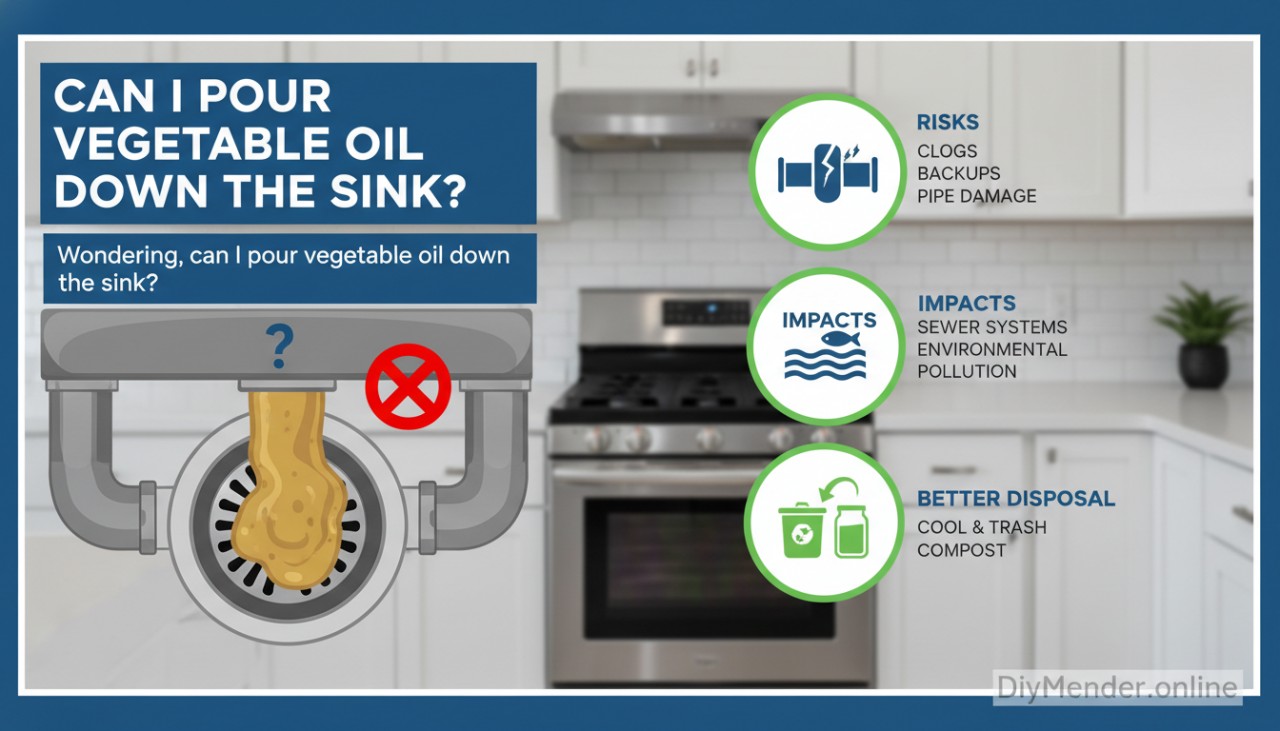
Many homeowners often wonder, can I pour vegetable oil down the sink? While it might seem convenient to dispose of used cooking oil this way, it can lead to serious plumbing issues and environmental harm. This article will explore why pouring vegetable oil down the sink is generally a bad idea, the consequences it can have, and how to properly dispose of it instead.
Quick Answer
No, you should not pour vegetable oil down the sink. It can solidify, clog pipes, and lead to costly plumbing problems.
What It Means to Pour Oil Down the Sink
When you pour vegetable oil down your kitchen sink, you may not immediately see the consequences. However, oil does not mix with water and can create a sticky residue that coats the insides of your pipes. Over time, this buildup can lead to blockages that trap food particles and other debris, eventually leading to clogs.
Why It Happens and Why It Matters
The reason pouring vegetable oil down the sink is problematic lies in its composition. Vegetable oil is a fat, and fats can solidify when cooled. When you pour hot oil down the drain, it may initially flow easily, but as it cools, it can solidify in the pipes. This solidified oil can accumulate over time, creating significant blockages.
Clogs caused by oil can result in:
- Slow draining sinks
- Backed-up wastewater
- Unpleasant odors
- Potential damage to your plumbing system
- Expensive plumbing repairs
Best Options for Disposal
Instead of pouring vegetable oil down the sink, consider these safer disposal methods:
- Cool and Reuse: If the oil is still good, strain it to remove food particles and store it for future cooking.
- Seal and Trash: Allow the oil to cool completely, then pour it into a sealable container or bottle. Dispose of it in your regular trash.
- Composting: Small amounts of vegetable oil can be added to compost piles, but be cautious not to overdo it, as too much oil can harm the composting process.
- Recycling: Some recycling centers accept used cooking oil for conversion into biodiesel. Check with local facilities.
How to Choose the Right Disposal Method
When deciding how to dispose of vegetable oil, consider the quantity, the type of oil, and your local disposal regulations. If you have a small amount, reusing or sealing and tossing in the trash may be sufficient. For larger quantities, check if local recycling options are available.
When Professional Help is Needed
If you’ve already poured vegetable oil down the sink and are experiencing drainage issues, it might be time to call a plumber. They can assess the situation, clear any clogs, and prevent further damage to your plumbing system. Regular maintenance can also help prevent such issues.
Prevention and Long-Term Best Practices
To avoid future problems, adopt these practices:
- Use oil sparingly in cooking to minimize waste.
- Have a dedicated container for used oil and dispose of it properly.
- Educate family members about proper disposal methods for cooking oils.
- Consider using a grease trap if you regularly handle large amounts of oil.
Frequently Asked Questions
What happens if I accidentally pour oil down the sink?
If you accidentally pour oil down the sink, monitor the drainage for any slowdowns. If issues arise, consider calling a plumber.
Can I pour oil down the toilet?
No, similar to sinks, toilets are not designed to handle grease or oil. It can cause clogs and plumbing issues.
Is it safe to pour oil in my compost bin?
In small amounts, yes. However, too much oil can disrupt the balance of carbon and nitrogen in your compost.
What is the best way to store used vegetable oil?
Strain it to remove any food particles, then store it in a clean, dry, and airtight container in a cool, dark place.
By understanding the implications of pouring vegetable oil down the sink and adopting better disposal practices, you can protect your plumbing and the environment. Make informed decisions to ensure the wellbeing of your home and community.