
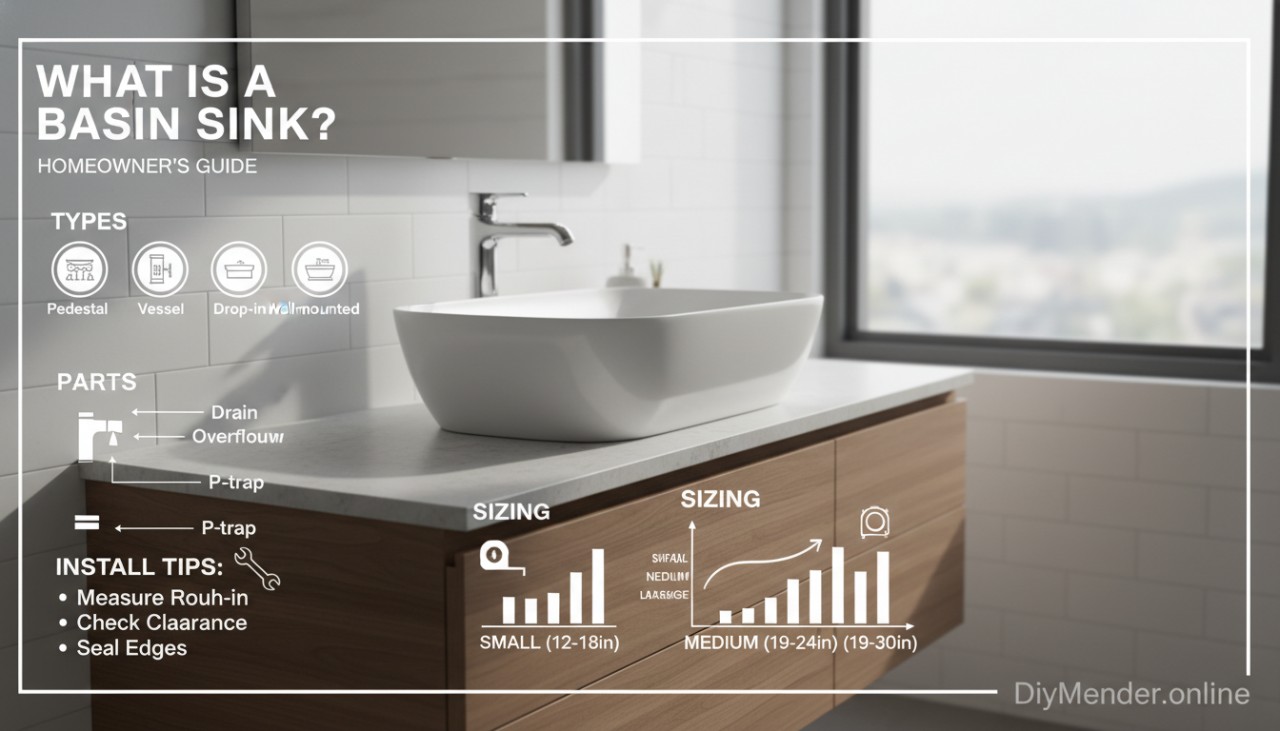
I hear this question a lot in remodels and store aisles: what is a basin sink? In most homes, “basin” simply refers to the bowl that holds water, while “sink” is the whole fixture. In practice, people use them interchangeably. But when you’re buying, installing, or replacing one, the details behind the terms actually matter.
What Is a Basin Sink, in Plain Terms?
In residential bathrooms, a basin sink is the water-holding bowl (the basin) paired with a drain and usually a faucet. It can sit on a vanity counter, mount under it, be part of a pedestal, or hang on the wall. The same idea applies in kitchens and utility rooms, though we tend to just say “sink” there.
Why the distinction helps: product listings often separate the basin (the bowl) from the plumbing bits (drain, faucet, trap). If you mix terms, you might order a beautiful basin and forget the drain assembly or pick the wrong faucet spacing.
Common Types You’ll See
- Drop-in (self-rimming): Sits in a countertop cutout; the rim supports the weight. Very forgiving for DIY because the rim hides a rough cut.
- Undermount: Attached to the underside of the countertop. Clean look, easy to wipe crumbs straight in. Needs solid counter support and good sealing to avoid leaks.
- Vessel: A bowl that sits on top of the counter. Striking style, but watch height—vessels add several inches, which can make handwashing awkward without a shorter vanity or lower faucet.
- Pedestal: The basin sits on a slender pedestal that hides the trap. Space-saver but offers zero counter storage; plumbing needs to be tidy since it’s exposed.
- Wall-mount: Hangs from brackets. Great for small baths or accessibility, but requires solid wall blocking to carry the load.
- Console/legged: A cross between wall-mount and freestanding, with legs; keeps things airy while adding stability.
The Parts That Actually Matter
When I install or replace one, these are the pieces that determine whether the job goes smoothly:
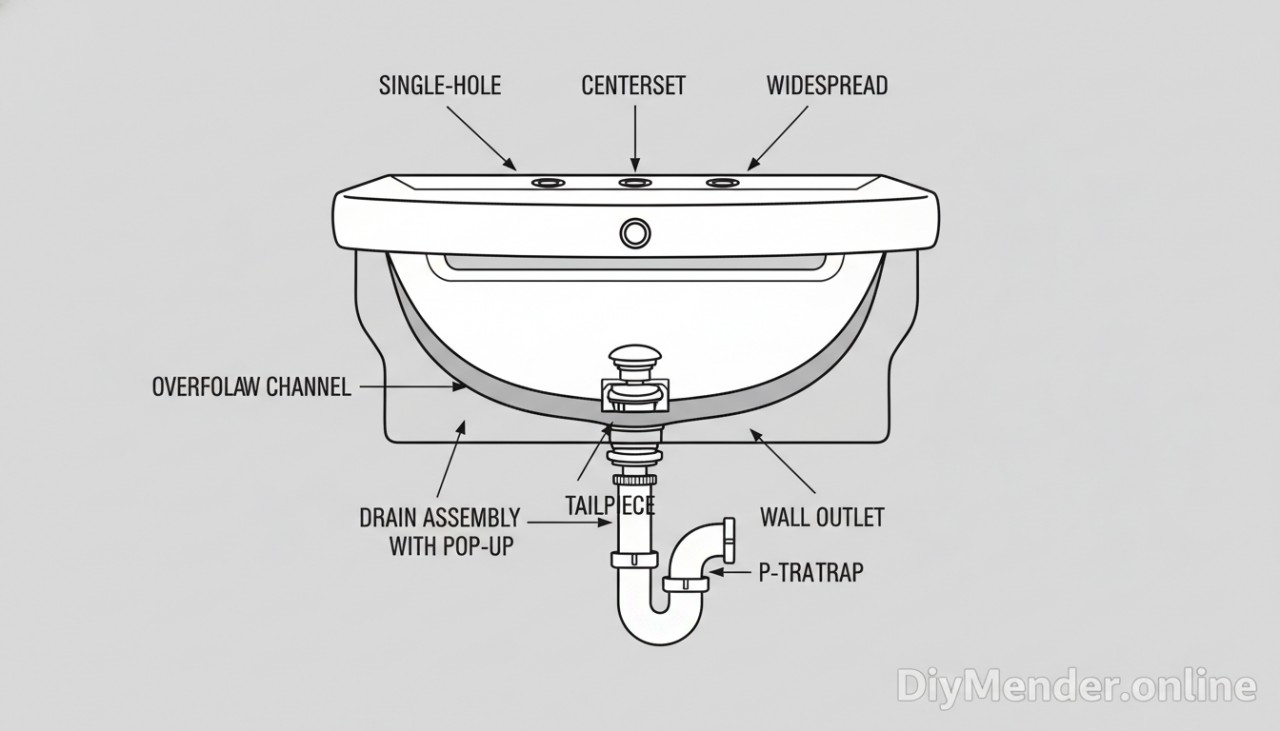
- Faucet holes: Single-hole, 4-inch centerset, or 8-inch widespread. Your faucet and basin must match. Adapters exist but look clunky.
- Overflow: Small hole inside the bowl that prevents spills and speeds draining. If your basin has an overflow, buy a drain made for overflows. A mismatch can drain slowly or leak at the flange.
- Drain assembly: Pop-up (linked to a lift rod) or grid/strainer (no stopper, often used with vessels). Make sure the tailpiece length works with your P-trap.
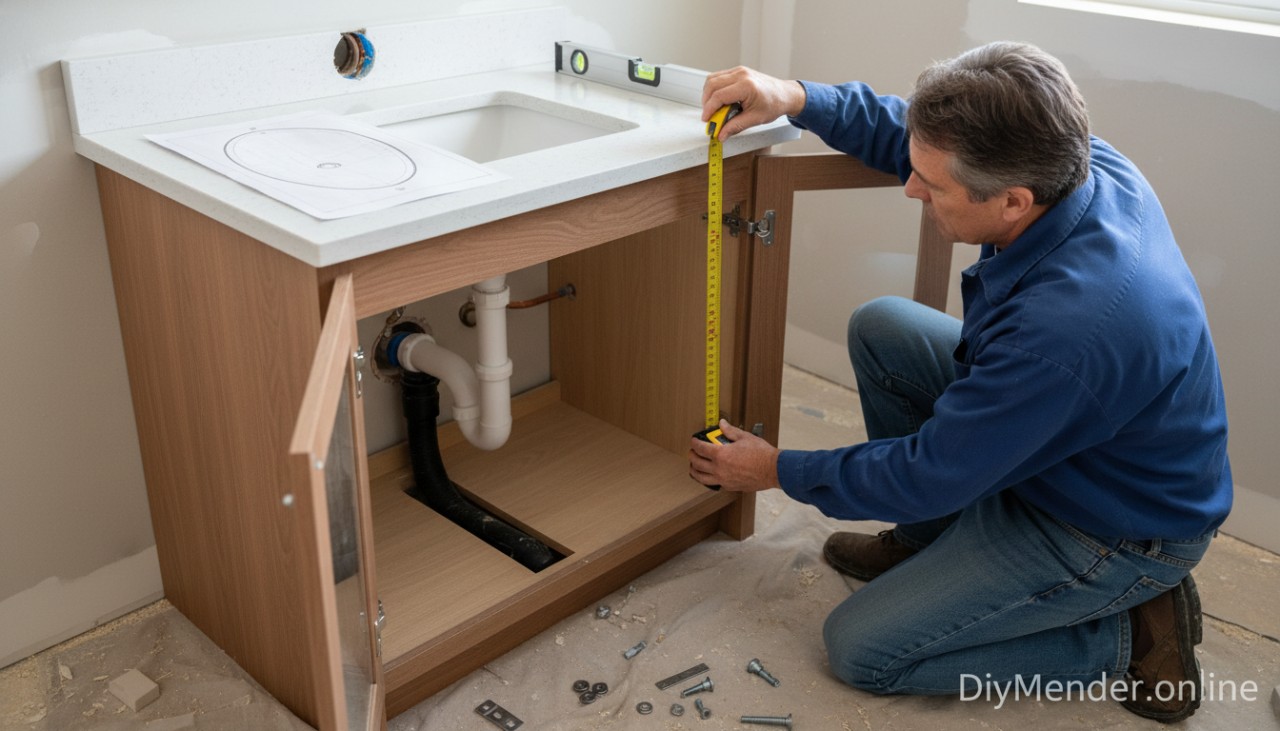
- P-trap height: Measure from finished floor to the wall drain outlet. Shallow basins or tall counters can misalign the trap. An adjustable trap helps, but big offsets can look messy.
- Mounting hardware: Undermount clips, wall brackets, or pedestal anchors. Missing hardware is the most common snag I see on weekend projects.
Materials and How They Behave
I pick materials based on who uses the bath and how hard the space gets used:
- Vitreous china/porcelain: Classic and durable. Resists stains and cleans up easily. Can chip if struck with a heavy object, but it’s the everyday winner.
- Enameled cast iron: Heavy, quiet, and tough. Needs solid support; dropping it during install is not an option. Finish is beautiful but can be damaged by aggressive abrasives.
- Solid surface/composite: Warm look and repairable for small nicks. Avoid harsh solvents. Seams can be nearly invisible with the matching counter.
- Natural stone: Looks fantastic, needs sealing, and can etch with acidic cleaners. Plan on gentler maintenance.
- Glass: Great in powder rooms. Shows water spots and toothpaste easily; use soft cloths only.
- Stainless: More common in utility/laundry. Tough and easy to sanitize; shows scratches that usually blend over time.
Sizing That Actually Works at Home
Pretty pictures mislead. Measure how people actually use the space:
- Width and depth: A typical bathroom basin ranges from 16–20 inches wide. Narrow powder rooms do fine with 14–16 inches. For main baths, a deeper front-to-back (at least 5.5–6 inches bowl depth) reduces splash.
- Counter height with vessels: Standard vanity height is ~32–36 inches. Add a 6-inch vessel and you can end up at chin level. Either use a shorter vanity or a shallower bowl.
- Clearances: Leave at least 4 inches from basin edge to backsplash for faucet handles and knuckles. Tight gaps collect grime and make cartridge replacements a pain.
- Cutout size: Drop-ins and undermounts come with templates. Do a cardboard test fit before cutting stone or butcher block. Slight template errors happen.
Where the Term Trips People Up
Store shelves and boxes use different words. A few translations:
- Lavatory/lav: Plumbing-speak for bathroom sink. A “lav faucet” just means bathroom faucet.
- Wash basin: Old-school term; same as bathroom sink bowl.
- Vanity sink: A basin set into or onto a vanity cabinet.
- utility sink: Deeper basin in laundry or garage; takes a beating and handles buckets and mops.
The confusion usually causes two problems: buying a faucet with the wrong hole spacing and forgetting the matching drain for overflow/non-overflow. Double-check the spec sheet before you leave the store.
Installation Notes from the Field
- Support matters: Undermounts and heavy cast iron bowls need proper clips and sometimes extra bracing. Silicone alone isn’t structure.
- Seal the rim and penetrations: A thin bead of 100% silicone around the rim or underside prevents seepage that swells wood counters and invites mold.
- Dry-fit everything: Set the basin, place the faucet, and assemble the drain without sealant first. Make sure the lift rod clears the backsplash and the trap lines up without stressing joints.
- Don’t overtighten: China can crack from overzealous wrenching on the drain flange or mounting nuts. Hand-snug plus a quarter turn is often enough; check manufacturer guidance.
- Test with a sink stop: Fill the basin and let it sit for 5–10 minutes. Look under with a flashlight for weeps at the drain gasket and tailpiece.
What Actually Fails in Real Homes
- Slow drip at the drain: Usually the rubber washer flipped or was overtightened. Re-seat it with plumber’s putty or silicone per the instructions.
- Gurgling or slow drain: Missing or blocked overflow reduces venting. Clean the overflow inlet and confirm you used the correct drain type.
- Counter rot around drop-ins: Caulk dried and cracked. Re-caulk; if the substrate is swollen, you may need to replace that section.
- Wobble on wall-mounts: No blocking behind the drywall. Proper fix is opening the wall and adding a ledger or blocking to spec.
Cleaning and Care That Keeps It Looking New
- Daily wipe-down: Soft cloth after brushing teeth prevents mineral spots. Especially important on glass, stone, and matte finishes.
- Avoid harsh abrasives: They dull porcelain glaze and scratch finishes. Use non-scratch pads and mild cleaners.
- Mind the drain finish: Black and brass finishes can show wear if you use bleach or strong acids. Rinse after cleaning products.
- Stone basins: Stick to pH-neutral cleaners and reseal as recommended.
When to Call a Pro
Move the drain outlet or supply lines more than an inch or two and you’re into plumbing and drywall work. Drilling holes in stone counters for a faucet is also best left to a fabricator. If a wall-mount or console will hold a heavy basin, have a pro confirm blocking and load ratings.
Quick Buying Checklist
- Confirm faucet hole pattern and whether you want single-hole, centerset, or widespread.
- Match overflow status between basin and drain.
- Measure P-trap height and ensure the tailpiece will meet it cleanly.
- Plan the total height if choosing a vessel.
- Verify mounting hardware and template are included.
- Choose a material that fits your cleaning habits and traffic level.
Bottom line: “basin” is the bowl and “sink” is the whole fixture, but the real success comes from matching the faucet layout, overflow, mounting, and dimensions to your space. Get those right, and installation is straightforward—and you won’t be back at the store for one tiny missing part.