
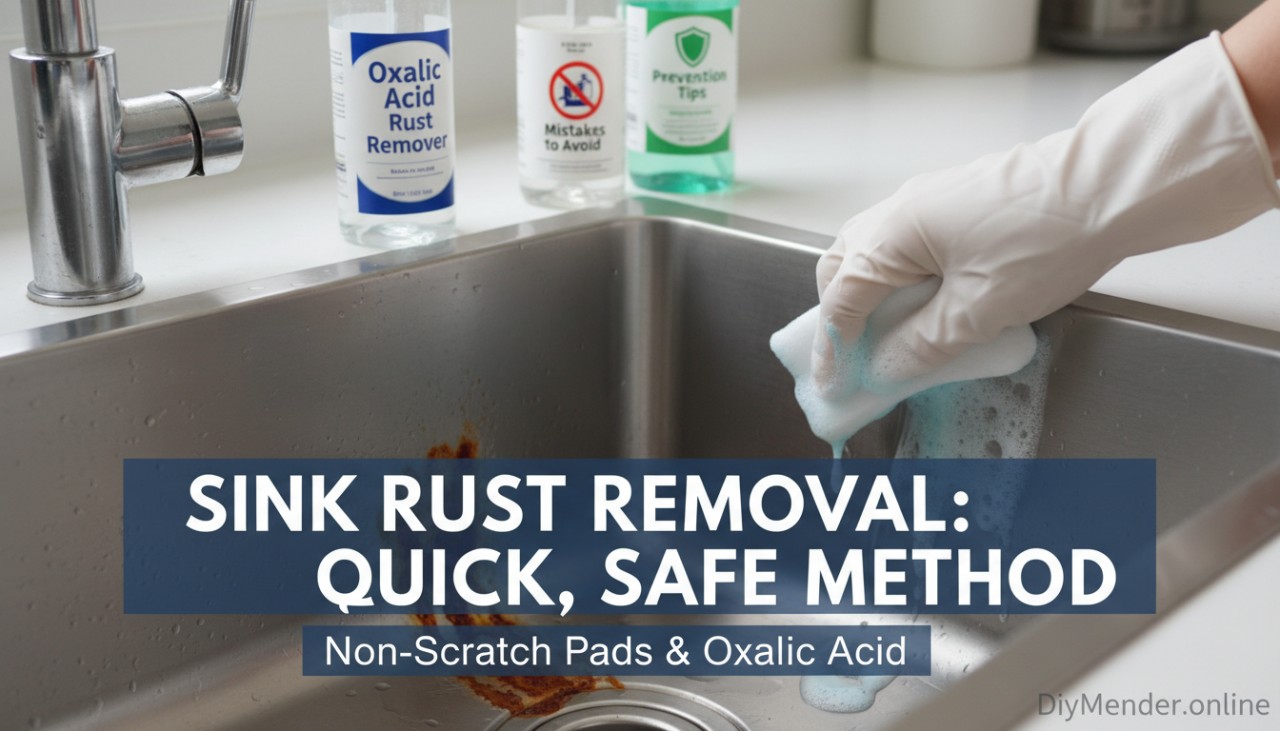
Short answer: How do you remove rust stains from stainless steel sink? Use an oxalic acid cleaner like Bar Keepers Friend, make a light paste, then scrub gently with the grain using a non-scratch pad. Rinse and dry. It works because oxalic acid dissolves iron oxide (rust) without harming the sink’s protective chromium-oxide layer.
My fast, safe method (what I do at home)
Rinse the area, then wipe it dry so the cleaner doesn’t dilute.
Dust on Bar Keepers Friend (an oxalic acid cleaner) or make a thin slurry. Target only the orange freckles or streaks.
Let it sit 1–2 minutes, not longer—acids don’t need much time.
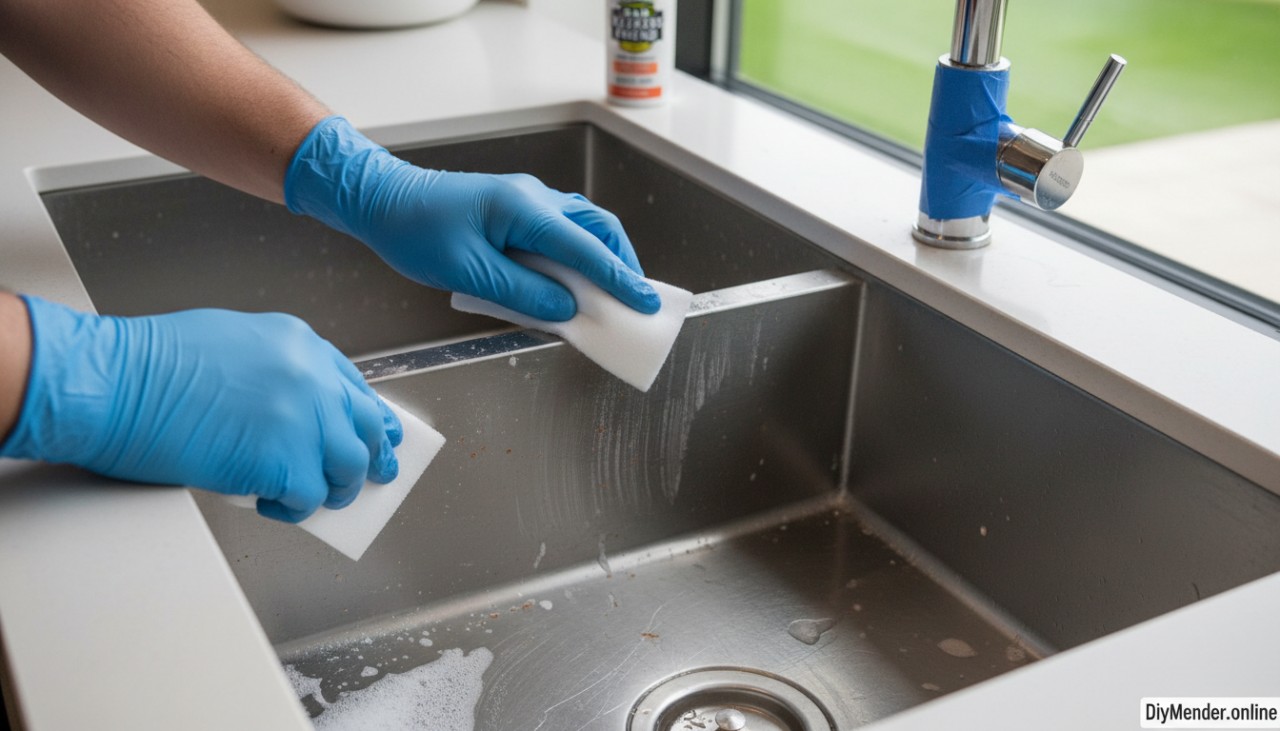
Gently scrub with a damp non-scratch pad, following the sink’s brushed grain (scrub with grain). This prevents visible swirl marks.
Rinse thoroughly, then wipe dry. If a faint shadow remains, repeat once.
Optional: Buff a drop of dish soap or a dedicated stainless cleaner to even the sheen.
Why this works (and why rust shows up at all)
Stainless steel resists rust because a thin chromium-oxide passivation layer blocks corrosion. Rust stains usually come from iron contamination—think steel wool particles, metal can bottoms, or iron-rich water—sitting on the surface. Oxalic and citric acids lift iron oxide chemically, so you don’t need aggressive abrasion.
Good alternatives
Citric acid paste: Mix powdered citric acid with a little water; apply 3–5 minutes; scrub lightly; rinse and dry.
Baking soda paste: For very light marks only. It’s a mild abrasive; scrub with grain and rinse. If it doesn’t budge in one pass, switch to oxalic acid.
Rust remover gel (stainless-safe): For stubborn spots. Do a test spot, tape off nearby areas, short contact time, rinse fast, and dry.
Mistakes that make it worse
Avoid bleach (and chlorine cleaners). Chlorides attack stainless and can cause permanent pitting.
Avoid steel wool or carbon-steel brushes. They shed particles that flash-rust and seed future stains.
Don’t over-scrub across the grain. It leaves haze and scratches.
Skip the vinegar + baking soda combo for rust. They neutralize each other and won’t remove iron oxide effectively.
Don’t let acids sit too long. Short contact, then rinse and dry.
Edge cases and limits
Orange freckles that return fast: You likely have ongoing iron contamination (old steel wool use, rusty rack, or high iron in water). Remove the source.
Brown/yellow film with tiny pits: That’s chloride damage, not just surface rust. Cleaning will lighten it, but pits won’t vanish.
Cloudy white spots: Often mineral scale, not rust. Treat with straight white vinegar first, rinse, then address any remaining rust with oxalic acid.
Keep it from coming back
Rinse and dry the sink after heavy use or after cans/iron cookware touch it.
Don’t store metal scouring pads or wet tools in the basin.
Monthly quick clean with Bar Keepers Friend helps passivation restore and makes future cleanups faster.
If you use a sink grid or mat, clean it often so trapped debris doesn’t sit wet on the steel.
Bottom line: A quick oxalic acid pass, a gentle scrub with the grain, and a thorough rinse and dry is the fastest, safest way to remove rust stains and protect your stainless finish.