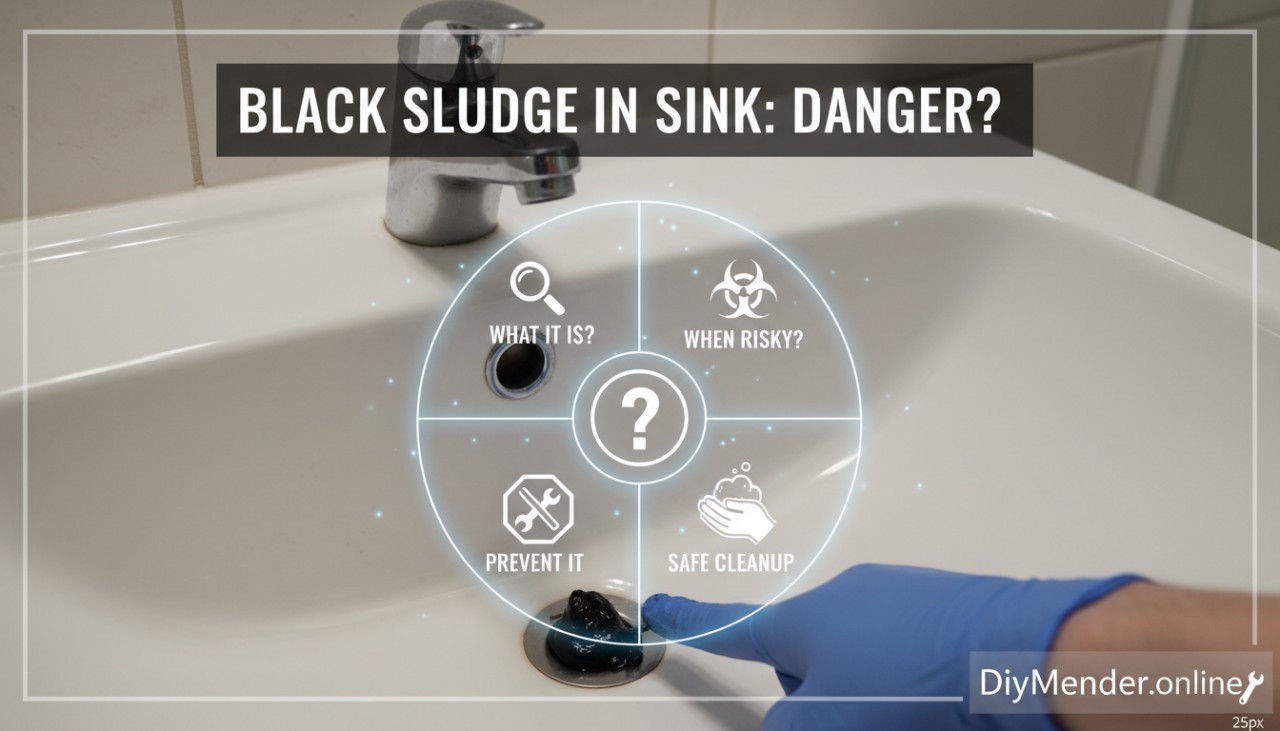
Short answer: usually not acutely dangerous to touch, but don’t handle it bare-handed. Black sink sludge is a germ-heavy biofilm—bacteria, mold, grease, and soap scum—sometimes with sewer contaminants. Touching it can cause skin irritation or infection (especially if you have cuts), and it’s higher risk for kids, elderly, and anyone immunocompromised. If there’s a sewage backup or a strong rotten-egg/sewer odor, treat it as potentially hazardous and use gloves and eye protection—or call a pro.
I’m a homeowner who’s cleared plenty of this gunk. Here’s why it appears, when it’s risky, how to clean it right, and how to stop it coming back.
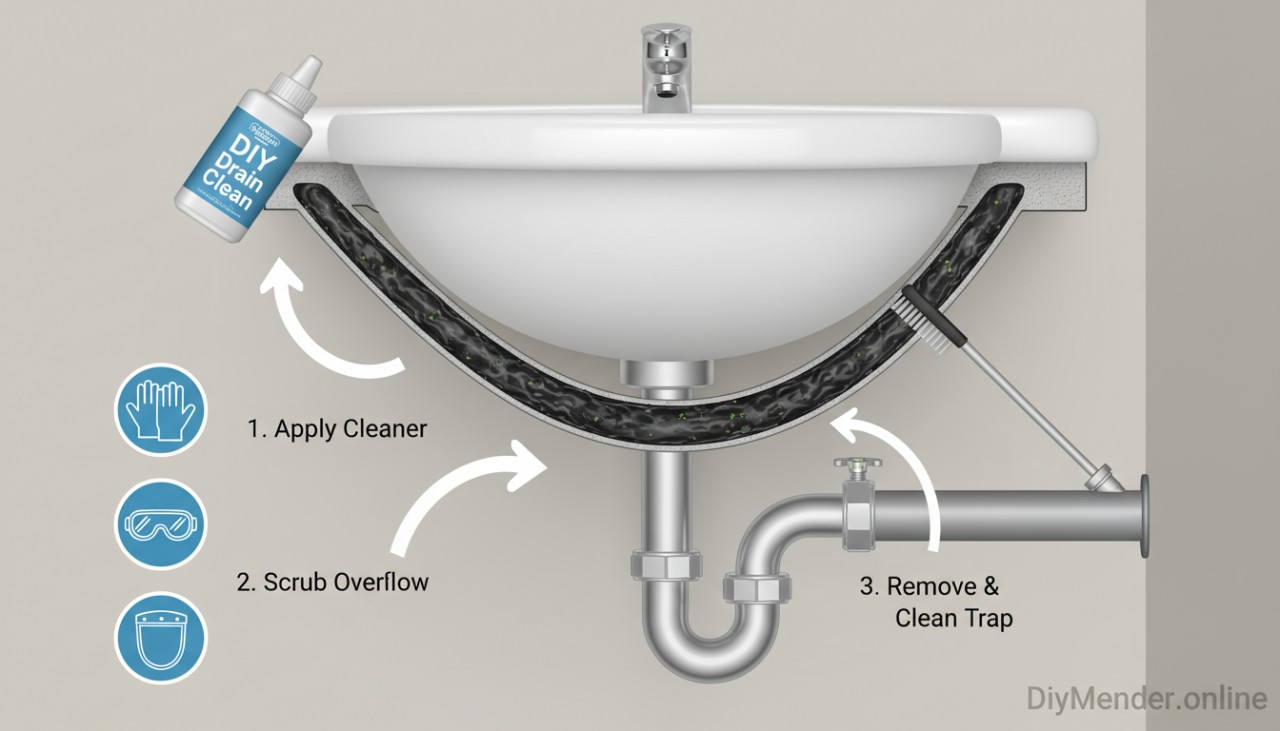 bathroom sink and P-trap showing black biofilm on the stopper, overflow, tailpiece, and trap; PPE icons (gloves, goggles); arrows for cleaning steps; include DiyMender.online watermark." title="A realistic cutaway diagram of a bathroom sink and P-trap showing black biofilm on the stopper, overflow, tailpiece, and trap; PPE icons (gloves, goggles); arrows for cleaning steps; include DiyMender.online watermark." class="overly-article-img">
What That Black Sludge Actually Is (And Why It Forms)
In a bathroom sink, it’s mostly a biofilm made from toothpaste, soap scum (fatty acids), skin oils, hair, and minerals. That mix becomes food for bacteria and mold, which dye it gray-to-black. In kitchens, add rotting food grease and disposal residue—thicker and smellier.
Why it builds up:
- Low flow and rough pipe interiors let slime anchor and thicken.
- Pop-up stoppers and overflow channels collect gunk but rarely get rinsed.
- P-traps trap water (good for blocking sewer gas) but also trap sludge.
- Anaerobic bacteria thrive in oxygen-poor spots and can produce sulfides that darken the slime.
Edge cases: On well water, manganese/iron bacteria can create dark slime and stains—it’s gross but usually less infectious; the fix is water treatment, not just drain cleaning.
Is It Dangerous To Touch?
Most bathroom/kitchen drain biofilm is a low-level health risk, but it’s dirty. Common issues are skin irritation, dermatitis, and infection if it gets into cuts. If there’s a sewage component (backup, toilet line crossover, or unmistakable sewer stink), pathogens can be present—treat with strict precautions or call a plumber.
Higher-risk situations:
- Open cuts, eczema, or compromised immunity
- Black water backing up into the sink
- Strong rotten-egg odor (hydrogen sulfide) or fecal smell
- Multiple drains affected—possible main or vent issue
If you touched it bare-handed, wash thoroughly with soap and warm water. If it splashed in your eyes, flush with clean water for 10–15 minutes. Watch for irritation or rash.
Clean It Properly (What Actually Works)
Bleach alone doesn’t work well at first because it doesn’t cut grease. The right order is: loosen and remove the biofilm, then disinfect, then keep it from regrowing.
Tools and Safety
- Nitrile gloves, eye protection, and ventilation
- Bucket, rags, old toothbrush/bottle brush
- Dish soap (degreaser), hot water
- Enzyme/bio-enzymatic drain cleaner (optional, great for biofilm)
- EPA-registered disinfectant or 1:10 bleach solution (after degreasing)
- Adjustable pliers for the P-trap
Step-by-Step
- Pull and scrub the pop-up stopper. It’s often the worst offender. Use dish soap and hot water; brush all crevices.
- Clean the overflow channel. Feed a small bottle brush with soapy hot water until it runs clean.
- Degrease the tailpiece and drain opening. Scrub with dish soap; rinse hot.
- Remove and clean the P-trap. Place a bucket, loosen the slip nuts, and dump the trap into the bucket. Scrub the trap and trap arm with soapy hot water.
- Reassemble and test for leaks. Hand-tighten slip nuts plus a gentle quarter-turn—don’t overtighten.
- Disinfect. Now apply a disinfectant or 1:10 bleach to the stopper, overflow, and accessible drain surfaces. Let dwell per label, then rinse.
- Optional enzyme treatment overnight. Great for organic film deeper in the line. Do not mix with chlorine or harsh chemicals.
For garbage disposals: With power off, clean the splash guard underside (a missed hotspot). Then run a mix of hot water, a few drops of dish soap, and ice to scrub the chamber. Citrus peels help odor but aren’t a disinfectant.
Common Mistakes That Make It Worse
- Mixing chemicals. Never mix bleach with vinegar, acids, or ammonia—can create toxic gas. Also don’t add enzymes after bleach (enzymes will be killed).
- Bleach first. It won’t cut grease; biofilm shields microbes. Degrease and physically remove gunk first.
- Boiling water in PVC drains. Very hot is okay; boiling can soften fittings.
- Ignoring the overflow and stopper. The slime returns fast if these stay dirty.
- Overtightening slip nuts. Can crack plastic or deform washers, causing leaks.
When It’s Not Just Slime
- Persistent sewer odors: The trap may be siphoning dry, the vent stack clogged, or there’s a partial main blockage. Check that the trap holds water; run water regularly in rarely used fixtures.
- Multiple fixtures slow or backing up: Possible main line or septic issue—call a plumber.
- Black mold around caulk/drywall: That’s not drain sludge—address moisture, ventilate, and remediate properly.
- Well water stains (manganese/iron): Consider oxidation/filtration; drain cleaning won’t fix the source.
Prevention That Actually Works
- Weekly: Run hot water with a squirt of dish soap for 30–60 seconds after greasy use.
- Monthly: Pull and brush the stopper and clean the overflow.
- Monthly or bi-monthly: Enzyme drain treatment overnight to keep biofilm thin.
- Disposal care: Clean the splash guard and run soapy ice scrubs monthly.
- Strainers: Keep hair and food out of the drain; never pour fats/oils down.
- Ventilation: Use exhaust fans to reduce moisture that helps mold.
Bottom Line
Is black sludge in sink dangerous to touch? Generally, it’s not acutely dangerous, but it’s unsanitary and can irritate skin—treat it like you would raw kitchen waste: avoid bare-hand contact, clean it methodically, disinfect after degreasing, and don’t mix chemicals. If there’s any sign of sewage or you’re in a high-risk health group, suit up or get a pro. Do the small monthly cleanings and you’ll rarely see it again.