When a septic system is working properly, most homeowners never think about the drain field at all. That is exactly how it should be. The tank quietly separates waste, the soil quietly finishes the treatment job, and the wastewater disappears without odor, soggy ground, or sewage backing into the house. When that process breaks down, though, the damage can get expensive fast because a failed drain field is not just a clogged pipe issue. It is a full-system treatment failure.
We have worked on enough septic systems to tell you this: the drain field is where the real treatment happens. The septic tank is only the separator. It holds solids back, lets grease and scum float, and sends partially clarified liquid effluent out to the soil. The drain field, sometimes called a leach field, is what spreads that effluent through gravel and perforated pipes so the surrounding soil and its natural microbes can filter, digest, and neutralize what is left.
If you understand that one principle, the rest of the system starts making sense. The reason drain fields fail, smell, flood, or stop absorbing water always comes back to hydraulic overload, poor soil percolation, solids escaping the tank, biomat overgrowth, saturated ground, or physical damage to the field itself.
Quick Diagnostic Guide: How Does a Septic Tank Drain Field Work?
| Symptom | Likely Culprit | Quick Test | DIY Fixable? |
|---|---|---|---|
| Slow drains in whole house | Hydraulic overload or saturated drain field | Reduce water use for 24 hours and watch whether fixtures recover | No |
| Wet, spongy grass over field | Effluent surfacing from clogged laterals or biomat failure | Check for sewage odor and unusually lush growth | No |
| Gurgling lowest drain | Backpressure from full tank or failing field | Inspect tank liquid level through service port | Sometimes |
| Septic smell outside at night | Surfacing effluent, venting issue, or overloaded field | Walk field perimeter in cool evening air | Sometimes |
| Tank needs pumping too often | Excess solids, leaking fixtures, or poor bacterial digestion | Check sludge depth and water usage pattern | Sometimes |
| Standing water near distribution box | D-box imbalance or downstream lateral blockage | Open and compare outlet flow levels | No |
| Green stripes above trenches | One or more lateral lines overloaded | Look for patterned growth matching trench layout | No |
| Sewage backup after laundry day | Field cannot absorb surge volume | Stop laundry for 48 hours and see if backup clears | Yes, temporarily |
The Real Job of a Septic Drain Field
A lot of homeowners think the tank does all the treatment. It does not. The tank is a watertight container designed to slow wastewater down long enough for solid waste separation to happen. Heavy material settles into sludge, lighter fats and oils rise into a scum layer, and the liquid zone in the middle flows onward through the outlet tee.
That liquid is still full of dissolved organics, suspended particles, pathogens, and nutrients. It is nowhere near clean enough to dump into the yard. The drain field takes over from there.
What the drain field actually does underground
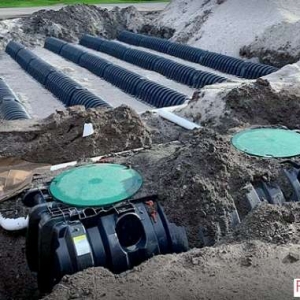
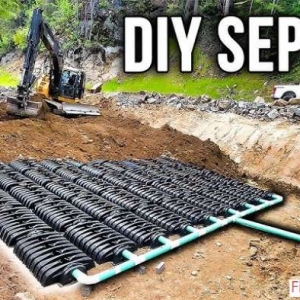
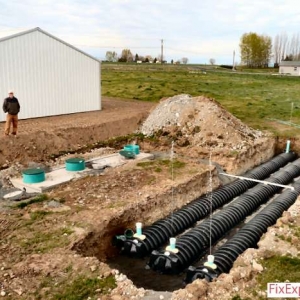
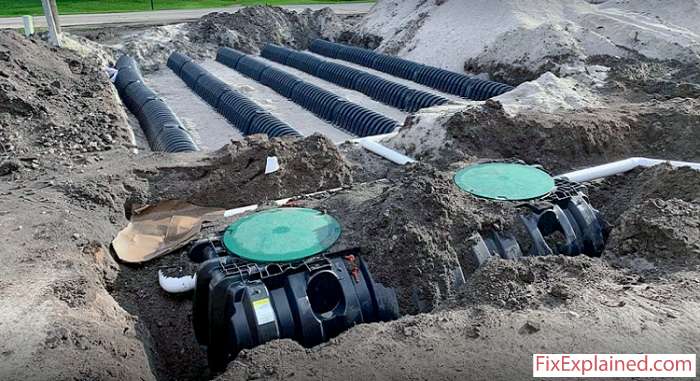
The drain field spreads liquid effluent into unsaturated soil through perforated lateral lines. Those pipes usually sit in drain rock or gravel that gives effluent room to disperse before it reaches native soil. Once the wastewater leaves the trench, a thin biological layer called biomat forms where the effluent meets the soil.
That biomat gets blamed for failures, but in a healthy system it is necessary. It slows the water down just enough for soil microbes to break down organics and for the soil to filter out pathogens and fine solids. Think of it as a living treatment skin. Too little biomat and treatment is weak. Too much biomat and the field stops accepting water.
- Physical filtration: Soil traps suspended particles that escaped the tank.
- Biological treatment: Aerobic microbes in oxygen-rich soil consume organics the tank did not fully digest.
- Chemical adsorption: Clay and mineral particles bind some contaminants before they move deeper.
- Moisture dispersal: Water slowly percolates downward and outward instead of pooling at one point.
How a Septic System With a Leach Field Works From Toilet Flush to Soil Treatment
To really understand how a septic tank leach field works, you need to follow the wastewater treatment cycle from inside the house all the way into the soil. Every component has a narrow job, and if one starts failing, the next one gets overloaded.
Stage 1: Wastewater enters the septic tank
Every flush, shower, sink discharge, and laundry cycle sends wastewater into the tank through the inlet pipe and inlet tee. In a properly designed system, the inlet tee pushes incoming waste downward so the tank contents are not violently stirred up every time water enters.
That matters because turbulence suspends settled sludge. Once sludge gets re-suspended, it can leave the tank and head straight for the distribution box and lateral lines.
- The Action: Slow incoming wastewater and keep the tank calm.
- The Why: Reduced turbulence allows heavy solids to settle and grease to stay floating instead of mixing into the effluent stream.
- The Execution: Inspect the inlet tee through the access riser using a flashlight and mirror, never by leaning into the opening. Look for a broken baffle, missing tee, or signs of crusted blockage.
- The Expected Result: The inlet tee is intact, submerged at the correct depth, and not obstructed by wipes or grease buildup.
- The Pivot: If the tee is broken or missing, solids move through the tank faster and the field may already be receiving waste it was never meant to handle.
Stage 2: Anaerobic digestion starts inside the tank
Inside the tank, oxygen is limited. That creates an anaerobic environment where anaerobic bacteria begin breaking down organic waste. They do not “eat everything” the way some marketing claims suggest. They only reduce the volume of biodegradable solids over time.
This is why tanks still require pumping. Even a healthy colony of bacteria cannot digest grit, lint, bones, coffee grounds, mineral ash, or every detergent filler. The tank is a separator first and a digester second.
- Concrete tanks: Often last 30 to 40 years or more when well built, but acidic gases can corrode exposed concrete above the liquid line.
- Fiberglass tanks: Resist corrosion well and often last several decades, but poor installation can lead to shifting or floatation in high groundwater.
- Polyethylene tanks: Lightweight and corrosion-resistant, but they need proper bedding and backfill support to avoid deformation.
Stage 3: Clarified effluent exits through the outlet tee
The outlet tee is one of the most important and neglected parts of the whole system. Its job is to draw liquid from the clearer zone between the sludge layer and scum layer. In many systems, an effluent filter sits there too.
If that tee is damaged, or if the filter is missing, overloaded, or never cleaned, suspended solids can leave the tank. Once solids reach the drain field, they settle in pipes, clog drain rock void spaces, and thicken the biomat until infiltration slows to a crawl.
- The Action: Protect the drain field from solids leaving the tank.
- The Why: The field can treat liquid effluent, but it cannot handle sludge particles, grease mats, and toilet paper pulp in volume.
- The Execution: During pumping, have the pumper inspect the outlet tee and internal effluent filter. Rinse the filter back into the tank, not onto the ground.
- The Expected Result: Effluent leaving the tank looks relatively uniform and free of floating solids.
- The Pivot: If the filter is heavily packed with slime or fibers, the house may be sending too much lint, grease, wipes, or antibacterial waste into the system.
Stage 4: Effluent reaches the distribution box
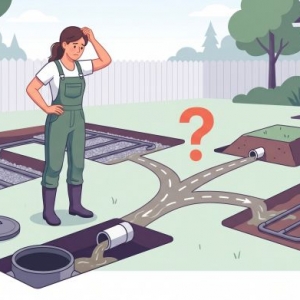
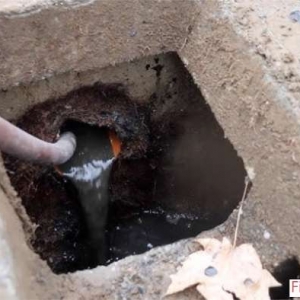
The distribution box, or D-box, is the traffic controller. Its only job is to split flow evenly among the lateral lines. If it is tilted, cracked, full of roots, or blocked with solids, one trench gets overloaded while another stays underused.
That imbalance creates a chain reaction. One line saturates, develops a heavy biomat, loses soil aeration, and starts surfacing effluent. Meanwhile the rest of the field may still have usable capacity, but the water is not being sent there evenly.
- The Action: Confirm balanced flow leaving the D-box.
- The Why: Even loading lets the entire field share absorption and biological treatment instead of burning out one trench early.
- The Execution: Open the D-box lid carefully after locating utilities. Compare outlet elevations, flow staining, and standing liquid depth in each port.
- The Expected Result: Each outlet shows similar moisture pattern and similar elevation.
- The Pivot: If one outlet is flooding while others are dry, the field may not be uniformly failed. It may be a distribution issue first.
Stage 5: Effluent moves through lateral lines and drain rock
The perforated pipes in a leach field are usually laid level inside gravel-filled trenches. Liquid exits through the perforations, moves into the void spaces of the drain rock, and then into the surrounding soil.
The drain rock is not there just to “hold the pipe.” It creates temporary storage and spread area. That extra void space helps distribute flow more evenly along the trench length instead of dumping it all into one spot.
Stage 6: Soil finishes the treatment process
This is the stage homeowners rarely picture, but it is the most important one. Soil permeability and percolation rate determine whether the system can safely absorb the daily wastewater volume. If soil is too tight, water backs up. If it is too loose, treatment may be incomplete before effluent moves too far.
Many systems are sized based on gallons per day and a perc test measured in minutes per inch. Fast-draining sandy soils behave very differently from slow, dense clays. A moderately permeable loam often gives the best balance between treatment and absorption.
- Fast soil risk: Water moves quickly, but treatment contact time may be reduced.
- Slow soil risk: Water lingers, trenches stay wet, and oxygen drops, which weakens aerobic treatment in the field.
- Saturated ground risk: Even a properly built field fails if the water table rises into trench depth and removes unsaturated soil beneath it.
Why Drain Fields Fail Even When the Tank Was Pumped Recently
We see this misunderstanding all the time. A homeowner pumps the tank, the toilets improve for a week or two, and then the symptoms come right back. They assume the pumper “did not do it right.” Usually the tank was not the true problem. The pump-out just bought a little temporary storage volume.
A septic drain field fails when the soil can no longer accept or properly treat the amount of liquid being delivered to it. That failure can happen slowly over years or happen fast after a single bad pattern of abuse.
The biomat became too thick
Biomat forms naturally where effluent meets soil. The trouble starts when excessive organics and fine solids feed it faster than the soil can handle. That usually happens when sludge escapes the tank, the household is overloading the system with water, or the field is constantly wet and oxygen-poor.
As the biomat thickens, infiltration slows. That creates perched liquid in the trench. Once the trench stays wet too long, oxygen drops further, aerobic treatment weakens, and the field enters a self-reinforcing decline.
A leaking fixture hydraulically overloaded the field
A bad toilet flapper is one of the most expensive “small leaks” in a house with septic. A slow-running toilet can dump dozens or even hundreds of extra gallons per day into the system. That extra water does not contain much solid waste, but it still fills the tank, shortens retention time, and pushes partially settled particles toward the outlet.
That is how a cheap rubber flapper can become a drain field problem. First you lose tank settling time. Then suspended solids reach the D-box. Then one or more lateral lines start clogging. Then the biomat gets thicker. Then you see slow drains and wet stripes in the yard.
Soil percolation was poor from the start
Some systems are installed in borderline soils, and they work only as long as water use stays low and weather stays favorable. Once a wet season arrives, or the household size increases, the weak margin disappears. Clay-heavy soil, compacted fill, or shallow restrictive layers can all cut absorption dramatically.
Groundwater rose into trench depth
Drain fields need unsaturated soil beneath and around the trench. If the seasonal water table rises, the field loses its treatment zone. Effluent has nowhere to go, and hydrostatic pressure can hold liquid in the trenches even if the pipes themselves are not clogged.
Vehicles or heavy equipment crushed the field
Compacted soil loses the pore spaces that allow air and water movement. Crush the trench area with trucks, skid steers, or repeated parking, and you reduce oxygen diffusion and soil permeability at the same time. We have seen perfectly repairable systems ruined because someone parked a trailer over the laterals for one season too many.
The 7 Components That Decide Whether a Leach Field Lives or Dies
When homeowners say “the septic system,” they usually mean the whole installation. In reality, several separate components determine whether the drain field stays healthy. A single weak link can shorten the life of the entire system.
1. Inlet tee and baffles
The inlet tee calms incoming flow. Broken baffles allow turbulence and can push grease mats farther into the tank than they should go.
2. Tank capacity and compartment design
A two-compartment tank generally protects the field better than a single-compartment tank because it gives wastewater a second settling stage. More retention time means fewer suspended solids reach the outlet.
3. Outlet tee and effluent filter
This is the field’s bodyguard. If it is missing, damaged, or neglected, the drain field pays the price.
4. Distribution box elevation
A D-box can be structurally intact and still fail its job if it is not level. Uneven distribution is enough to destroy one trench while the others remain mostly workable.
5. Lateral line condition
Lateral lines can clog with biofilm, root intrusion, grease residue, or settled solids. In older systems, pipes may also sag or separate.
6. Drain rock quality and trench design
Washed aggregate with open void space helps storage and dispersal. Fines-contaminated rock reduces open space and traps material prematurely.
7. Native soil and site drainage
The field’s final performance depends on the soil it was installed in, not just the tank brand or pipe layout. Poor grading, uphill runoff, or roof drains discharging near the field can saturate otherwise decent soils.
How Household Products Affect the Drain Field More Than Most People Realize
A septic system is biological and hydraulic. That means what you pour down the drain affects both the bacterial microbiome balance inside the tank and the composition of what reaches the field. Some products do not just “kill bacteria.” They change settling behavior, grease behavior, foam production, or sludge accumulation.
Why harsh chemicals can shorten drain field life
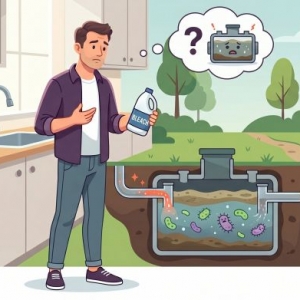
Bleach, disinfectants, solvents, quaternary ammonium cleaners, and aggressive antibacterial products can disrupt the microbial balance in the tank, especially when used heavily in small systems. The danger is not always instant sterilization. More often, the problem is repeated suppression of bacterial populations that normally help digest organics.
When digestion weakens, solids accumulate faster. That means more pumping, less retention time, and more solids reaching the field. Chlorine bleach impact becomes more serious when homeowners use concentrated products in repeated loads or combine them with other sanitizers.
- Antibacterial soap effects: Usually minor in small amounts, but constant heavy use can still shift biological activity over time.
- Surfactants: Strong detergents can keep grease emulsified longer, letting it travel farther instead of separating properly.
- Solvents and degreasers: These can upset microbial action and send difficult compounds into the field.
Why some laundry products are harder on septic than they look
Powder detergents can contribute insoluble filler material that settles into sludge. Cheap formulas sometimes contain mineral-based extenders that do not break down biologically. That means more sludge mass and shorter intervals before the tank loses useful settling volume.
Laundry is also a hydraulic issue. One long laundry day can dump a surge of water into the system, especially with older machines using 30 to 45 gallons per load. Even if the chemistry is mild, the volume alone can flood a stressed field.
Do biological additives, live enzymes, and septic treatments really work?
Usually not in the miracle-cure way they are advertised. A healthy septic tank already grows the bacteria it needs from incoming waste. Live enzymes and biological additives may help break down some scum and organic material under limited conditions, but they do not reverse a physically clogged biomat, crushed trench, or groundwater problem.
Worse, some additive products over-liquefy solids. That sounds helpful until those smaller suspended particles move out of the tank and into the field. Leach field rejuvenation products can sometimes provide temporary relief in specific conditions, but if the field is structurally or hydraulically failed, chemicals will not rebuild soil pore space.
The First Signs That a Drain Field Is Losing the Battle
Drain field failure rarely starts with sewage erupting in the yard on day one. Most systems give smaller warnings first. The trick is reading those clues before the damage spreads downstream.
The grass tells the story before the plumbing does
Watch for abnormally lush, dark green, fast-growing stripes above the trench pattern. That usually means nutrient-rich effluent is rising too close to the root zone. If the ground also feels soft or spongy underfoot, the field is not dispersing properly.
The lowest drain in the house speaks first
The shower or tub on the lowest floor often shows the first slow-drain or gurgle because it sits closest to the septic system’s backup point. That sound is often trapped air being displaced by water that cannot leave the building sewer fast enough.
Nighttime odors are a serious clue
Hydrogen sulfide odors often become more noticeable in cool, still evening air. If the yard smells sulfurous at night near the field or tank, do not dismiss it as “just country smell.” That odor may be telling you effluent is too near the surface.
What We Check First When a Septic Drain Field Stops Working
Good diagnosis matters because plenty of homeowners get sold a full drain field replacement when the real issue is a stuck filter, a tilted D-box, or a hidden plumbing leak. You need to work from the house outward in a logical sequence.
Step 1: Measure whether the problem is hydraulic or structural
We first want to know whether the field is overwhelmed by water volume or physically unable to accept water even under light use. That difference changes the repair path completely.
- The Action: Cut indoor water use sharply for 24 to 48 hours.
- The Why: A field that partially recovers under rest is often hydraulically overloaded, while a field that stays flooded may have deeper clogging or saturation issues.
- The Execution: Stop laundry, shorten showers, delay dishwashing, and repair known leaks. Record whether fixtures begin draining faster.
- The Expected Result: Partial improvement suggests the soil still has some acceptance capacity.
- The Pivot: No improvement points toward a more advanced field problem, outlet obstruction, or groundwater interference.
Step 2: Check sludge and scum levels inside the tank
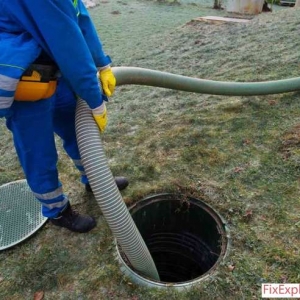
You need actual measurements, not guesses based on “it was pumped a couple years ago.” A sludge judge or clear sampling tube gives a real picture of settled solids and scum thickness.
- The Action: Measure sludge and scum accumulation.
- The Why: Excess solids reduce detention time and increase the odds of carryover into the drain field.
- The Execution: Open the access riser safely, avoid fumes, and use a sludge judge to sample the tank depth. Never enter a tank and never put your face over the opening.
- The Expected Result: Solids remain within safe service limits and the clear zone is still substantial.
- The Pivot: If solids are high, pump the tank and inspect the outlet path immediately because the field may already have received carryover.
Step 3: Inspect the outlet tee and effluent filter
This is one of the highest-value inspections you can do. A clogged filter can mimic field failure because it throttles flow leaving the tank.
- The Action: Inspect and clean the outlet filter.
- The Why: A packed filter blocks discharge, causes house-side backup, and warns that solids loading may be excessive.
- The Execution: Remove the filter carefully, hose it back into the first compartment, and reinstall it correctly.
- The Expected Result: Flow normalizes and fixtures improve if the filter was the bottleneck.
- The Pivot: If the filter plugs again quickly, the system has an upstream solids or grease problem, not just a filter problem.
Step 4: Open and assess the distribution box
A failing D-box can fool people into thinking the whole field is dead. We have seen systems recover after correcting distribution because the majority of the trenches were still healthy.
- The Action: Compare flow and liquid elevation at each D-box outlet.
- The Why: Uneven distribution overloads select laterals and wastes remaining field capacity.
- The Execution: Use a level, flashlight, and probe rod after locating utility lines. Check for root intrusion, settled box corners, and blocked ports.
- The Expected Result: Balanced levels and similar staining patterns across outlets.
- The Pivot: A tilted or blocked box may be repairable without full field replacement.
Step 5: Evaluate soil saturation and trench condition
By this point you are determining whether the drain field itself is still biologically active and unsaturated, or whether it has crossed into chronic failure.
- The Action: Probe trenches and assess surface moisture pattern.
- The Why: Surfacing effluent and constant trench saturation indicate the soil can no longer absorb daily flow at normal rate.
- The Execution: Use a probing rod, shovel, or inspection port if installed. Wear protective gear and avoid digging blindly where utilities may exist.
- The Expected Result: Soil around the field is moist but not sewage-saturated, and trenches are not ponded to the surface.
- The Pivot: Persistent ponding, black slime, and sewage odor indicate advanced biomat or saturation problems.
Can a Drain Field Be Saved, Rested, Repaired, or Rejuvenated?
Sometimes yes. Sometimes no. The honest answer depends on what kind of failure you actually have. A drain field that is overloaded, unevenly distributed, or partially clogged may be salvageable. A field crushed by vehicles, buried in saturated clay, or permanently blocked by years of solids is a different story.
When rest and water reduction can help
If the field is stressed mainly by excess daily water, reducing flow can give the soil time to re-aerate. That means fixing leaks, spreading laundry across the week, installing low-flow fixtures, and keeping stormwater away from the field.
This works because less water allows oxygen to return into soil pore spaces. Once oxygen returns, aerobic microbes function better and the field can recover some treatment performance.
When D-box correction can save the system
If one line is flooded and others are underused, correcting the distribution box may significantly extend system life. That is not magic. It simply stops one trench from taking the entire daily dose.
When line cleaning helps and when it does not
Jetting or mechanical cleaning can help if laterals are obstructed by roots or localized buildup. It does not fix a fully developed biomat wall in the soil interface. Pipes are only part of the field. The soil absorption surface is the real heart of it.
When leach field rejuvenation is mostly wishful thinking
Some products claim to dissolve biomat, restore soil permeability, or permanently revive failed fields. Be careful. If the issue is true biomat overgrowth combined with solids migration, any temporary opening tends to close again unless the upstream cause is fixed. If the problem is high groundwater, clay soil, collapsed trenches, or years of compaction, chemicals will not solve it.
The Maintenance Habits That Actually Protect a Septic Drain Field
Drain fields last longest when the tank protects them, the household does not overload them, and the soil around them stays dry and uncompacted. The best maintenance is usually boring, but it works.
Protect the tank so the field does not have to fight solids
- Pump on schedule: Many households need pumping every 3 to 5 years, but actual timing depends on tank size, occupancy, and solids production.
- Inspect baffles: A broken baffle can do years of damage before anyone notices.
- Clean effluent filters: Filters protect fields, but neglected filters create backup symptoms.
Control water volume as seriously as you control solids
- Fix leaks fast: Toilet flappers, dripping faucets, and softener discharge volumes add up.
- Spread laundry out: Daily moderation is easier on the field than one flood day.
- Use efficient fixtures: Lower gallons per day means better retention and less field stress.
Keep the drain field dry, open, and breathable
- Redirect runoff: Roof drains, sump discharges, and surface drainage should never flow onto the field.
- No vehicle traffic: Compaction kills soil pore space and trench performance.
- No deep-root trees: Aggressive roots seek moisture and invade pipes and boxes.
Choose septic-safe cleaners realistically
Septic-safe cleaners are not magic either, but milder products reduce stress on the system. The goal is not to create a sterile house. It is to avoid repeatedly sending large doses of disinfectants, surfactants, and grease-solubilizing chemicals into a biological treatment system.
The Safety Risks Around Septic Tanks and Drain Fields Are Real
Septic work is not just dirty. It can be deadly. Methane and hydrogen sulfide can accumulate in and around tank openings. Hydrogen sulfide can knock a person unconscious fast at high concentration. Never lean into an open tank. Never climb into one. Never assume an old lid is structurally sound.
Also treat wastewater as a biohazard. Wear gloves, boots, and eye protection during inspection. And before probing or digging, locate underground utility lines. We have seen people turn a septic repair into an electrical emergency because they assumed the area was “just yard.”
FAQs About How a Septic Tank Leach Field Works
These are the questions homeowners usually ask once they realize the drain field is not just a buried gravel pit.
Does a septic tank clean the water before it reaches the drain field?
Partially, but not completely. The tank mainly separates solids, grease, and scum from the liquid stream. The drain field and surrounding soil perform much of the final treatment.
How long should a septic drain field last?
A well-designed and well-protected drain field can last 20 to 40 years or longer. Poor maintenance, solids carryover, compaction, high water use, or bad soil can cut that lifespan drastically.
Why is my yard wet over the leach field?
Because effluent is likely rising too close to the surface instead of soaking into the soil properly. Common causes include saturated ground, biomat buildup, uneven D-box flow, or hydraulic overload.
Can pumping the tank fix a bad drain field?
Only temporarily if the field is the real problem. Pumping restores storage space in the tank, but it does not repair clogged soil, failed laterals, or groundwater saturation in the field.
Do additives fix biomat failure?
Usually no. Additives may change waste breakdown inside the tank, but they do not reliably reverse a physically overloaded or structurally damaged soil absorption area.
What hurts a septic system more, chemicals or too much water?
Too much water usually does more direct damage because it shortens settling time and overloads the field. Chemicals matter too, especially when they disrupt bacterial activity or alter grease and solids behavior repeatedly.
Is a two-compartment tank better for drain field protection?
Yes, in most cases. A two-compartment tank gives wastewater more time to settle and reduces the amount of suspended solids that can reach the outlet and laterals.
Why the Drain Field Is the Part of the Septic System You Cannot Afford to Misunderstand
If you remember one thing from this guide, remember this: the tank is the separator, but the drain field is the treatment engine. That is why so many expensive failures start with small upstream problems that homeowners ignore. A leaking toilet, a missing outlet tee, a packed filter, too many laundry loads, harsh cleaners, poor drainage, or one tilted distribution box can all end up shortening the life of the field.
When a septic system with a leach field works correctly, wastewater moves in a controlled sequence. Solids settle, scum floats, liquid effluent exits through protected outlets, the distribution box shares the load, the lateral lines spread the flow, and unsaturated soil finishes the treatment job through filtration, biology, and time. When that balance is lost, the field does not just stop draining. The entire wastewater treatment cycle starts failing piece by piece.
That is why the smartest septic maintenance is never reactive. Protect the tank, respect the soil, control the water volume, and treat every early warning sign like it matters. Because underground, it does.