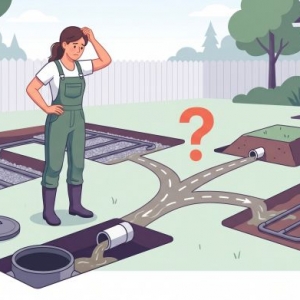
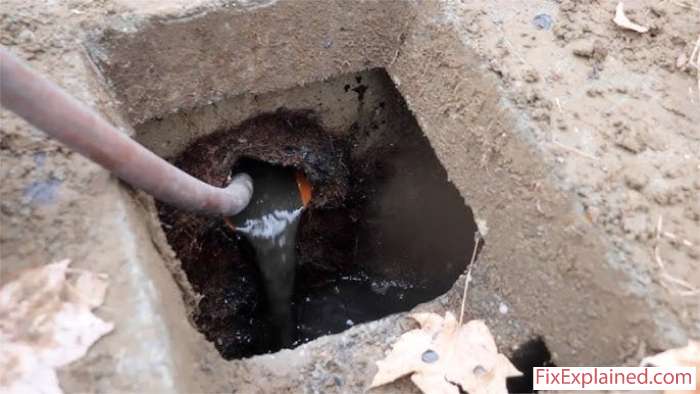
When a septic tank drain pipe clogs, the problem is almost never just “a pipe issue.” In the field, we usually find a chain reaction: too much water, too many solids, wipes that never broke down, grease that cooled and stuck, or sludge that pushed where it never should have gone. That is why a toilet backup, slow draining sinks, and gurgling pipes can all trace back to one restriction point in the septic system. We do not fix this kind of trouble by guessing. We isolate where the blockage is, confirm why it formed, clear only what can be cleared safely, and recognize when the drain field or outlet side has already crossed from a clog into system failure. This article follows the troubleshooting structure in your uploaded brief.
If you remember one thing, remember this: a true septic tank drain pipe clog can sit at the house sewer, the tank inlet tee, the tank outlet tee, the effluent filter, the distribution box, or the lateral lines heading toward the drain field. Each one behaves differently. Treating them all the same is how homeowners crack tees, stir up sludge, damage baffles, and turn a manageable blockage into a raw sewage emergency.
Safety warning: septic systems can contain methane and hydrogen sulfide gas, both dangerous in confined spaces. Never lean into an open tank, never enter a septic tank, never walk on an old metal or weakened lid, and never dig until underground utilities are marked.
Quick Diagnostic Guide: How to Unclog a Septic Tank Drain Pipe
| Symptom | Likely Culprit | Quick Test | DIY Fixable? |
|---|---|---|---|
| One toilet backs up, other fixtures normal | Local fixture or branch line clog | Flush another toilet and run nearest sink | Yes |
| Lowest drain gurgles when upstairs water runs | Main sewer line restriction before tank | Run tub for 2 minutes and listen at basement shower | Sometimes |
| Tank inlet side full, outlet side lower | Inlet tee or house sewer blockage | Open inlet access and compare flow behavior | Sometimes |
| Tank full to outlet, effluent not leaving | Outlet baffle or effluent filter clogged | Inspect outlet tee and filter | Yes |
| Tank normal, yard wet near leach field | Saturated drain field or biomat failure | Probe for spongy soil and sewage odor | No |
| Lush green strip over laterals | Effluent surfacing from lateral overload | Check for standing water after normal use | No |
| Backups after heavy rain | Ground saturation or groundwater infiltration | Compare symptoms during dry weather | No |
| Problem started after guests or laundry marathon | Hydraulic overload | Stop water use for 24 hours and reassess | Sometimes |
| Frequent clogs after using wipes | Non-biodegradable solids at inlet or sewer line | Review what was flushed in past 30 days | Sometimes |
| Kitchen drains slow, septic smells stronger | FOG buildup from fats, oils, and grease | Check if kitchen line is worst affected | Sometimes |
The First Thing We Need to Know: Is the Clog Before the Tank, Inside the Tank, or After the Tank?
That question decides everything. A house sewer clog can often be mechanically cleared. A packed inlet baffle may be manageable. A clogged outlet filter is common. But a failed septic drain field is not a “snake it and move on” problem. We start by separating the system into zones.
Step 1: Confirm whether the backup is local or whole-house
The Action: Test multiple fixtures in a deliberate order, starting with the lowest drain in the home.
The Why: Wastewater follows gravity. When the main sewer line or septic tank drain pipe is restricted, the first warning often shows up at the lowest plumbing fixture because hydrostatic pressure pushes wastewater backward to the lowest opening. If only one sink or one toilet acts up, the clog is probably local. If multiple fixtures struggle together, the problem is farther downstream.
The Execution: Flush the toilet farthest from the main exit point, then run a bathtub or washing machine standpipe if accessible. Listen for a slow gurgle in the lowest floor shower drain. Watch whether toilet bowls rise before they drain. Note whether slow draining sinks happen house-wide or only in one branch. Use gloves and avoid repeated flushing; every extra gallon adds pressure against an already restricted line.
The Expected Result: If multiple fixtures react together, you are likely dealing with the main sewer line blockage, septic tank inlet restriction, or trouble beyond the tank.
The Pivot: If only one fixture backs up, treat that branch line first. Do not excavate the septic system for a clog that is still inside the house plumbing.
Inline image prompt: plumber in work gloves testing lowest shower drain and nearby toilet in a rural home, realistic septic troubleshooting scene, natural light, documentary style
Step 2: Stop the water load before diagnosis gets distorted
The Action: Shut down all nonessential water use immediately.
The Why: Hydraulic overload can imitate a hard clog. A septic system is designed around gallons per day, not endless surges. A rough residential benchmark is 60 to 75 gallons per person per day, though real usage varies. A leaking toilet flapper can quietly dump 100 to 200 gallons a day into the tank. That extra water churns the tank, suspends solids, and can push sludge or scum toward the outlet tee, where they clog the drain pipe or contaminate the distribution box.
The Execution: Stop laundry, dishwashing, long showers, and bath draining. Check toilets by putting a few drops of food coloring in the tank; if color appears in the bowl without flushing, the flapper leaks. Turn off the water supply to any suspected toilet. Give the system 12 to 24 hours with minimal use if sewage is not already overflowing indoors.
The Expected Result: If symptoms ease after the rest period, water volume was at least part of the problem.
The Pivot: If the system still backs up under very light use, you likely have a true physical restriction or a saturated leach field rather than simple overload.
Where Septic Tank Drain Pipes Actually Clog in Real Life
Homeowners often imagine one straight pipe with one clog. Field reality is messier. Septic trouble usually forms at transition points where water changes speed, solids settle, grease cools, or roots and sludge catch on an edge.
The house sewer line before the tank
This line clogs when wipes, feminine hygiene products, paper towels, or grease create a snag point. “Flushable wipes” are one of the worst offenders. They do not disperse like septic-safe toilet paper. Toilet paper is cellulose engineered to absorb water and break apart under agitation. Wipes are built with synthetic fibers and wet-strength binders specifically designed not to fall apart. Inside a cool sewer line or an anaerobic septic tank, they stay intact long enough to rope together and grab other solids.
The inlet tee or inlet baffle
The inlet tee slows the incoming surge and directs wastewater downward so it does not blast across the top of the tank. When wipes, stringy material, congealed grease, or heavy paper products reach this tee, they can mat around the opening. Once that happens, toilet backups appear quickly because the house cannot discharge properly into the watertight container.
The outlet tee and effluent filter
This is one of the most common true septic tank drain pipe clogs. The outlet tee holds back the scum layer while letting clarified liquid effluent exit toward the drain field. Many systems also have an effluent filter. That filter protects the lateral lines from suspended solids, but when sludge levels get too high or the tank is hydraulically overloaded, the filter catches too much material and plugs.
The distribution box and lateral lines
If solids escaped the tank, the distribution box can partially fill with sludge and the lateral lines can develop biomat failure. A biomat is the slimy biological layer that forms where effluent meets soil. A thin biomat is normal and part of treatment. A thick, oxygen-starved biomat becomes a barrier. When that happens, liquid cannot percolate into surrounding soil fast enough, hydrostatic pressure rises, and the whole system behaves like a clogged pipe even when the pipe itself is open.
How We Diagnose the Inlet Side Without Making a Bigger Mess
This stage tells us whether the blockage is between the house and the tank or at the tank entry. Work carefully here. Septic lids can be heavy, concrete edges can crumble, and exposure risk is real.
Step 3: Open the correct access point and observe liquid behavior
The Action: Expose the inlet access riser or inlet side of the tank and watch how incoming wastewater behaves.
The Why: Flow pattern reveals restriction location. If wastewater rushes in and then stalls or stands high at the inlet opening, the inlet tee may be clogged. If little or no inflow arrives while the house still backs up, the blockage may be in the main sewer line between the home and tank.
The Execution: Use the as-built drawing if you have it. If not, trace the building sewer exit and carefully locate the tank. Use a probing rod only where allowed and after utilities are marked. Remove the inlet lid without standing directly over the opening. Use a flashlight, not an open flame. Have one person inside run water briefly while you observe from a safe distance. Never put your face over the tank opening.
The Expected Result: You should see whether influent enters freely, splashes back, or barely appears.
The Pivot: If the inlet is matted with wipes or grease, that is a localized clog. If the tank receives almost nothing despite indoor backup, snake the building sewer from an accessible cleanout rather than forcing tools through the tank opening.
Inline image prompt: exposed septic tank inlet riser with technician using flashlight from a safe distance, rural yard, realistic plumbing inspection, no tank entry
Step 4: Clear only soft obstruction at the inlet tee
The Action: Remove visible soft debris from the inlet tee without breaking the baffle.
The Why: Inlet obstructions are often fibrous and compressible. They can be teased out. But old concrete baffles and PVC tees can crack if you jab aggressively. A broken baffle stops doing its job, increases turbulence, and lets solids pass too easily across the tank, which shortens the life of the drain field.
The Execution: Wear chemical-resistant gloves, eye protection, and disposable coveralls. Use a retrieval hook, a trash grabber, or a carefully controlled hand tool to pull wipes and stringy debris back toward the access opening. Do not ram a plumbing snake blindly through the baffle. If grease is involved, remove the mass mechanically. Hot water alone will not solve FOG problems because fats, oils, and grease often cool farther down and re-solidify.
The Expected Result: Flow into the tank should normalize, and indoor fixtures should stop burping or backing up under light use.
The Pivot: If the tee plugs again quickly, the tank probably needs pumping because floating scum and elevated sludge are feeding the obstruction.
The Outlet Side Is Where Many “Mystery Clogs” Hide
When the tank seems full and nothing obvious is blocking the house sewer, the outlet side becomes the prime suspect. This is where a lot of homeowners assume the whole system failed, when in reality the effluent filter is just packed with solids.
Step 5: Inspect the outlet tee and effluent filter first
The Action: Check the outlet tee and remove the effluent filter for inspection if the system has one.
The Why: The outlet side only handles clarified effluent when the tank is working correctly. If sludge rises too high, if the scum layer thickens, or if the wastewater treatment cycle gets disrupted by overload or harsh chemistry, suspended solids reach the filter and blind it off. That creates a real outflow restriction even if the drain field is still usable.
The Execution: Open the outlet riser. Locate the filter handle inside the outlet housing. Pull the filter slowly upward to avoid splashing. Hose it off into the first compartment of the septic tank, not onto the yard. That keeps captured solids inside the treatment system. Inspect the outlet tee for scum mat intrusion or broken parts.
The Expected Result: A clogged filter will often be visibly coated with dark fibrous sludge. Once cleaned and reinstalled, flow may resume quickly.
The Pivot: If the filter was clean and the tank still stands high to the outlet level, the restriction is probably farther downstream at the distribution box, lateral lines, or saturated soil.
Inline image prompt: technician removing septic effluent filter from outlet tee, protective gear, realistic wastewater service scene, no exaggerated mess
Step 6: Measure sludge and scum before you call the problem “just a clog”
The Action: Check sludge depth and scum thickness using the proper tool.
The Why: A septic tank is built around solid waste separation. Heavy solids sink as sludge. Grease and light material float as scum. Between them sits the clarified liquid effluent zone. If sludge or scum occupies too much of the working volume, the tank loses detention time, meaning wastewater exits before solids have a chance to separate. That is how outlet clogs begin and how drain fields get seeded with solids.
The Execution: Use a sludge judge or a clear core sampler. In systems without that tool, a wrapped stick method can give a rough idea, though it is less precise. Check both compartments if you have a two-compartment tank. Pumping is generally due when sludge plus scum consumes roughly one-third of the liquid depth, or when the bottom of the scum layer is too close to the outlet tee. Exact service thresholds vary by tank design and local practice, but the principle never changes: once the clear zone collapses, trouble accelerates.
The Expected Result: You will know whether the tank has enough clear operating volume left.
The Pivot: If sludge is high, pumping is not optional. Clearing the pipe without restoring tank capacity only buys a very short reprieve.
When Snaking Helps, and When It Makes Things Worse
A plumbing snake is useful in the right place and destructive in the wrong one. We use it for building sewers and certain accessible line blockages. We do not use it as a blind weapon against every septic issue.
Step 7: Snake the building sewer from a proper cleanout, not through the tank if possible
The Action: Mechanically clear the line from the house-side cleanout if the restriction is before the tank.
The Why: A cable machine works by rotating and boring through a soft blockage or retrieving fibrous material. It needs pipe guidance. Running it through a septic opening can let the cable strike baffles, jump direction, or wrap in ways that damage components. A proper cleanout gives straighter control and reduces the chance of cracking an inlet tee.
The Execution: Locate the exterior main cleanout between the house and tank if one exists. Use the correct head: a retrieval head for wipes and fibrous masses, a cutting head only if roots are suspected in a house sewer line. Feed slowly. Mark cable distance so you know approximately where the blockage sits. Pull back and inspect what comes out.
The Expected Result: Water should begin draining more freely, and retrieved debris should match the suspected cause such as wipes, grease-soaked paper, or root fibers.
The Pivot: If the cable passes but the problem remains, you may have only punched a small hole through a larger mass, or the restriction is actually beyond the tank.
Step 8: Use hydro-jetting only on the correct pipe and only when structure allows it
The Action: Consider hydro-jetting for grease-heavy building sewers or stubborn line buildup, not for failing drain fields.
The Why: Hydro-jetting strips pipe walls with high-pressure water, which is excellent for FOG and soft deposits in structurally sound sewer lines. But it does not fix biomat failure, saturated soil, or collapsed laterals. On fragile older lines, excessive pressure can also worsen defects.
The Execution: Camera-inspect if possible before jetting. Confirm the target line is the house sewer or another accessible pressure-tolerant pipe. Do not jet directly into septic laterals unless a qualified septic professional has diagnosed a specific blockage and the line material and layout are known. Even then, success is limited if soil permeability is already lost.
The Expected Result: On a grease-lined sewer, the pipe should return to near-full diameter and drain quickly.
The Pivot: If symptoms return soon after jetting, the core issue is likely tank management or drain field hydraulics, not simple pipe wall buildup.
The Yard Tells the Truth When the Pipe Does Not
Once you suspect the clog is after the tank, surface conditions matter. A drain field cannot absorb water if the soil is sealed, saturated, compacted, or biologically overburdened. At that point, the pipe is often innocent and the soil is the bottleneck.
Step 9: Read the drain field surface before digging anything
The Action: Inspect the area over the septic drain field and around the distribution box.
The Why: Failing dispersal systems leave clues at the surface. Effluent surfacing, unusually lush grass, black soggy soil, and sewage odor indicate that water is reaching the field but not infiltrating at the required rate. Soil percolation rates matter here. Healthy systems depend on suitable soil permeability. Extremely slow soils can sit above 60 minutes per inch, while suitable ranges vary by jurisdiction and design. Once biomat thickens and the ground stays saturated, the field acts hydraulically closed.
The Execution: Walk the area carefully. Look for spongy ground, wet spots, standing water, or greener strips following lateral lines. Note whether symptoms worsen after rain. Do not drive over the field. Soil compaction crushes pore space, lowering oxygen transfer and infiltration performance.
The Expected Result: A dry, odor-free field suggests the issue may still be inside the plumbing or tank. A wet, odorous field points beyond the tank.
The Pivot: If the field is wet or surfacing, stop all unnecessary water use and call a septic professional. Snaking pipes will not restore clogged soil structure.
Inline image prompt: septic drain field with subtle wet strip and lush grass over lateral lines, realistic rural property, overcast daylight, professional inspection mood
Step 10: Check the distribution box for uneven loading
The Action: Inspect the distribution box if the system design includes one.
The Why: The distribution box splits effluent among lateral lines. If the box settles out of level, one line receives most of the flow and fails early while others remain underused. If solids reached the box, they can dam an outlet and mimic a line clog. Uneven loading is one of the quietest reasons a septic drain field ages faster than it should.
The Execution: Expose the box carefully after utility marking. Open it and compare liquid levels and outlet conditions. Check whether one outlet is submerged while others are relatively dry. Look for sludge deposition inside the box. Use a level if needed to verify tilt.
The Expected Result: A balanced box sends similar flow to each line under comparable conditions.
The Pivot: If one line is overloaded due to box settlement, releveling or rebuilding the box may help. If every outlet is standing full, the field itself is likely saturated.
What Actually Causes Septic Tank Drain Pipes to Clog
Clogs do not come out of nowhere. They are usually the end result of repeated habits or one heavy event that overloaded the system faster than the biology could recover.
The flushable wipes myth is expensive
Wipes do not break down like septic-safe toilet paper. Septic-safe paper is mostly cellulose and loses strength quickly in water. Wipes are engineered to stay intact during use, which means they stay intact long enough to wrap around inlet tees, outlet filters, and retrieval cables. Once that mesh catches hair, grease, and fecal solids, flow narrows fast.
FOG turns a kitchen habit into a sewer restriction
Fats, oils, and grease may leave the sink warm, but they cool as they travel. In cooler pipe walls and septic conditions, they congeal into sticky deposits. Those deposits trap food particles and paper fibers. Garbage disposal usage makes this worse because ground food still becomes solid waste load. Disposals can increase sludge accumulation significantly, which shortens pumping intervals and raises the odds of outlet-side clogging.
Hydraulic overload pushes solids where they do not belong
Too many loads of laundry in one day, long showers, leaking fixtures, and guest surges flood the tank faster than solids can settle. That reduces detention time. Instead of clear liquid leaving the outlet, the tank sends suspended particles toward the outlet baffle and lateral network. The short-term symptom may look like a clog. The long-term result can be drain field contamination and biomat thickening.
Harsh chemicals disrupt anaerobic digestion
The septic tank depends on anaerobic digestion to start breaking down organic solids. It is not magic, and it is not fast, but it matters. Repeated dumping of bleach concentrates, solvent cleaners, paint residues, strong disinfectants, or extreme pH chemicals can suppress the microbial community. Once digestion slows, sludge accumulates faster. A rough healthy septic environment typically stays near neutral pH, around 6.5 to 7.5. Repeated extremes stress the biology and upset solid waste separation.
Neglected pumping lets the tank lose its working volume
Concrete, fiberglass, and polyethylene tanks all need pumping. Concrete often lasts decades if installed well, but it can suffer from acid corrosion near the lid and baffles. Fiberglass resists corrosion but can be damaged by poor installation or flotation in high water tables. Polyethylene resists corrosion too, but improper bedding can deform it. Material lifespan matters, but none of them can overcome years of skipped pumping. Once sludge climbs too high, outlet-side clogging becomes predictable.
When the Standard Fix Fails and the Problem Is Bigger Than a Pipe
This is where many online guides stop. We do not. Some systems still back up after the filter is cleaned, the inlet is open, and the house sewer has been cabled. That usually means the trouble has moved past the easy points.
Biomat failure and soil sealing
A clogged biomat is not just “dirty soil.” It is a dense biological layer formed from organic loading, fine solids, and chronic saturation. When oxygen exchange drops and the field stays wet, the biomat thickens and acts like a membrane. Effluent can no longer move into surrounding soil at the original design rate. This is common after years of overload, missed pumping, or solids carryover.
Saturated ground after storms or high groundwater
Even a healthy field struggles when the water table rises into the treatment zone. The system needs unsaturated soil to filter and polish effluent. If the surrounding soil is already full of water, the tank outlet has nowhere to push liquid. The symptom feels like a clogged drain pipe, but the real blockage is hydraulic pressure in the soil itself.
Crushed laterals or root intrusion
Older lines can collapse, especially under traffic or poor backfill. Roots can also enter perforated lines where moisture attracts them. In those cases, a snake may find a partial path, but the line will not truly recover without repair. This is especially likely in systems with mature trees planted too close to the field.
Leach field rejuvenation: sometimes helpful, sometimes oversold
Leach field rejuvenation can help when the issue is partial clogging, biomat loading, or distribution imbalance and the field still has structural integrity. Methods vary and results vary. Aeration treatment upgrades, line cleaning, and controlled rest strategies can sometimes recover part of the infiltration rate. But when the soil is chronically saturated, the laterals are crushed, or the biomat is too mature, rejuvenation will not replace a failed field. Be skeptical of miracle products that claim to dissolve years of solids without pumping. Most do not fix the mechanical cause.
What Not to Put Down the Drain if You Ever Want This Clog Gone for Good
Once we clear a septic restriction, prevention matters more than the cleaning itself. Most repeat clogs come from the same inputs that caused the first one.
- Never flush wipes: Even when labeled flushable, they stay intact too long and tangle at tees, filters, and line offsets.
- Avoid grease dumping: FOG cools, sticks to pipe walls, and narrows flow while feeding sludge growth.
- Limit disposal waste: Ground food still becomes septic solids and accelerates sludge buildup.
- Skip feminine products: They do not biodegrade appropriately and can bridge across pipe restrictions.
- Use septic-safe paper: Fast-disintegrating cellulose reduces the time solids remain as intact clumps.
- Spread water use: One load of laundry spaced out is far kinder to the system than four loads back-to-back.
- Watch detergents: Some powdered products leave mineral-heavy residues that contribute to sludge and scale.
How to Keep the Pipe from Clogging Again
Long-term septic health is mostly rhythm: controlled water use, timely pumping, and keeping non-biodegradable material out of the system. That routine matters more than additives and miracle bottles.
Step 11: Set pumping intervals by household load, not guesswork
The Action: Put the tank on a pumping schedule based on occupancy, tank size, and usage habits.
The Why: Pumping protects the outlet side by restoring detention volume. A tank that has room for solids to settle performs better biologically and hydraulically. Exact intervals vary, but many households fall somewhere in the 3- to 5-year range, with heavier use requiring more frequent service.
The Execution: Keep records of tank size, last pumping date, number of people in the home, and disposal use. Ask the pumper for measured sludge and scum observations, not just a receipt.
The Expected Result: Lower risk of solids reaching the outlet tee and drain field.
The Pivot: If the tank needs pumping unusually often, investigate hidden leaks, disposal overuse, or field trouble instead of assuming the tank is simply too small.
Step 12: Reduce water spikes that mimic clogs
The Action: Smooth out daily water demand.
The Why: Septic systems treat flow over time. Sudden surges stir solids and overwhelm infiltration. Water conservation is not just about saving water; it protects the wastewater treatment cycle inside the tank and the oxygen balance in the soil.
The Execution: Repair leaking toilets, install efficient fixtures, spread laundry over the week, and avoid draining giant tubs all at once if the system is already stressed.
The Expected Result: More stable tank levels and less solids carryover.
The Pivot: If normal conservative use still causes backup, the system likely has a structural or field-side defect.
Frequently Asked Questions
Can we unclog a septic tank drain pipe ourselves?
Yes, sometimes we can, but only if the blockage is in the house sewer, at the inlet tee, or in a removable effluent filter. Once the issue is a saturated drain field, biomat failure, crushed lateral, or distribution box problem, DIY methods usually do not solve it and can make cleanup nastier and more expensive.
Will pumping the tank unclog the pipe?
Sometimes, but not always. Pumping helps when high sludge or scum is feeding the blockage or when the outlet filter is overwhelmed. It will not fix a crushed sewer line, root intrusion, or a failed leach field. Pumping restores capacity; it does not magically repair broken components.
Are septic additives a real fix for clogged drain pipes?
No, not for a true physical clog. Additives may be marketed as cures, but they do not remove wipes, broken baffles, grease masses, collapsed lines, or waterlogged soil. Some products can even disturb the tank balance or send loosened solids toward the field.
Why does the house back up more after heavy rain?
Because the soil around the drain field may already be saturated. When groundwater rises, the field loses the empty pore space it needs to accept and treat effluent. That creates backpressure on the outlet side and makes the whole system behave like it has a clogged pipe.
What is the difference between a clog and drain field failure?
A clog is a localized restriction in a pipe, tee, or filter. Drain field failure means effluent cannot infiltrate and disperse through soil at the required rate. One is often mechanically clearable. The other usually requires repair, rehabilitation, or replacement work.
Can septic-safe toilet paper still cause problems?
Yes, if water use is excessive or the tank is overdue for pumping. Septic-safe toilet paper breaks down faster, but even good paper contributes solids. It helps, but it cannot compensate for wipes, grease, overload, and neglected maintenance.
The Bottom Line on Clearing a Septic Tank Drain Pipe
The right way to unclog a septic tank drain pipe is to diagnose the location before touching a tool. We start by deciding whether the trouble is local plumbing, the main sewer line blockage, the inlet baffle, the outlet baffle and effluent filter, or the drain field itself. Then we clear only what is actually clogged, protect the tank baffles, measure sludge and scum, and pay attention to the yard because the soil often tells the truth before the pipe does.
If the problem is wipes, grease, or a packed filter, we can often correct it. If the tank has lost its working volume, pumping becomes part of the fix. If the distribution box is unbalanced or the lateral lines are surfacing effluent, we are no longer dealing with a simple clog. At that point, the smartest move is to stop water use, prevent a raw sewage backup, and bring in a qualified septic pro before a repair becomes a full drain field replacement.