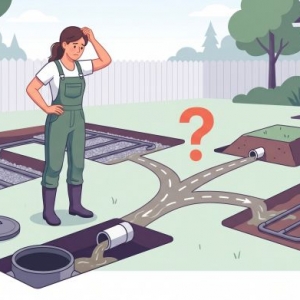
When homeowners say they want to drain a septic tank, they usually mean one of three things:
- Pump accumulated sludge and scum.
- Empty a flooded or overloaded system.
- Fix a tank that isn’t draining into the leach field properly.
Those are completely different mechanical situations — and handling them wrong can destroy a perfectly good drain field, sometimes permanently.
We’ve pumped and inspected hundreds of tanks across saturated clay soils, sandy percolation zones, failing biomats, and collapsed distribution boxes. Here’s the correct professional workflow.
Quick Diagnostic Guide: How to Drain a Septic Tank
| Symptom | Likely Culprit | Quick Test | DIY Fixable? |
|---|---|---|---|
| Tank fills quickly after pumping | Saturated drain field / biomat clog | Open outlet side and observe backflow | No |
| Gurgling lowest drain first | Outlet restriction or filter clog | Pull effluent filter | Yes |
| Standing water above tank lid | Hydraulic overload or groundwater intrusion | Probe soil moisture around tank | Sometimes |
| Sewage surfacing over laterals | Failed leach field | Walk trench lines for spongy grass | No |
| Slow drains everywhere | Full tank or blocked inlet tee | Inspect inlet chamber | Yes |
| Tank drains but refills overnight | Running toilet flapper leak | Dye test toilet tank | Yes |
What “Draining a Septic Tank” Actually Means in Practice
A working septic tank separates solids, retains floating scum, and sends liquid effluent to the drain field through the outlet tee. If any stage of that process fails, the tank appears “not draining.”
Draining incorrectly removes the biological balance that powers anaerobic digestion, the bacteria-driven breakdown of waste inside the tank.
Step-by-Step: How We Drain a Septic Tank Safely
This is the same workflow professionals use during a standard service visit.
Step 1 — Locate the Access Lid (Not the Vent Pipe)
The Action: Find and expose the inspection lid.
The Why: Opening a vent pipe releases odor but does not allow tank draining.
The Execution: Use a probing rod and shallow trench shovel. Most lids sit 6–24 inches below grade. Never stand directly on unknown lids.
The Expected Result: One or two chamber access ports visible.
The Pivot: Only one lid usually means a single-compartment tank requiring more frequent pumping.
Step 2 — Measure Sludge and Scum Depth First
The Action: Check whether pumping is required.
The Why: Removing liquid without removing sludge pushes solids into the distribution box.
The Execution: Use a sludge judge measuring tool.
- Sludge > ⅓ tank depth = pump required
- Scum touching outlet tee = pump required
The Expected Result: Clear confirmation of separation layer thickness.
The Pivot: Normal layers but persistent backup usually indicate drain field failure.
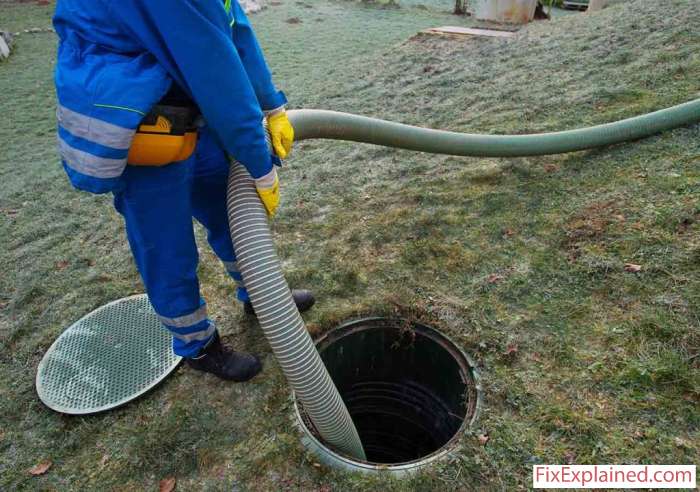
Step 3 — Pump Both Chambers Completely
The Action: Vacuum pump the entire tank.
The Why: Leaving the second chamber full defeats solid separation protection.
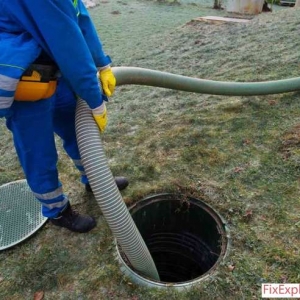
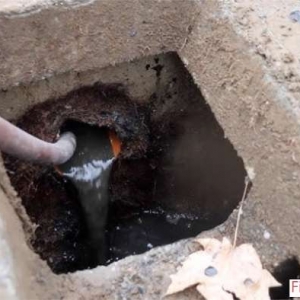
The Execution: A vacuum truck removes sludge, scum, and liquid effluent.
The Expected Result: Tank interior visible down to outlet baffle.
The Pivot: Immediate backflow from outlet pipe means saturated drain field.
Step 4 — Inspect the Inlet Tee and Outlet Tee
The Action: Inspect internal baffles.
The Why: Outlet tees prevent solids from entering lateral lines.
The Execution: Check for:
- missing tee
- collapsed PVC
- grease buildup
- filter blockage
The Expected Result: Clear outlet path toward drain field.
The Pivot: Submerged outlet pipe after pumping indicates groundwater intrusion.
Step 5 — Confirm the Tank Drains Into the Leach Field
The Action: Run controlled water into the house.
The Why: This tests soil percolation acceptance rate.
The Execution:
- Run bathtub 10 minutes
- Run washing machine once
- Run sink continuously 5 minutes
The Expected Result: Water exits tank smoothly.
The Pivot: Rising tank level indicates biomat clog or saturated soil.
Why Septic Tanks Stop Draining After Pumping
The tank itself rarely fails. The problem is usually downstream.
The Biomat Layer Has Sealed the Soil Interface
A biomat is a natural biological slime layer beneath drain field trenches. When thickened, it blocks soil permeability and prevents effluent absorption.
The Distribution Box Has Shifted Out of Level
A tilted distribution box floods one trench while starving others. Resetting elevation often restores proper drainage.
Soil Saturation From Groundwater Intrusion
High water tables reverse flow direction, allowing groundwater into the tank instead of effluent leaving it.
Emergency Method: Draining a Flooded Septic Tank Temporarily
Temporary Pump-Down Procedure
The Action: Remove excess liquid only.
The Why: Reduces hydraulic pressure inside household plumbing.
The Execution: Use a trash pump or licensed vacuum service.
The Expected Result: Indoor fixtures begin draining normally.
The Pivot: Tank refilling within 24 hours confirms drain field failure.
When Draining a Septic Tank Makes Things Worse
Pumping during heavy rain or saturated soil removes hydrostatic balance and can cause tank floatation or pipe misalignment.
How a Simple Toilet Leak Can Flood an Entire Septic System
A leaking toilet flapper can send 700+ gallons daily into the system, pushing solids into the distribution box and accelerating biomat formation.
Safe Chemical Practices While Draining a Septic Tank
Bleach above pH 11 kills anaerobic bacteria responsible for sludge digestion, increasing pumping frequency and clogging risk.
Tank Material Differences That Affect Draining Strategy
Concrete Tanks
Stable, heavy, and typically last 40+ years.
Fiberglass Tanks
Resist corrosion but can float in saturated groundwater conditions.
Polyethylene Tanks
Lightweight but highest floatation risk during pump-down.
The Right Pumping Frequency (Based on Real Usage)
| Household Size | Tank Size | Pump Interval |
|---|---|---|
| 2 people | 1,000 gal | 4–5 years |
| 4 people | 1,250 gal | 3–4 years |
| 6 people | 1,500 gal | 2–3 years |
Inline Inspection Checklist Before Closing the Lid
- Outlet tee intact
- Inlet tee intact
- No root intrusion
- No groundwater inflow
- Effluent filter cleaned
- Distribution box not submerged
FAQs
Can I drain my septic tank myself?
Yes, but only partially. Full sludge removal requires professional vacuum pumping equipment.
Why is my septic tank not draining after pumping?
Because the drain field is saturated or biomat has sealed the soil pores.
How long does it take to drain a septic tank?
Usually 20–45 minutes depending on tank size and sludge depth.
Is draining a septic tank dangerous?
Yes. Hydrogen sulfide gas exposure and collapsing lids are serious risks.
Should a septic tank be completely empty after pumping?
Normally yes unless groundwater conditions create floatation risk.
Final Thoughts From the Field
Draining a septic tank is about restoring balance between tank separation, distribution box flow, and soil percolation capacity.
Treat the tank as one stage of a complete wastewater treatment chain and it can last decades.